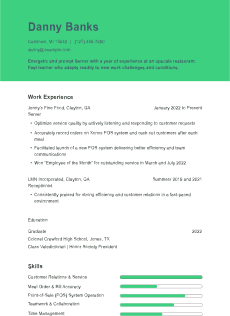
A summary of qualifications is a concise, bulleted list at the top of your resume that highlights your most relevant strengths, skills, and accomplishments. It offers hiring managers a quick, high-impact snapshot of your value as a candidate — especially useful when they spend mere seconds reviewing each resume.
This section is also known as “Career Highlights,” “Professional Highlights,” or simply “Key Qualifications.” It’s particularly helpful for candidates with broad experience, specialized credentials, or nontraditional backgrounds.
Whether you’re an experienced professional, a recent graduate, or changing careers, the summary of qualifications can be a powerful way to grab attention early and optimize your resume for applicant tracking systems (ATS).
What Is a Summary of Qualifications?
The summary of qualifications is typically four to six bullet points immediately below your name and contact info. Think of it as your resume’s elevator pitch — only faster.
Each bullet should be a strong, self-contained statement that helps employers understand why you’re qualified for the job. These statements might highlight:
Years of relevant work experience
Areas of technical or industry expertise
Certifications, degrees, or licenses
Measurable accomplishments or career milestones
Software skills or language fluency
Unlike a traditional professional summary, which is written in paragraph form, the qualifications summary is formatted as a bulleted list, making it easier to skim quickly.
When Should You Use a Summary of Qualifications?
This section can benefit a wide range of candidates, but it’s especially helpful if:
You have several years of experience in your field
You’re making a career change and want to highlight transferable skills
You want to immediately showcase specific credentials or accomplishments
You’re applying for a competitive or high-level position
Even if you’re early in your career, you can use this section to highlight internships, academic strengths, volunteer work, or certifications — anything that speaks to your potential.
How To Write a Summary of Qualifications
1. Write It Last
Although this section comes first on your resume, it’s often easier to write it last. Draft your work experience, education, and skills sections first — that process will help you identify your most impressive qualifications.
2. Choose 4–6 of Your Best Selling Points
Each bullet should answer the question: “Why should this employer hire me?” Focus only on your top achievements and relevant skills. Cut anything that doesn’t relate directly to the job posting.
Examples of what to include:
Number of years in a relevant role or industry
Specific accomplishments tied to metrics or impact
Notable credentials or degrees
Bilingual abilities or software expertise
3. Use Keywords from the Job Description
Mirror the language used in the job posting. This increases your chances of getting past ATS filters and also shows that you understand the company’s priorities.
For instance, if the job asks for “project lifecycle management” and you’ve done that, say so in those exact words.
4. Make It Specific and Measurable
Avoid vague phrases like “excellent communicator” or “strong leader.” Instead, show what you’ve done and the impact you had. Numbers make your statements more credible.
Example:
Do
“Generated $500K+ in annual B2B sales for two consecutive years”
Don't
“Strong sales background”
5. Avoid Redundancy
Each bullet should introduce a new reason to hire you. Don’t repeat the same skill or achievement using different wording.
Summary of Qualifications Examples
left
Example 1: Entry-Level Customer Service Representative
Example 2: Administrative Assistant
Example 3: Project Manager
Example 4: Entry-Level Marketing Assistant
right
Summary of Qualifications
Business administration graduate with 3.7 GPA
Completed six-month internship at a major retail brand
Resolved up to 50 customer inquiries daily with 95% satisfaction score
Bilingual: Fluent in English and Spanish
Career Highlights
Over seven years of experience supporting executives in fast-paced environments
Scheduled 200+ meetings annually with 98% accuracy
Trained five junior administrative staff on office procedures
Advanced proficiency in Microsoft Office Suite and Google Workspace
Summary of Qualifications
Certified Project Management Professional (PMP) with 10+ years of experience
Led cross-functional teams on projects with budgets up to $2 million
Reduced production delays by 35% through workflow optimization
Expert in Agile, Jira, and project lifecycle management
Summary of Qualifications
Bachelor’s degree in Marketing, Dean’s List all semesters
Created 12 social media campaigns as part of internship
Increased engagement by 40% across three platforms
Proficient in Canva, Hootsuite, and Google Analytics
Tips for Writing a Strong Qualifications Summary
Tailor It for Every Application
Customize this section for each job. You don’t need to rewrite every bullet, but reorder or revise them based on what’s most relevant to the job description.
Keep It Brief and Focused
Four to six bullet points is the sweet spot. Don’t overload this section with too much detail — that’s what your experience section is for.
Use Action-Oriented Language
Begin each bullet with a strong verb or descriptor. Skip full sentences and unnecessary words.
Example:
“Award-winning designer with Adobe Creative Suite expertise”
“Trained and mentored 15+ new hires over 12 months”
Download All Summary of Qualifications for a Resume with Examples, Tips, and Guide Resume Templates
Free Download: Summary of Qualifications for a Resume with Examples, Tips, and Guide Resume Examples in PDF & Word
Get these resumes as a free download in PDF or Word formats—perfect for customizing or sharing.
Sorry! We ran into an issue. Please try a different file.
Written by professional resume writers and loved by hiring managers
Resume Templates offers free, HR approved resume templates to help you create a professional resume in minutes. Choose from several template options and even pre-populate a resume from your profile.