

4 Best Personal Trainer Resume Examples and Templates for 2025



As a coach, your job is more than winning games or crushing goals — it’s about unlocking the untapped potential within athletes and clients. Your coaching resume should highlight your unique approach and innate ability to create a positive environment for personal growth. This guide offers tips and strategies for writing a resume that demonstrates the transformative impact you’ve had on individuals and teams throughout your career.
Why This Resume Is a Great Example
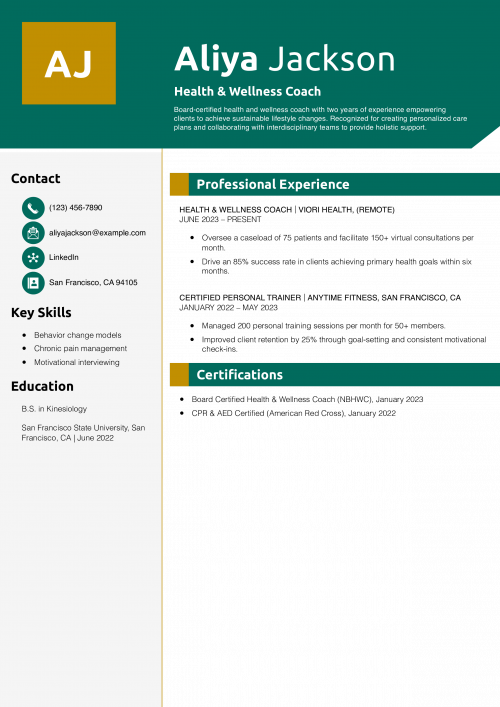
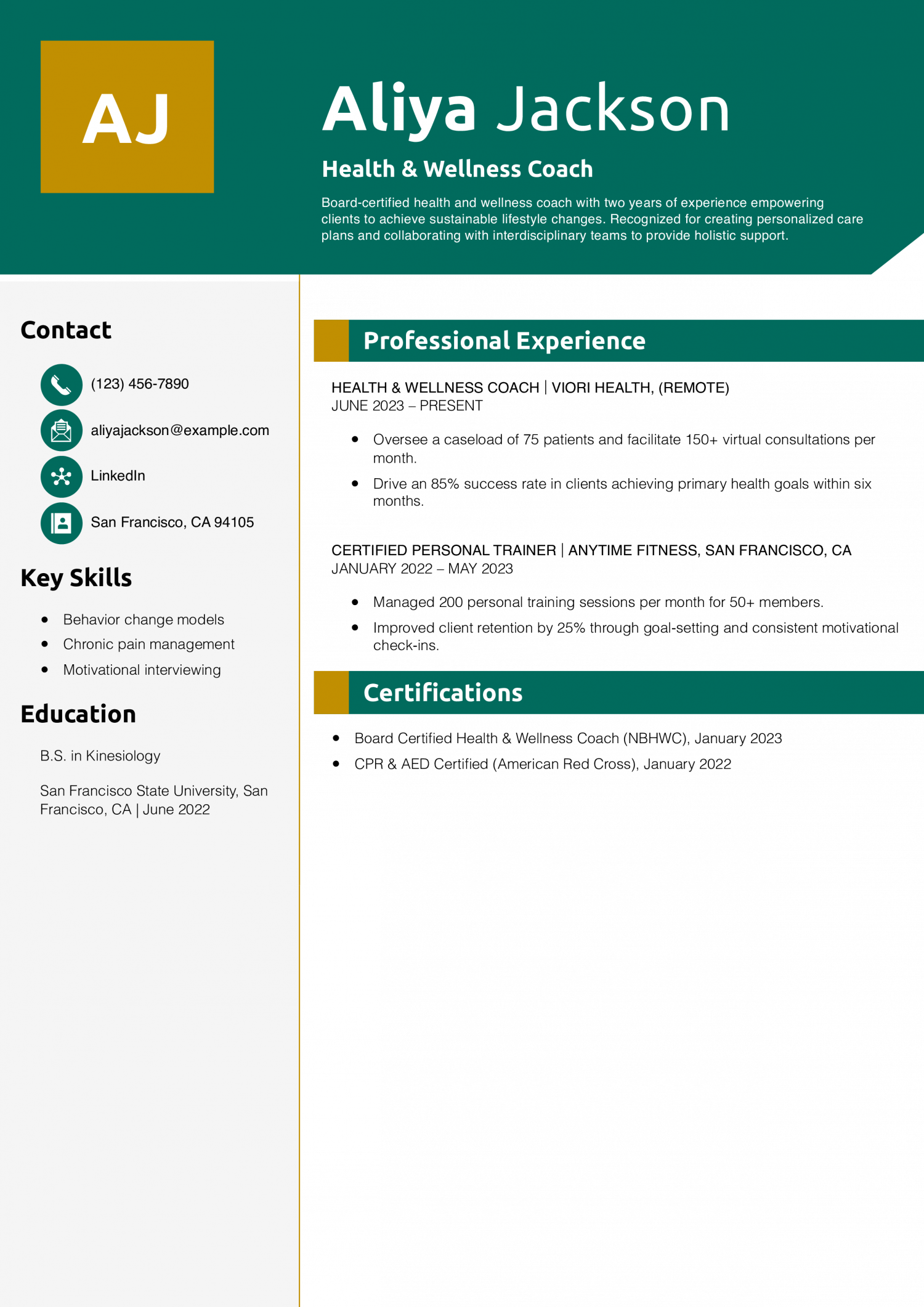
Aliya’s resume highlights measurable client success rates and her dual expertise as a trainer and coach.
Expert Tip: Emphasize your education entries clearly with graduation dates. For more tips, see How to List Education on a Resume.
Why This Resume Is a Great Example
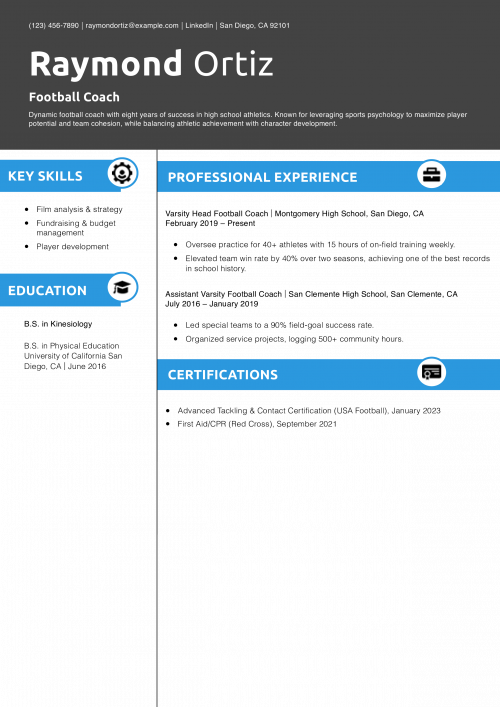
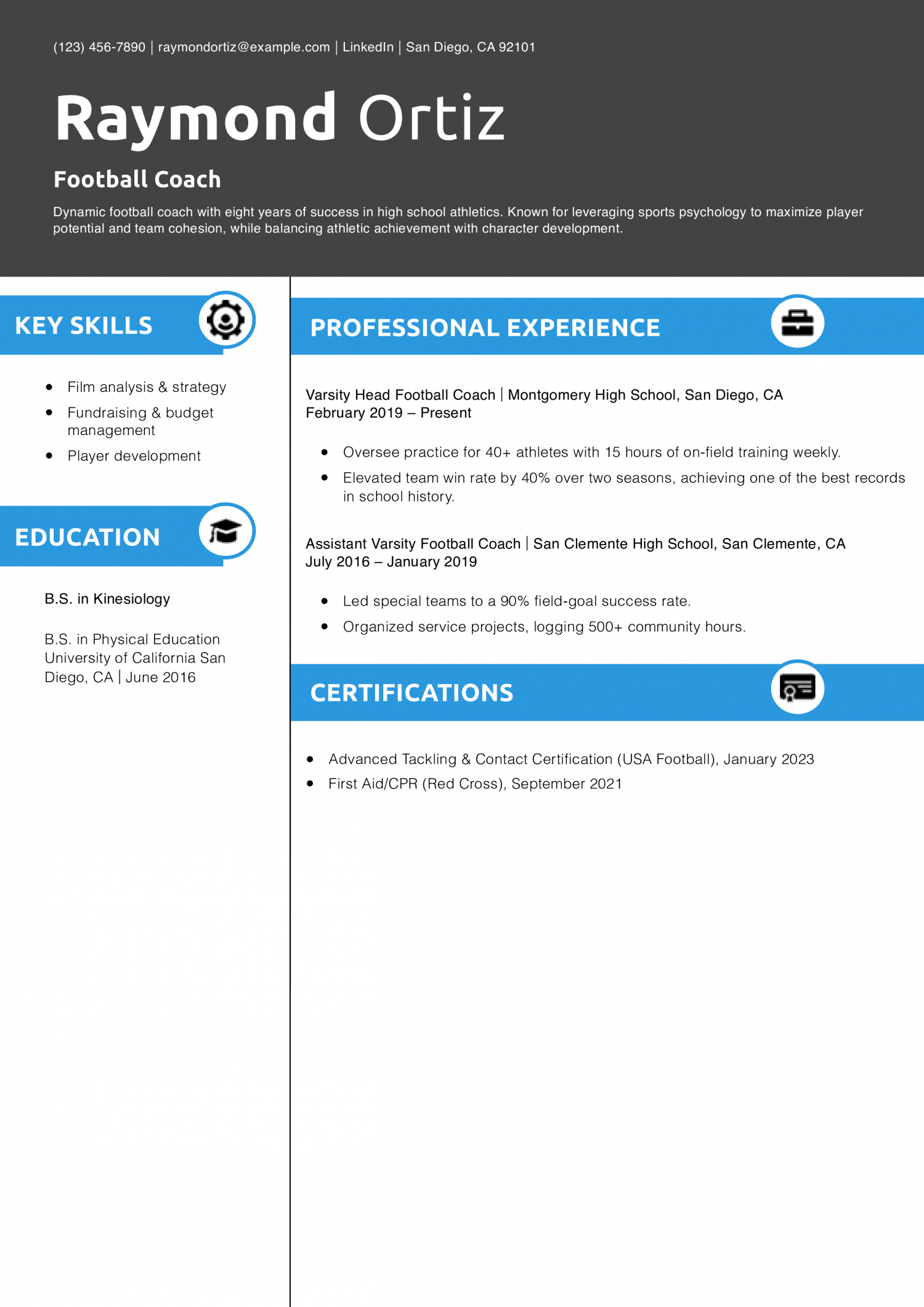
Raymond’s resume pairs quantifiable team improvements with clear leadership responsibilities.
Expert Tip: Use precise season‑over‑season metrics to showcase performance gains. For more tips, see Career Advice: Job Titles for Resume.
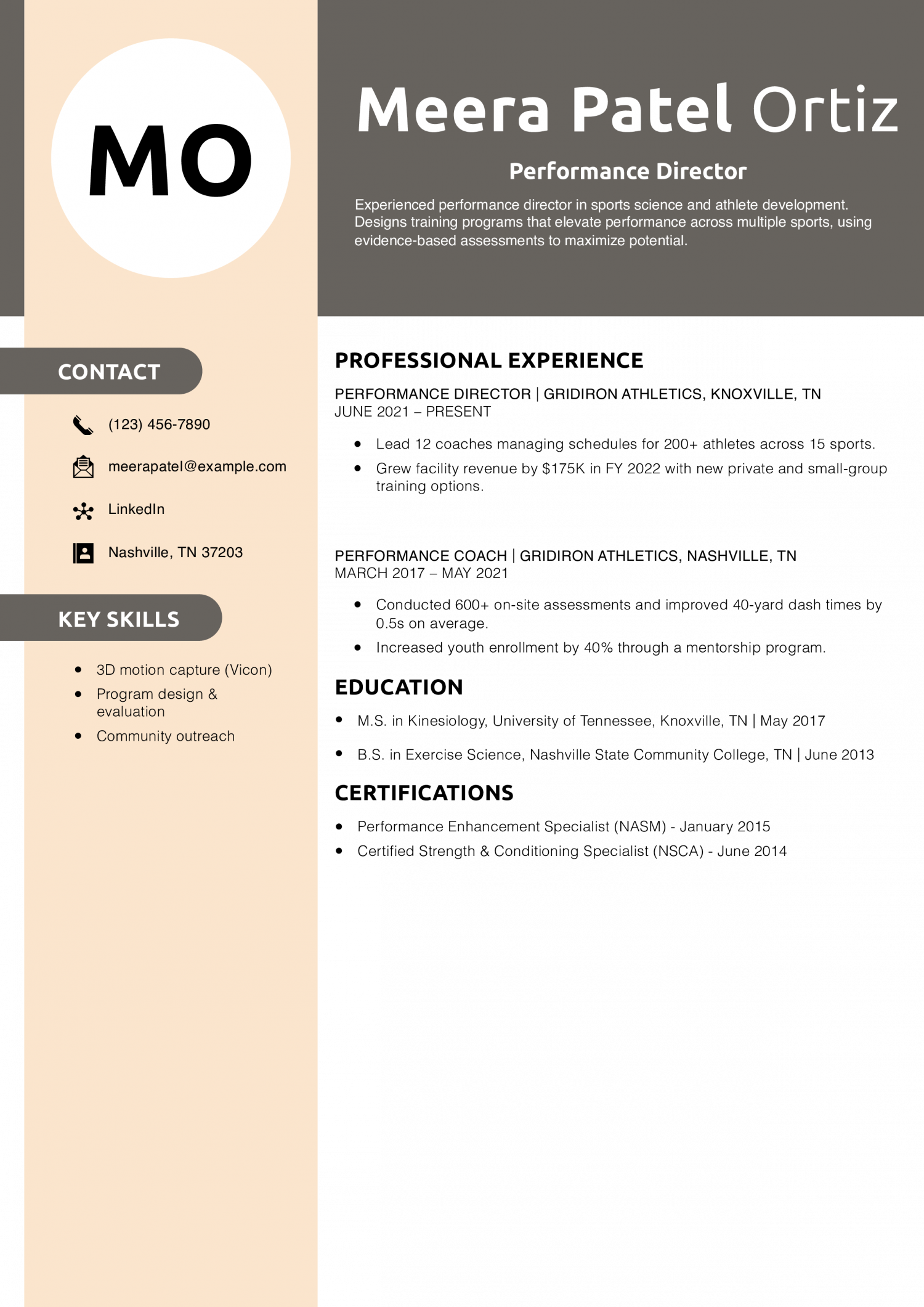
Why This Resume Is a Great Example
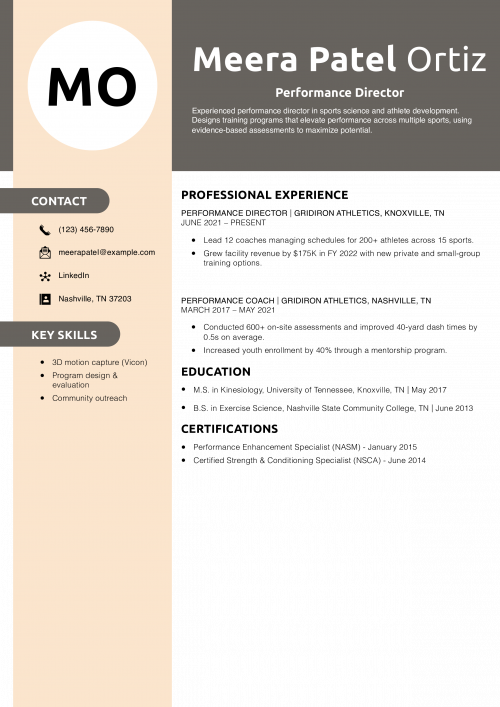
Meera’s resume showcases multi‑sport performance leadership and clear revenue impact.
Expert Tip: Highlight program‑revenue growth alongside athlete‑performance metrics. For more tips, see How to Update Your Resume.
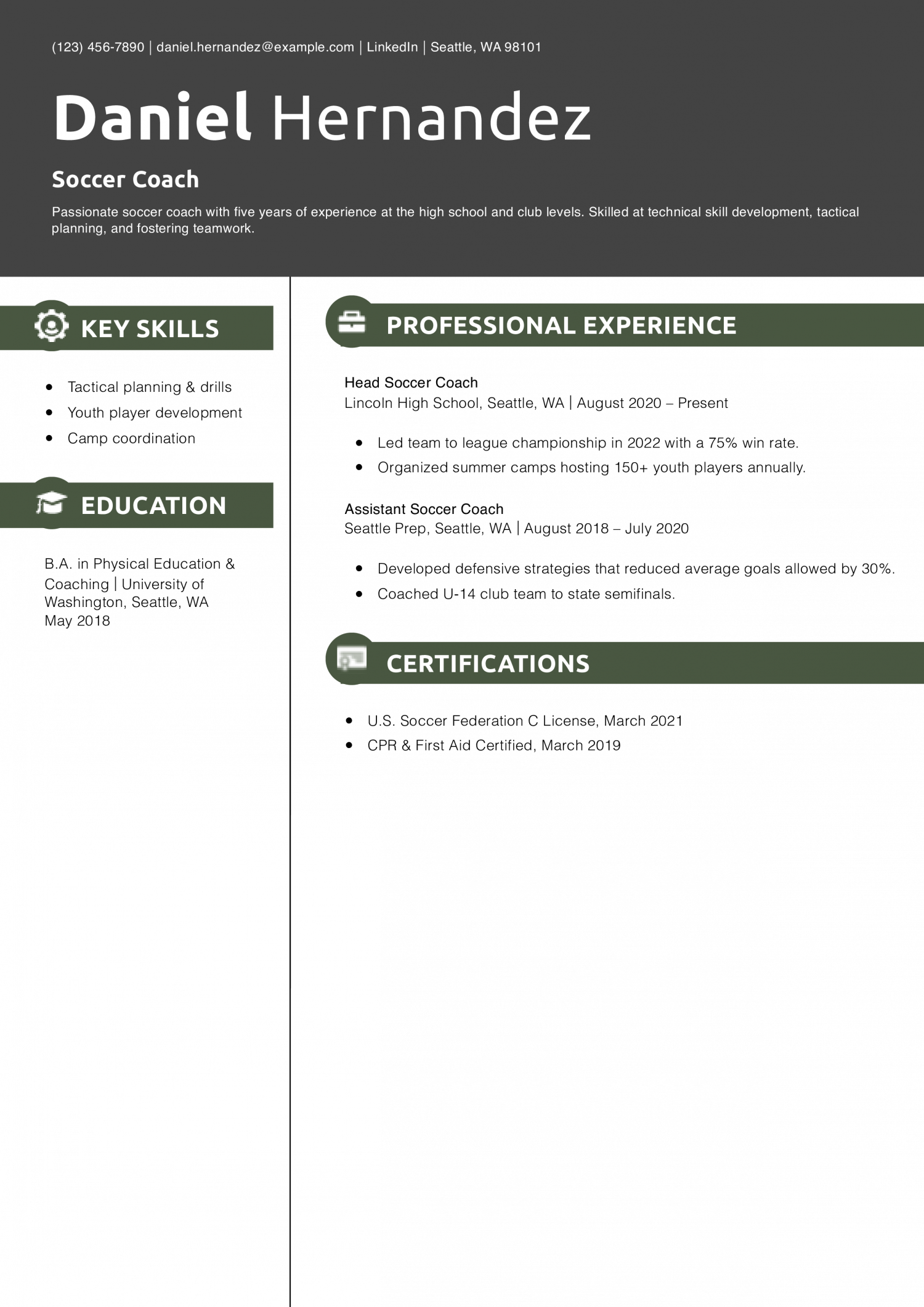
Why This Resume Is a Great Example
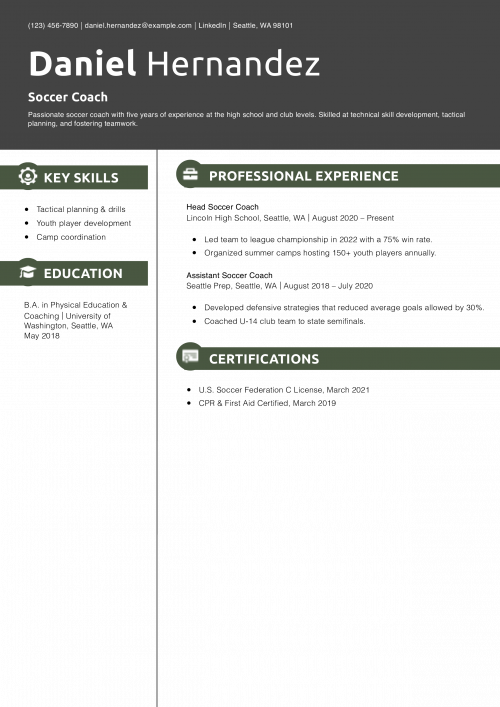
Daniel’s resume highlights championship success and clear defensive improvements.
Expert Tip: Emphasize your championship outcomes and defensive metrics. For more tips, see Best Resume Formats.
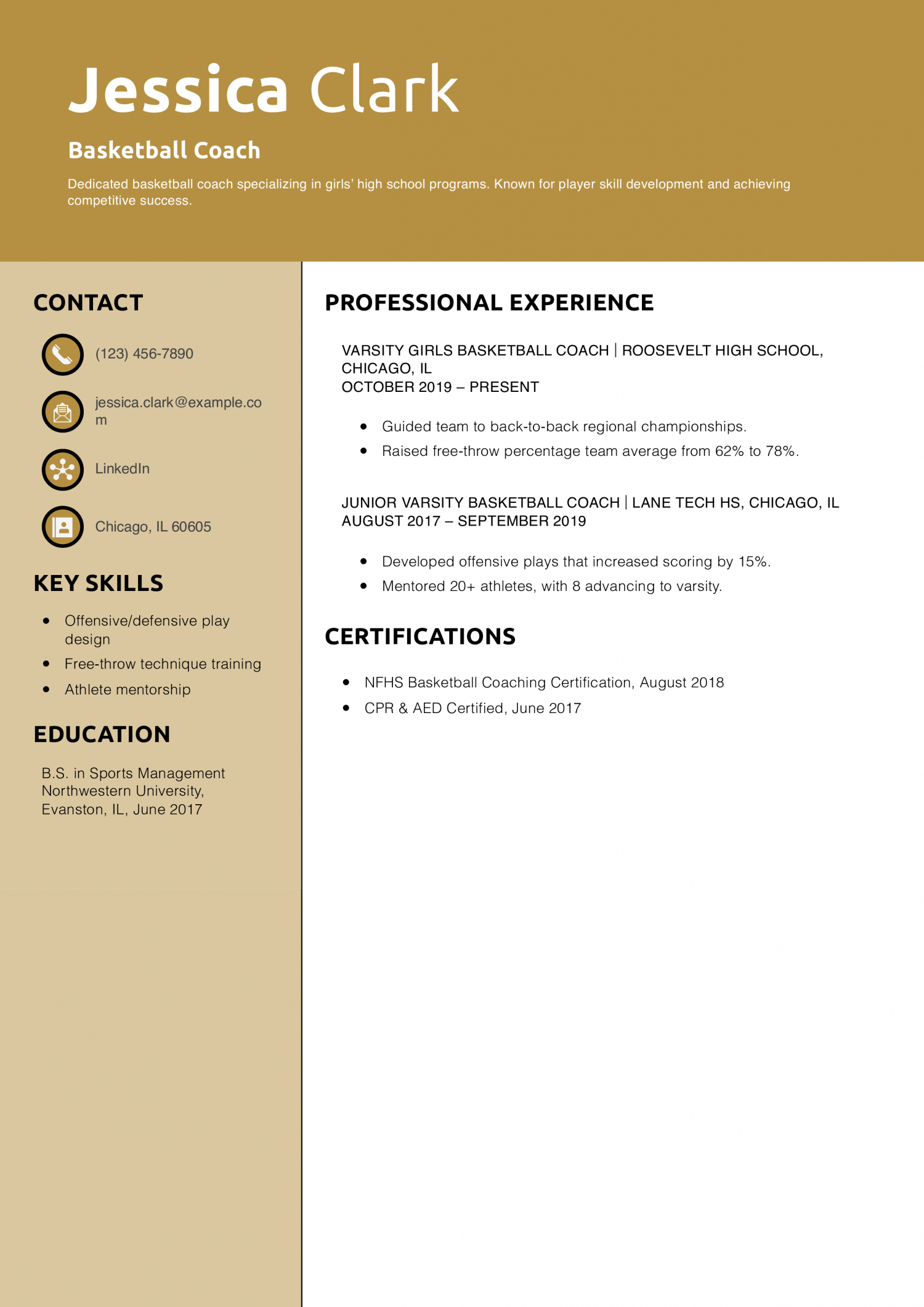
Why This Resume Is a Great Example
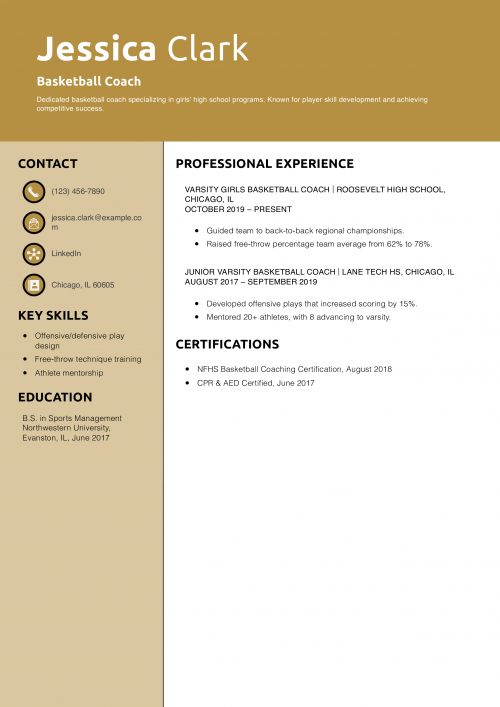
Jessica’s resume combines championship wins with measurable skill‑improvement stats.
Expert Tip: Include before‑and‑after performance metrics to showcase coaching impact. For more tips, see How to Make a Resume.

Why This Resume Is a Great Example
Mark’s resume highlights title wins and clear improvements in team batting and pitching stats.
Expert Tip: Showcase your ERA and batting average improvements to quantify progress. For more tips, see Server Job Description for Resume.
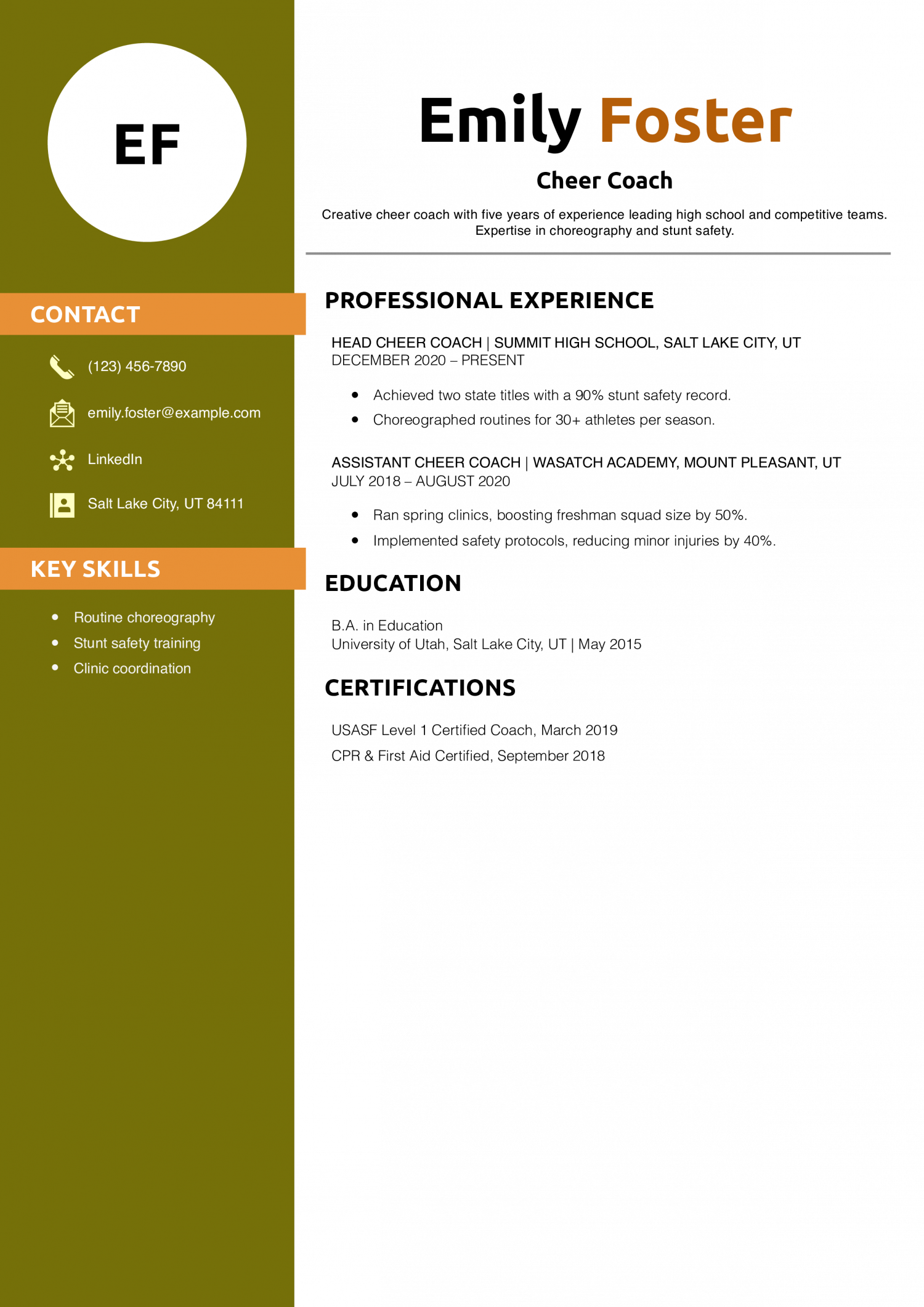
Why This Resume Is a Great Example
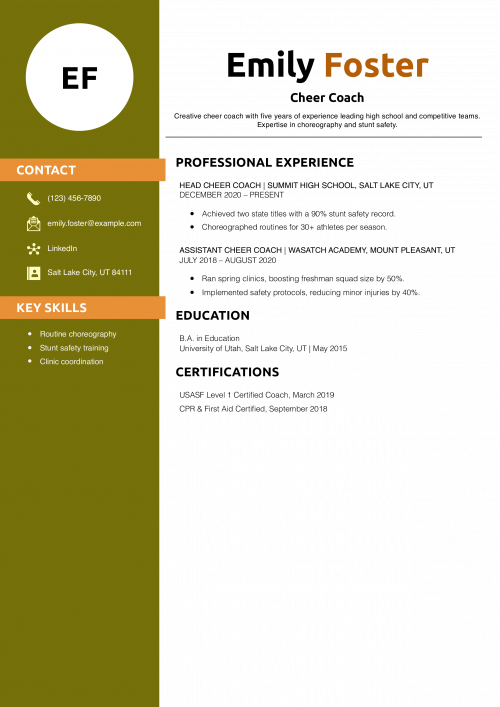
Emily’s resume combines championship achievements with a strong safety record.
Expert Tip: To underscore your coaching prowess, emphasize safety improvements and title wins. For more tips, see Skills to Put on a Resume.
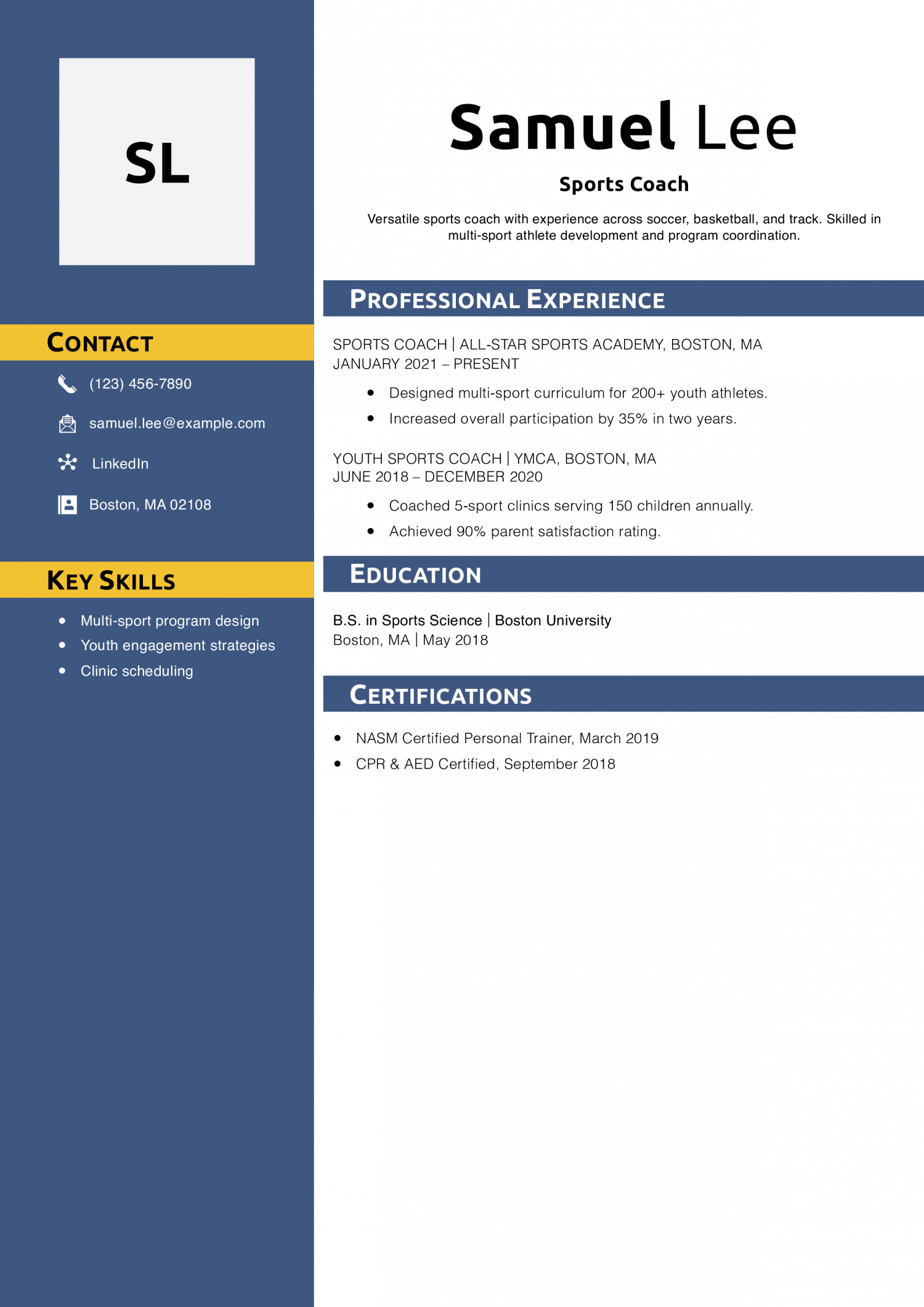
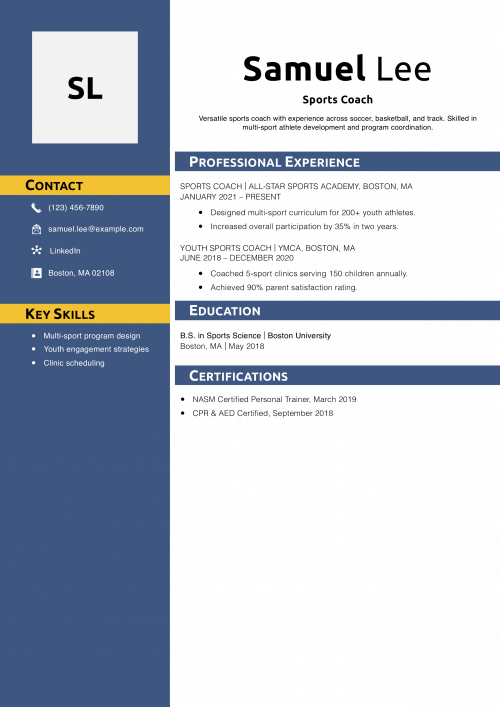
Why This Resume Is a Great Example
Samuel’s resume showcases broad multi‑sport success and clear participation growth metrics.
Expert Tip: Highlight percentage‑based participation increases to demonstrate program impact. For more tips, see How to Write a Resume Summary.
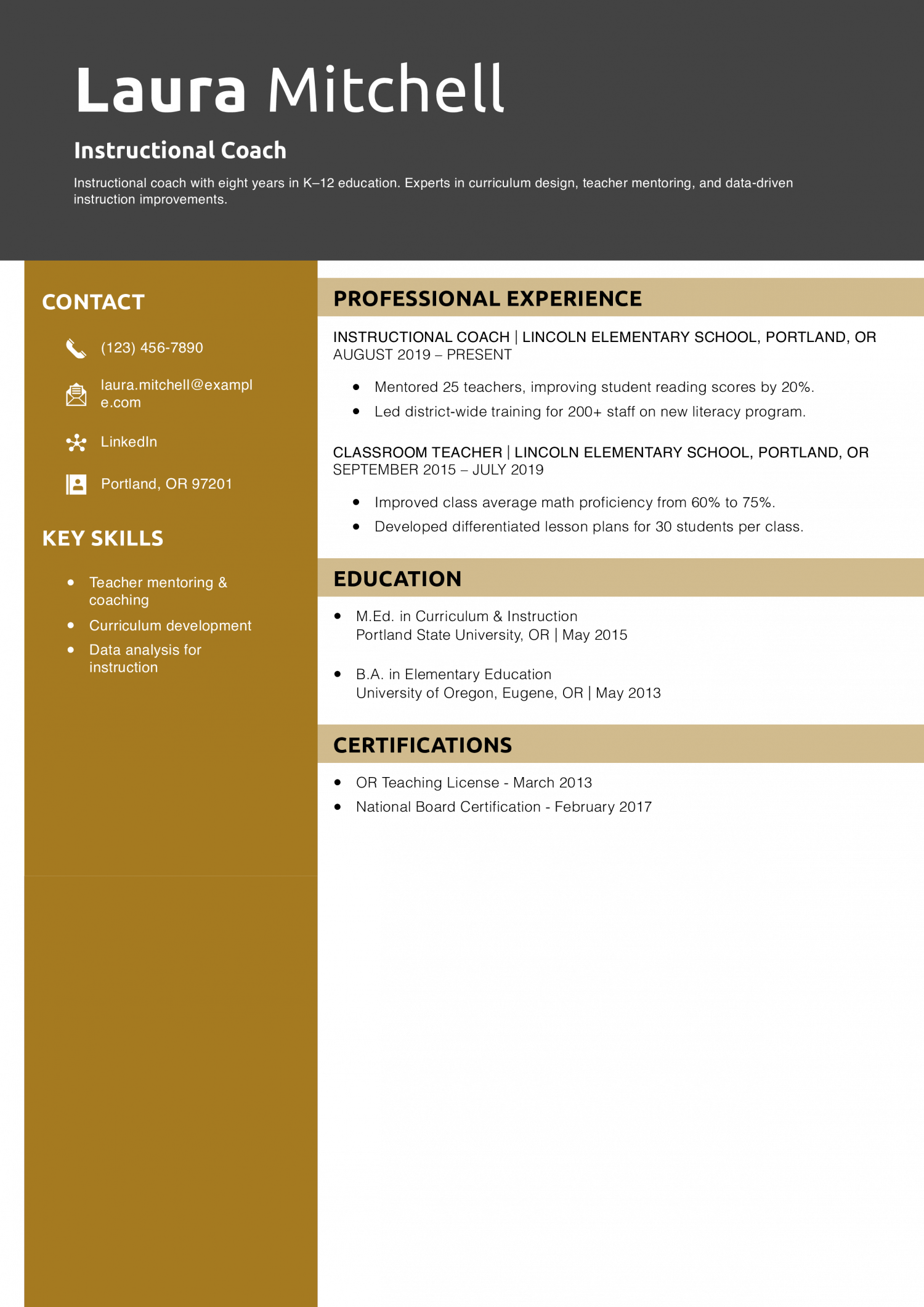
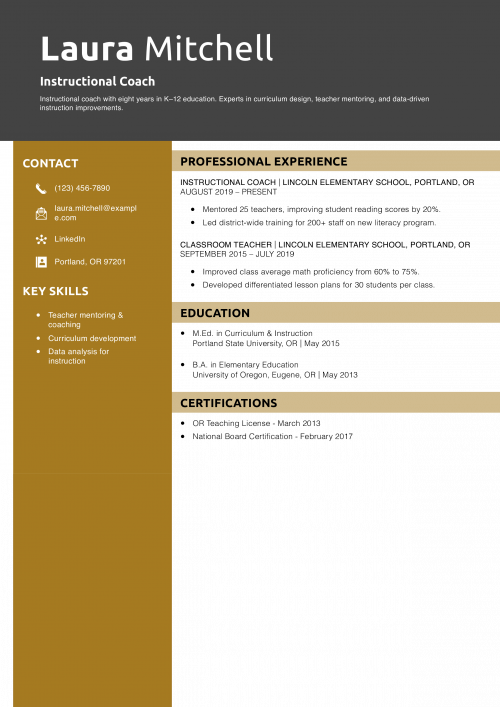
Why This Resume Is a Great Example
Laura’s resume pairs teacher development outcomes with clear student achievement gains.
Expert Tip: Use before‑and‑after student metrics to highlight instructional impact. For more tips, see How to Write a Resume with No Experience.
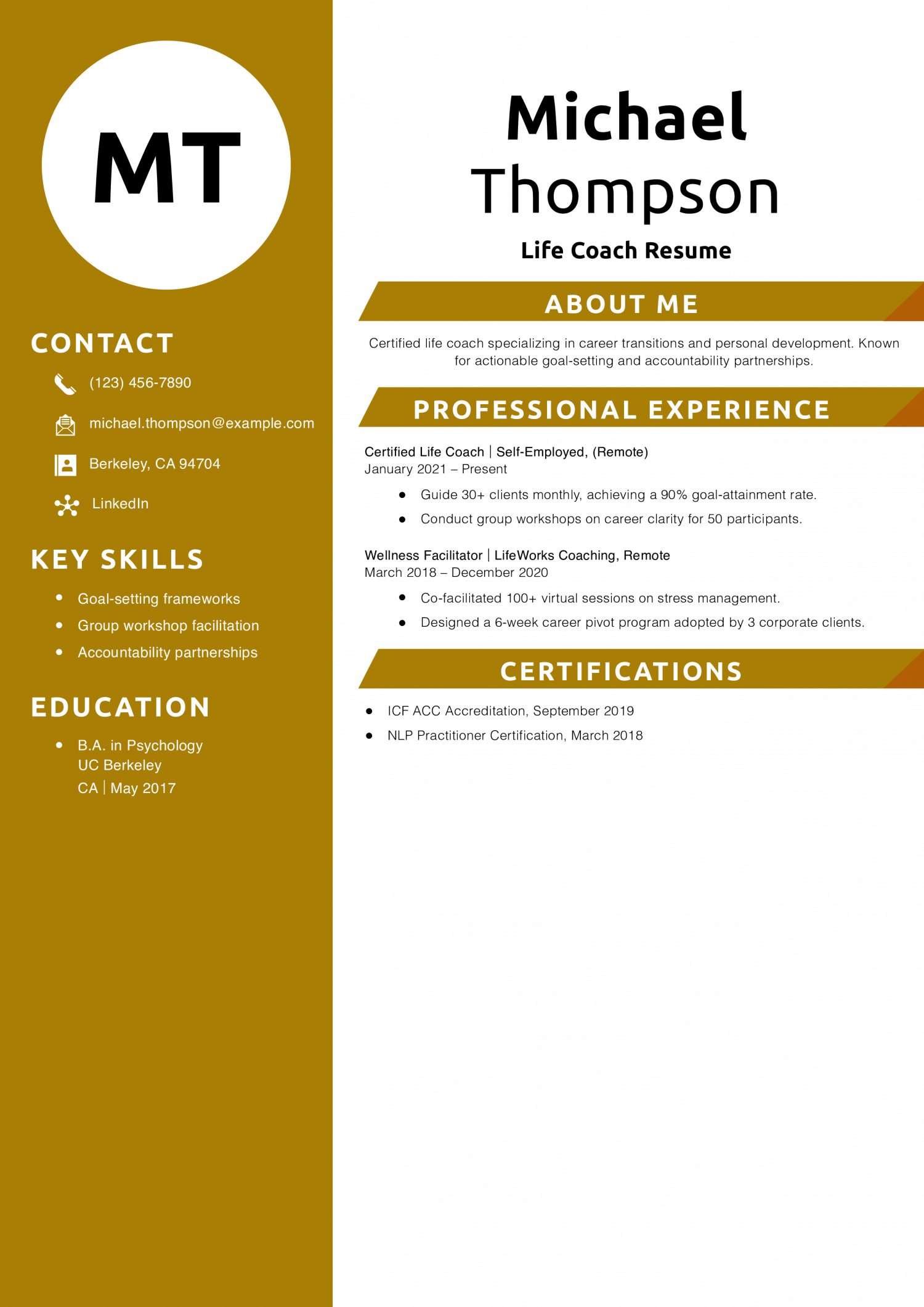
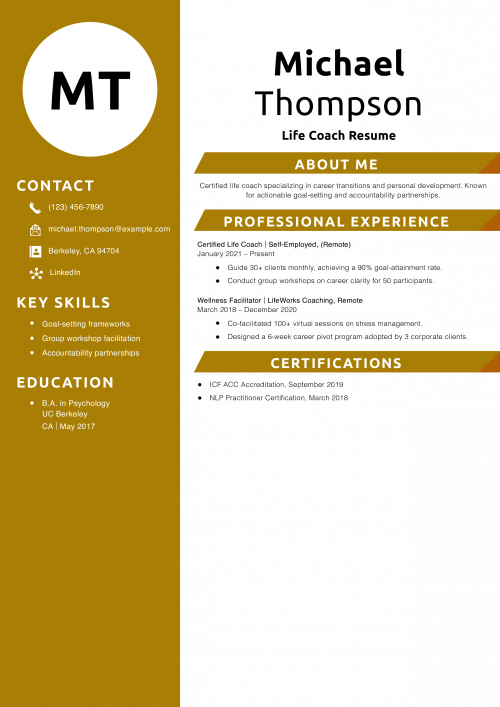
Why This Resume Is a Great Example
Michael’s resume highlights high goal‑attainment rates and corporate program design.
Expert Tip: Quantify your client success rates to illustrate coaching effectiveness. For more tips, see How to List Volunteer Work Experience on a Resume.
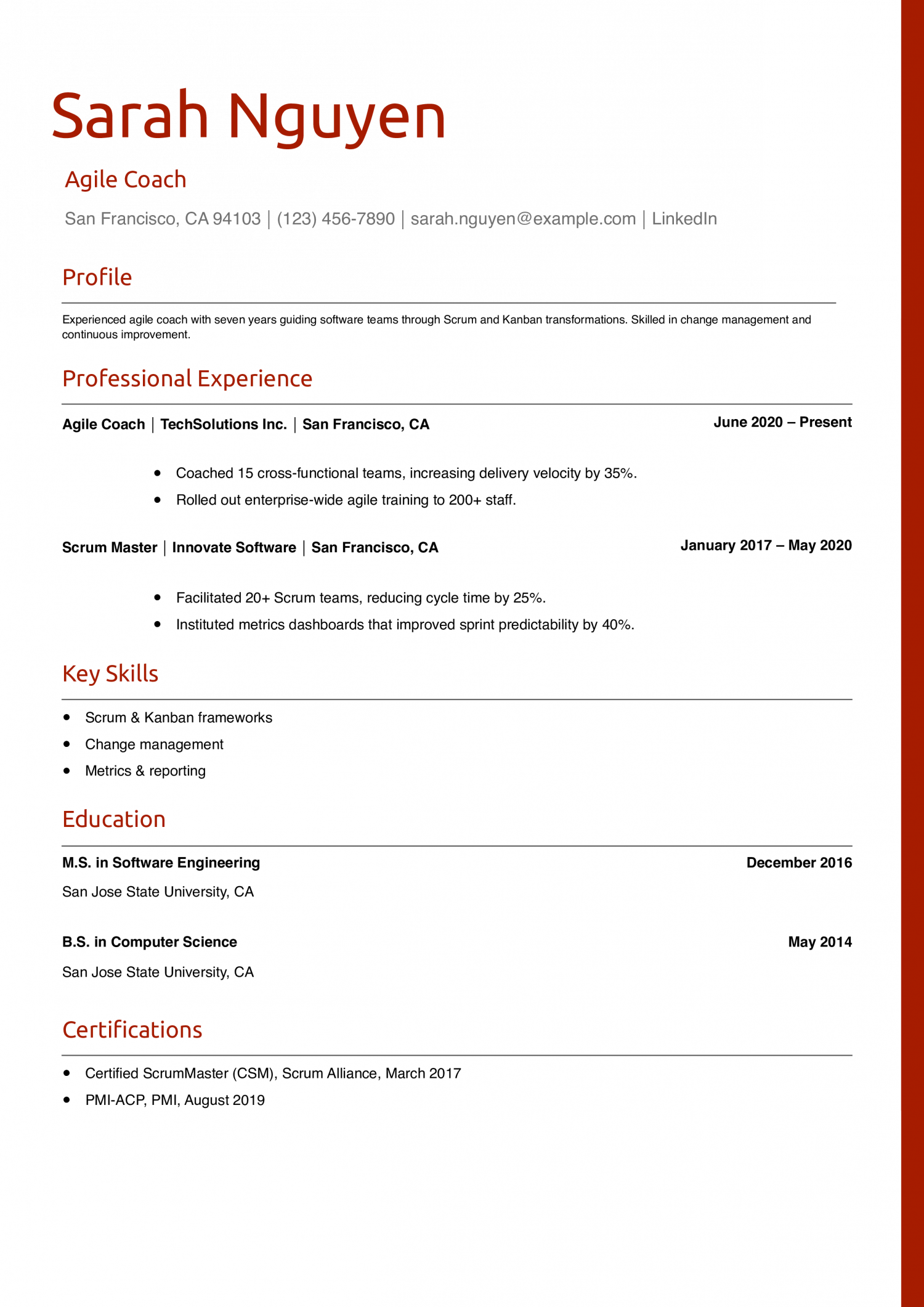
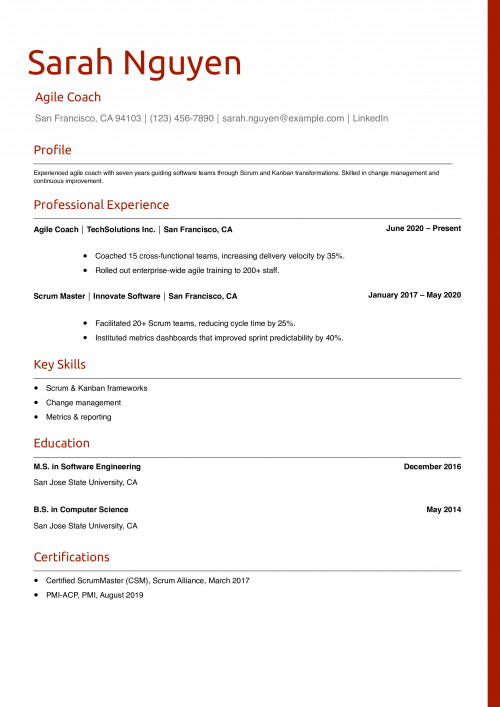
Why This Resume Is a Great Example
Sarah’s resume demonstrates clear velocity and predictability improvements in agile implementations.
Expert Tip: Highlight your percentage gains in delivery metrics to showcase coaching impact. For more tips, see What Hobbies to Put on a Resume.
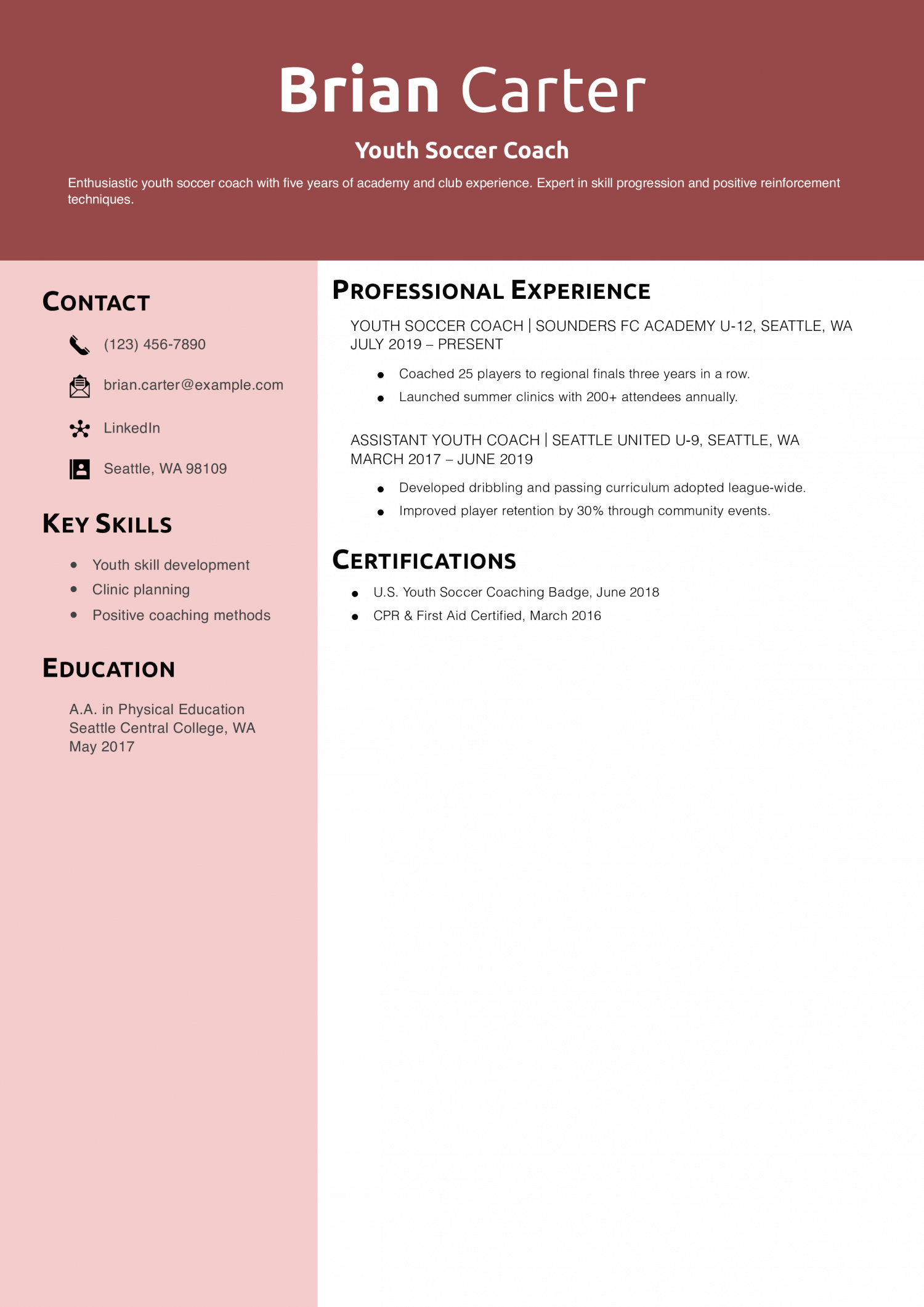
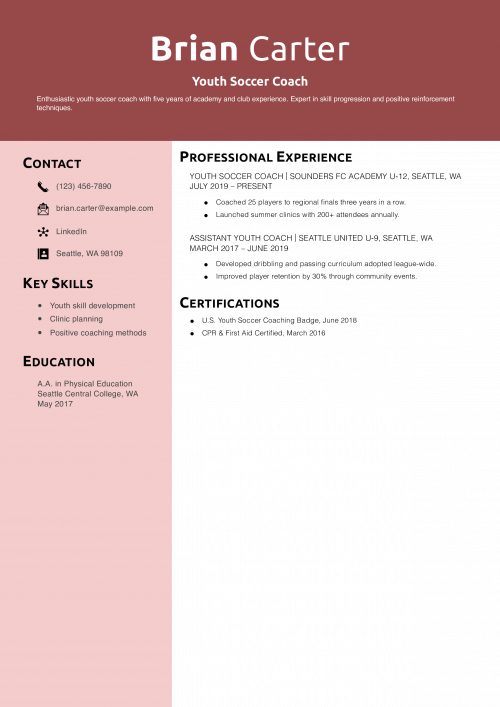
Why This Resume Is a Great Example
Brian’s resume highlights repeated finalist appearances and strong retention metrics.
Expert Tip: Showcase player‑retention and finalist stats to underscore program success. For more tips, see How to List Skills on a Resume.
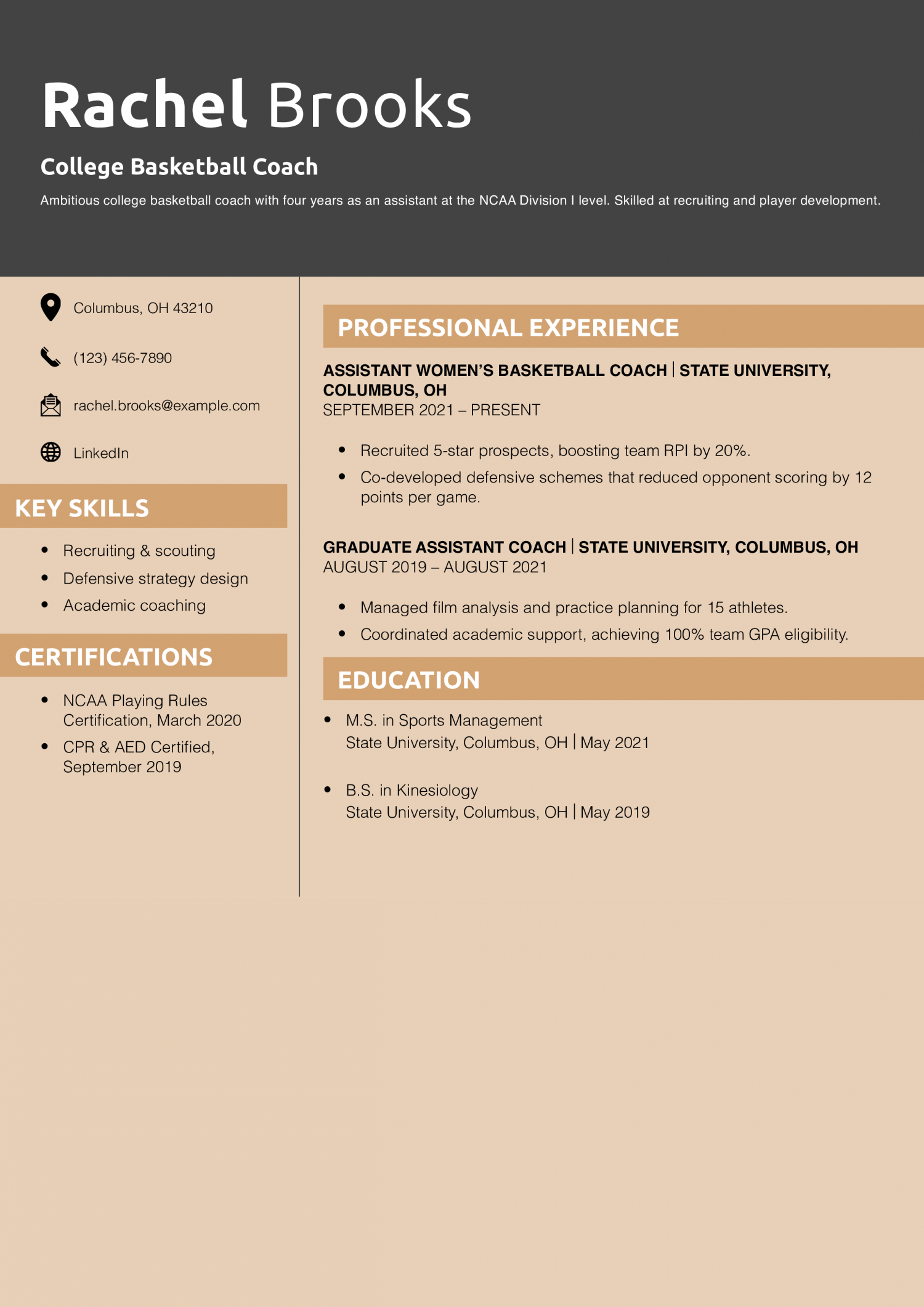
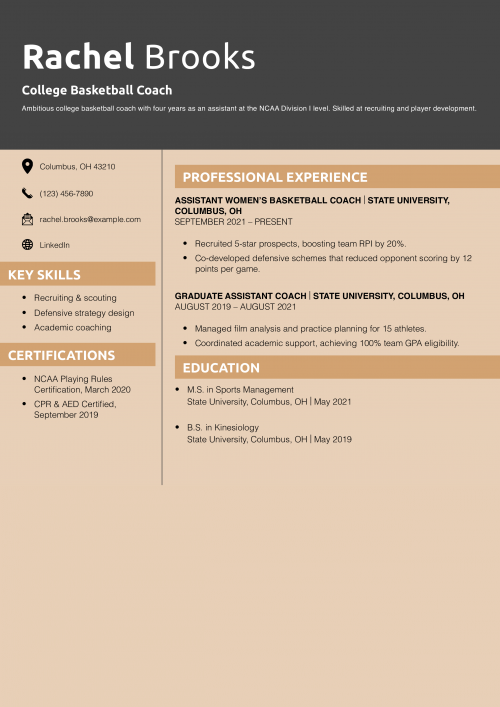
Why This Resume Is a Great Example
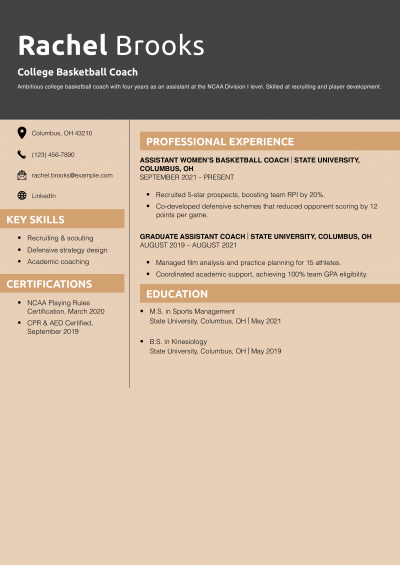
Rachel’s resume showcases recruiting impact and defensive performance improvements.
Expert Tip: Use RPI and points‑allowed stats to quantify competitive gains. For more tips, see How to List Degree on a Resume.
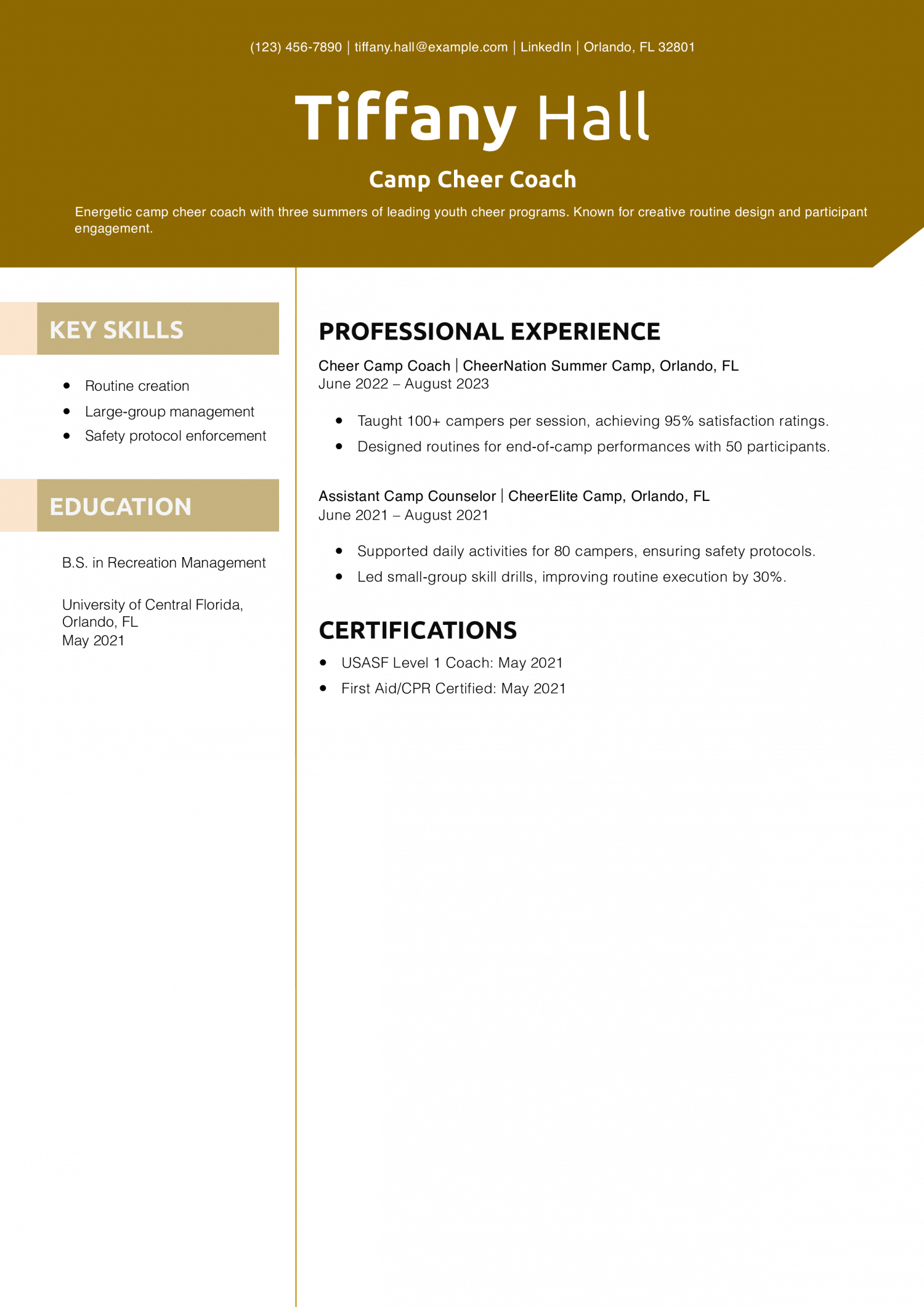
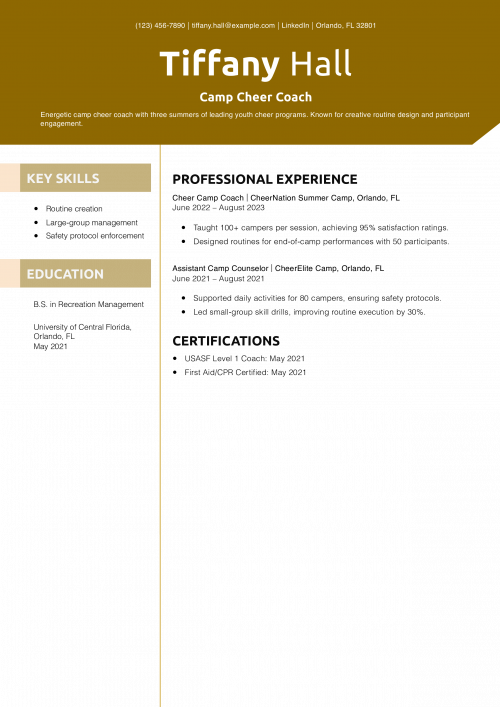
Why This Resume Is a Great Example
Tiffany’s resume demonstrates camper satisfaction rates and routine performance improvements.
Expert Tip: Highlight satisfaction metrics to showcase program success. For more tips, see Resume Objective Examples.
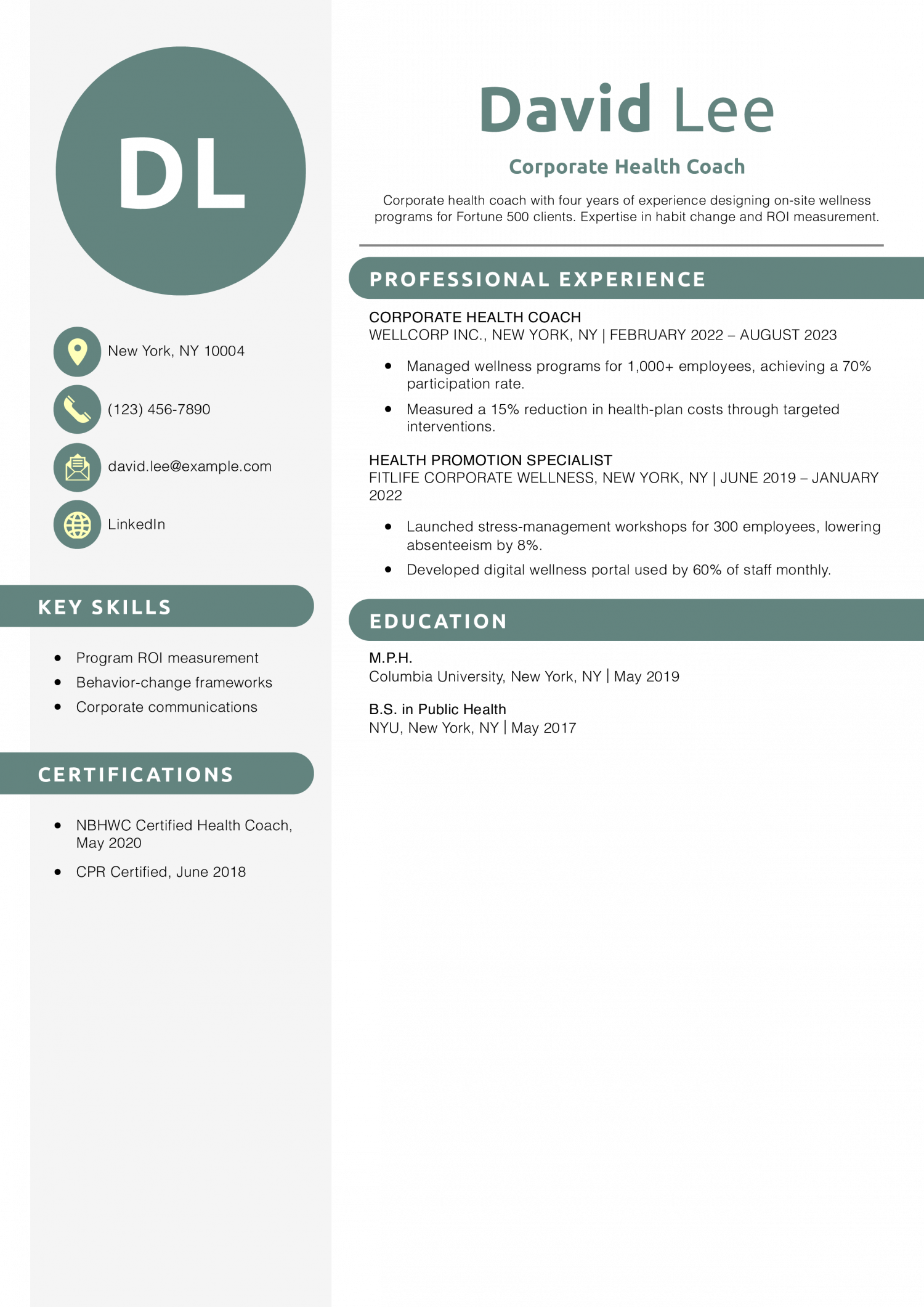
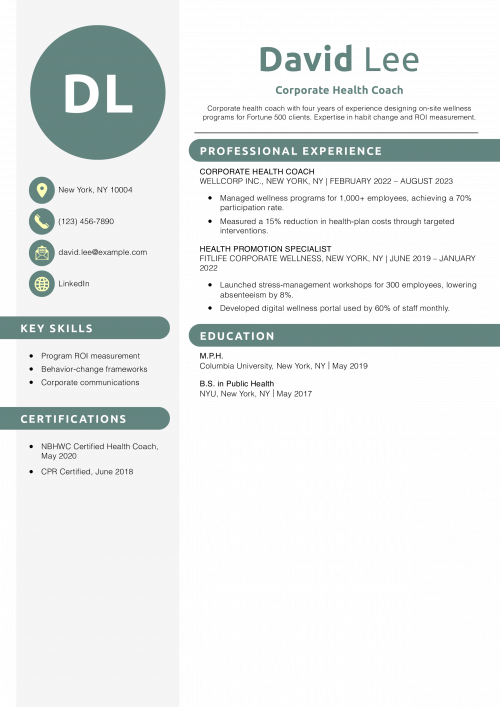
Why This Resume Is a Great Example
David’s resume pairs high participation rates with quantifiable cost savings.
Expert Tip: Use cost‑reduction percentages to illustrate program value. For more tips, see What to Put on a Resume.
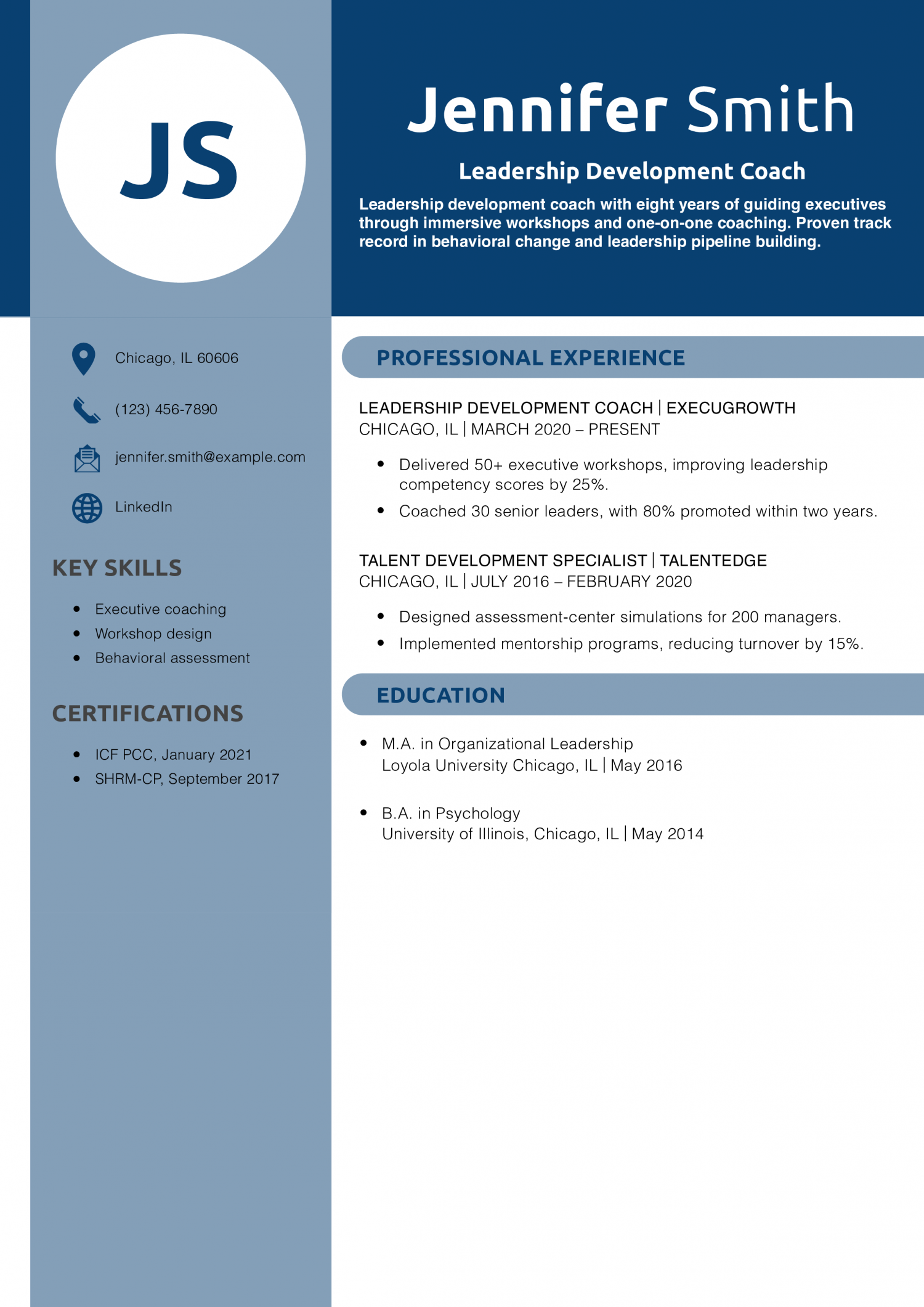
Why This Resume Is a Great Example
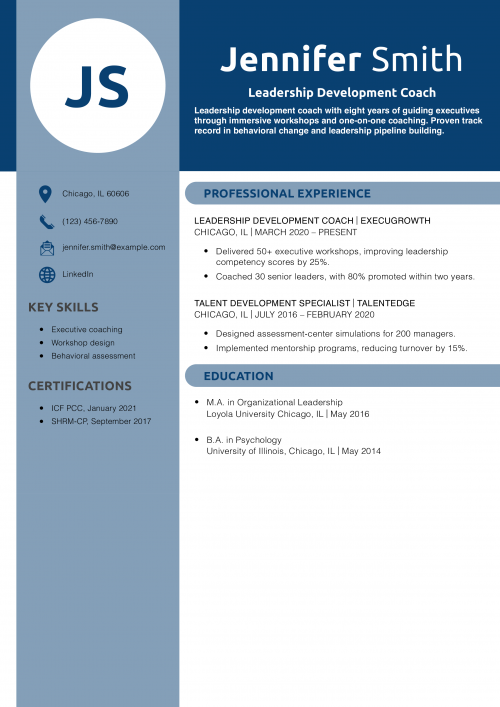
Jennifer’s resume quantifies leadership competency gains and promotion rates.
Expert Tip: Highlight promotion percentages to demonstrate coaching ROI. For more tips, see the Core Competencies Resume.
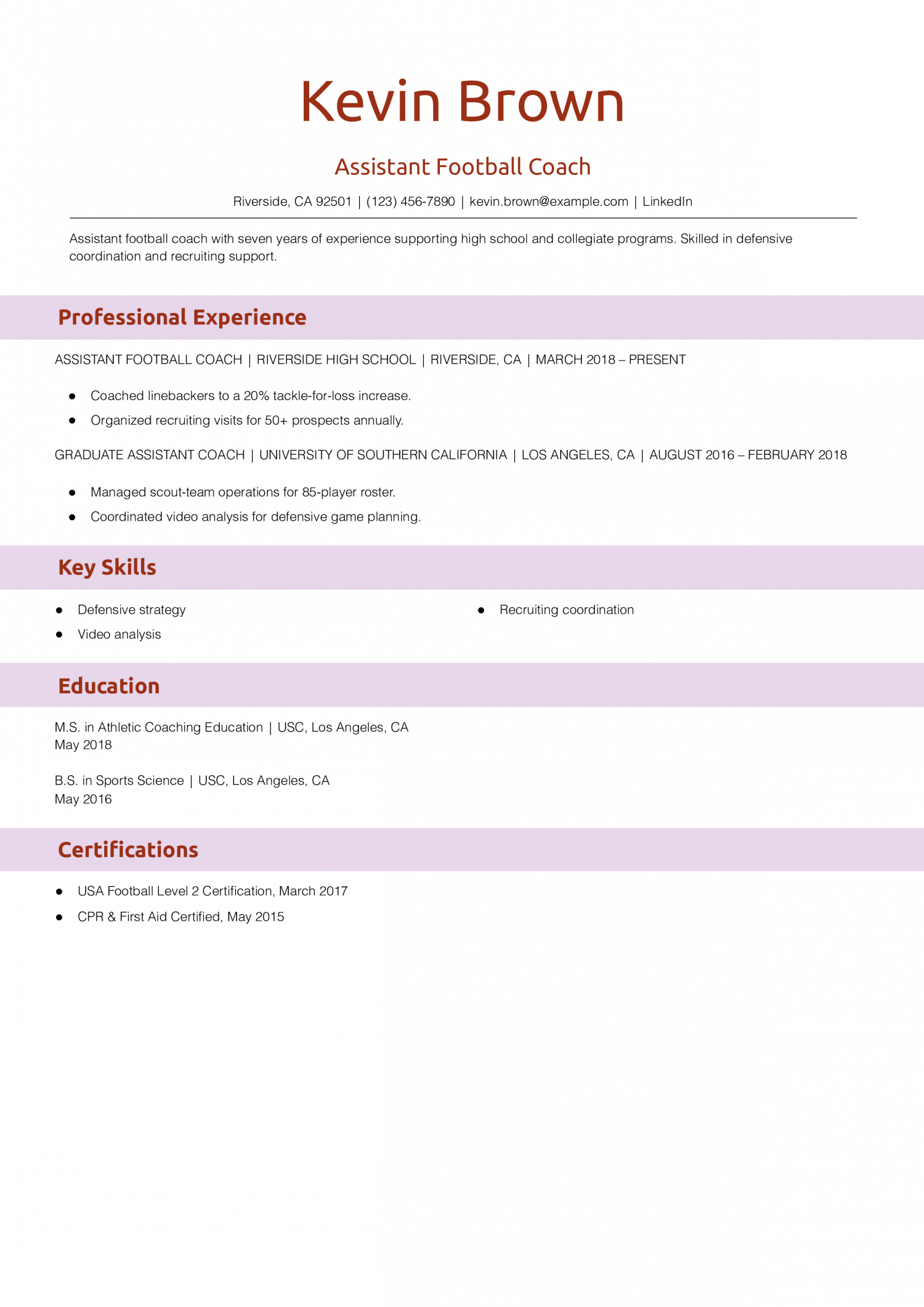
Why This Resume Is a Great Example
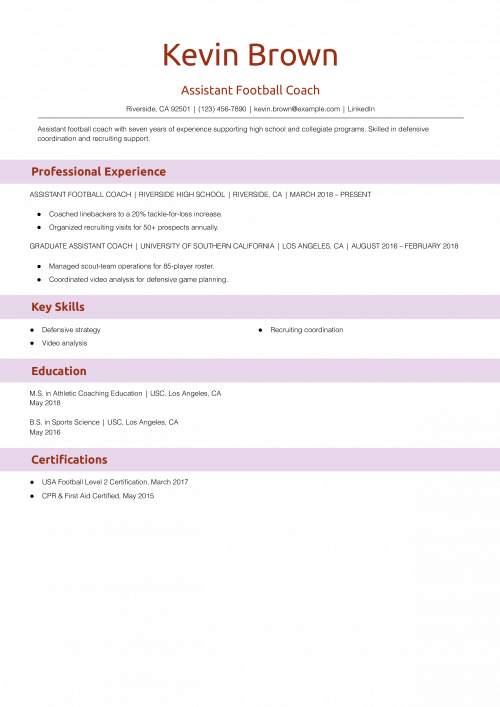
Kevin’s resume features clear defensive performance metrics and recruiting achievements.
Expert Tip: Use tackle‑for‑loss and prospect numbers to quantify your support role. For more tips, see Resume Keywords.
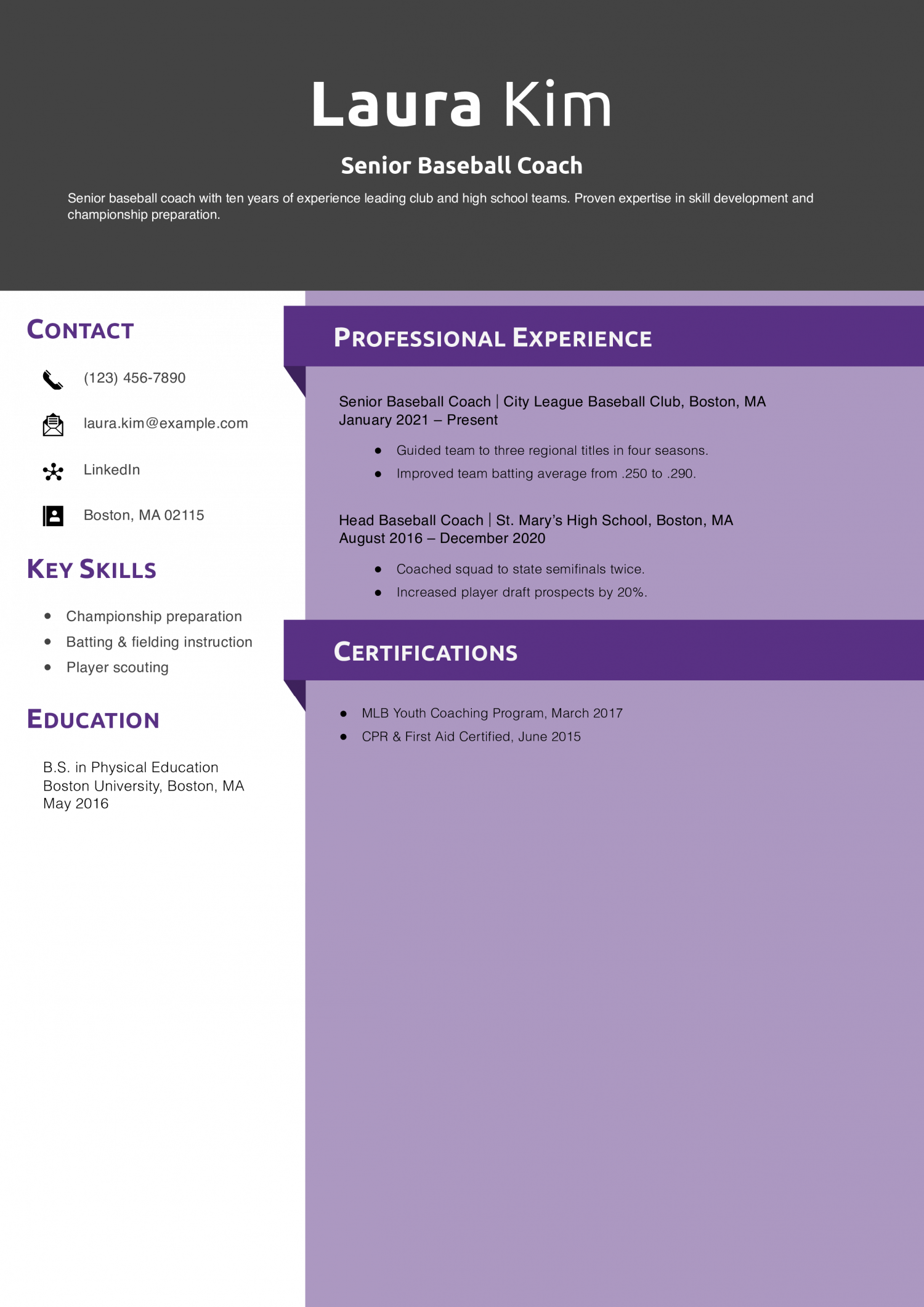
Why This Resume Is a Great Example
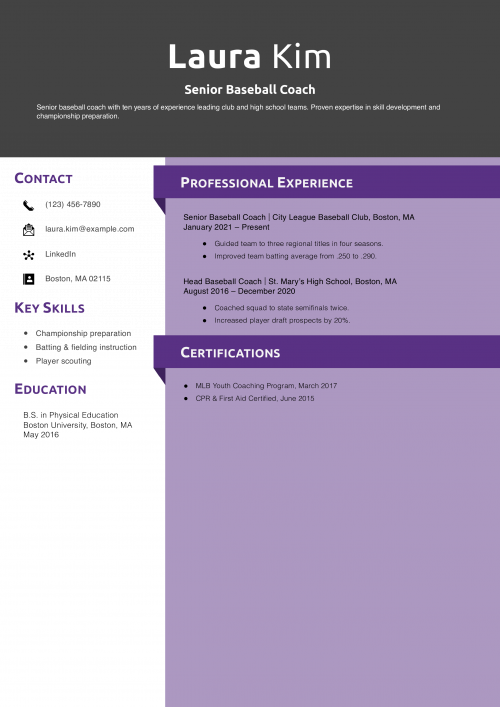
Laura’s resume highlights multiple titles and clear batting improvements.
Expert Tip: Highlight championship counts and average increases for maximum impact. For more tips, see How to Put Contact Information on Your Resume.
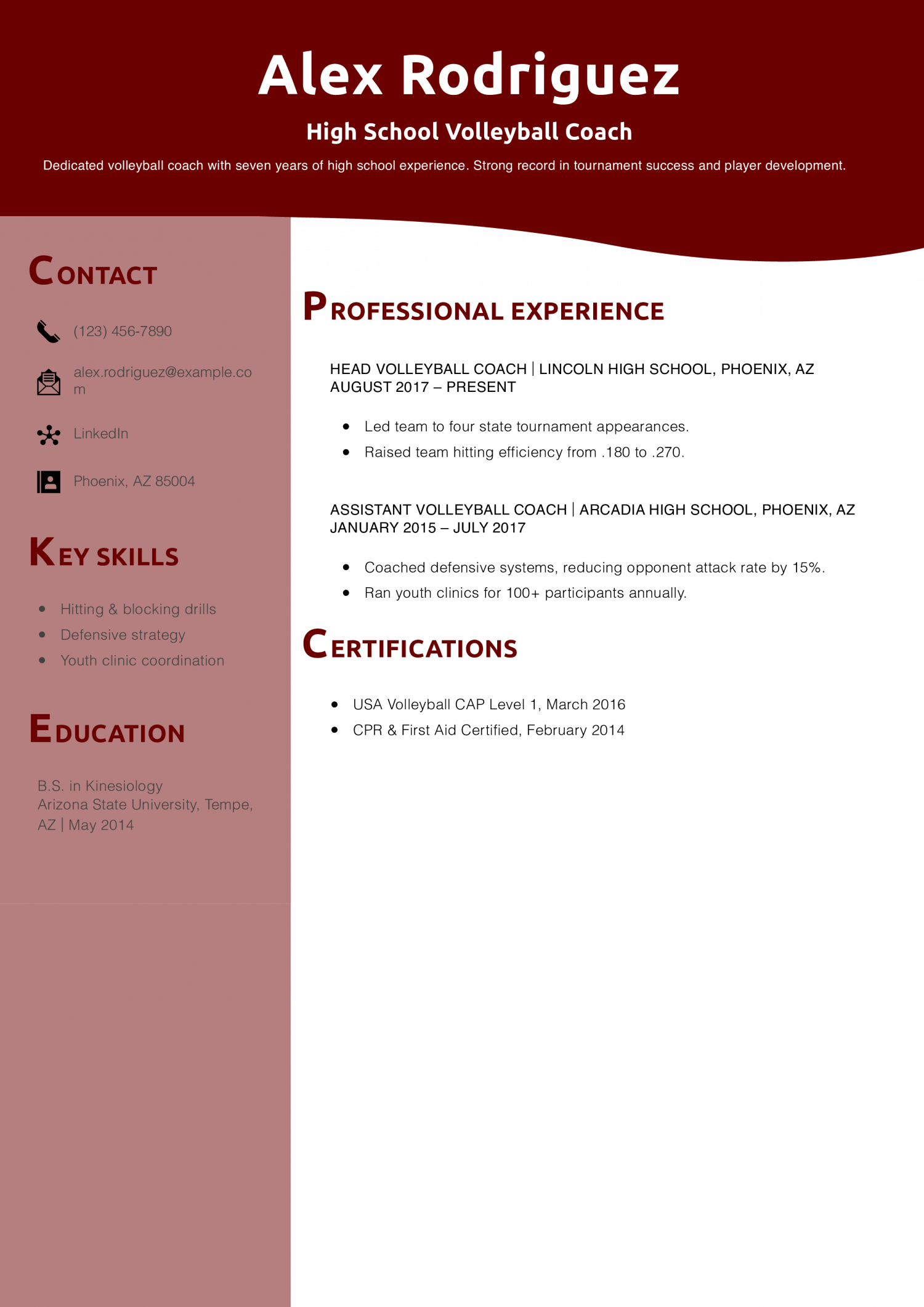
Why This Resume Is a Great Example
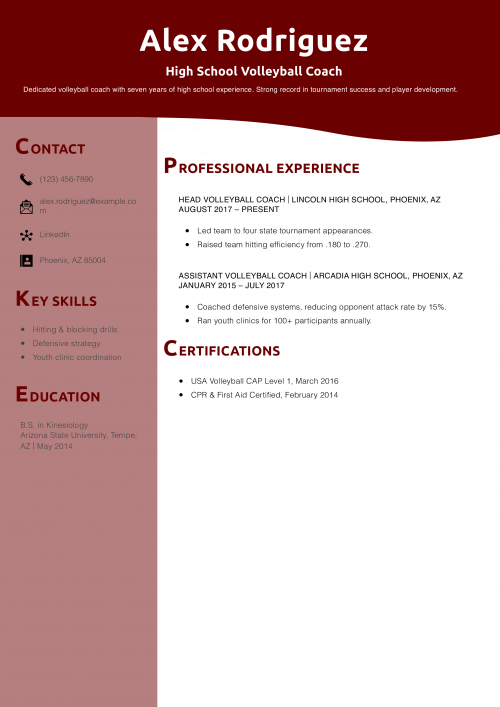
Alex’s resume showcases consistent tournament appearances and efficiency gains.
Expert Tip: Use hitting‑efficiency improvements to quantify your coaching success. For more tips, see How to Tailor a Resume to a Job Description.
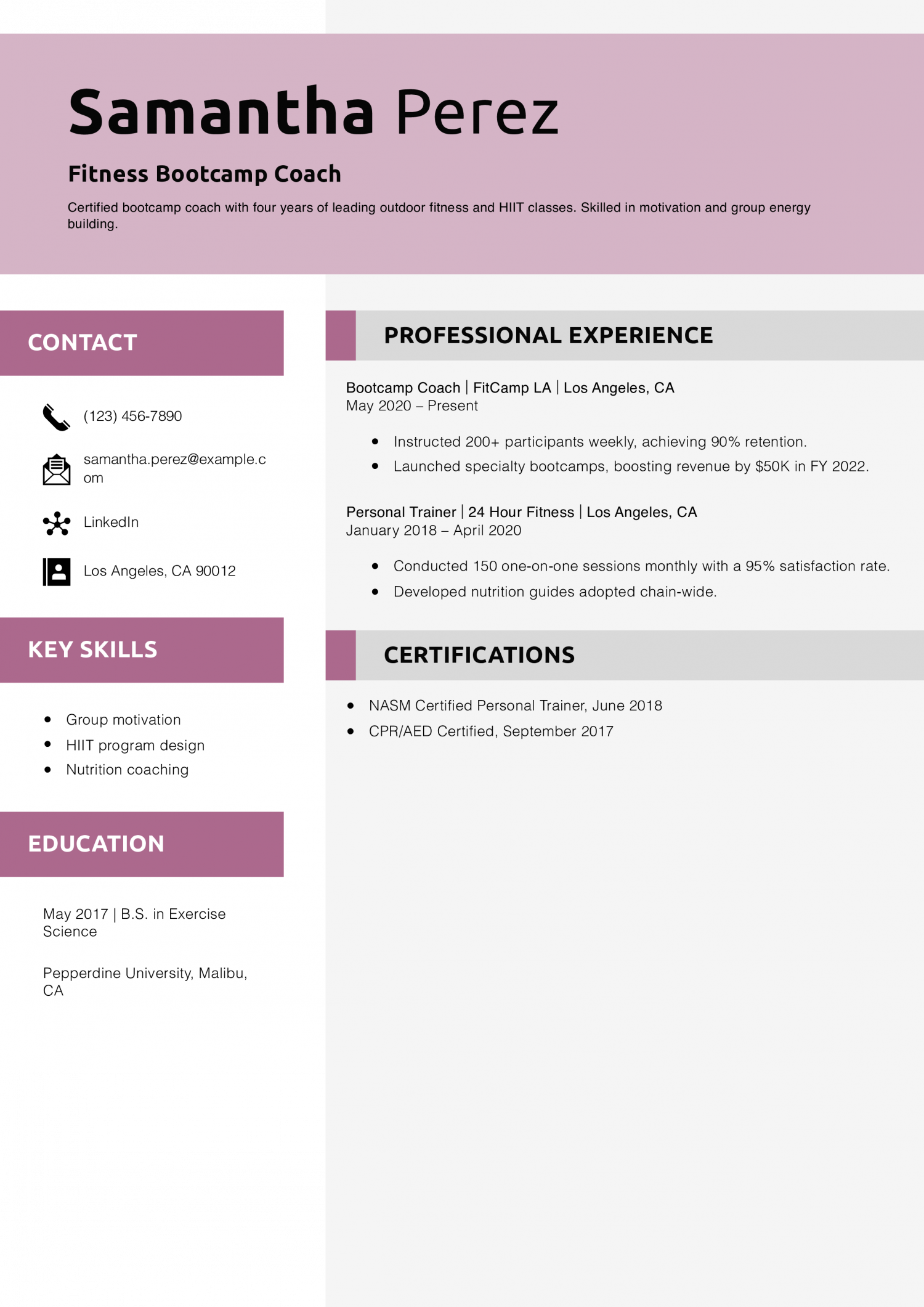
Why This Resume Is a Great Example
Samantha’s resume highlights retention rates and revenue growth from specialty programs.
Expert Tip: Showcase retention percentages and revenue figures to underline program success. For more tips, see Resume Personal Statement Examples.
Hiring managers need to know that you can guide, support, and motivate people to achieve goals. Every part of your resume should speak to this ability. Your coaching resume should include these sections:
In the header of your resume, include your full name, phone number, email address, location, and links to your professional coaching profile. Make sure all of your information is up-to-date so hiring managers can easily contact you for an interview.
Your Name
(123) 456-7890
[email protected]
City, State Abbreviation Zip Code
LinkedIn | Portfolio
Your profile is a summary of your coaching philosophy and career highlights rolled into one brief paragraph. To make a strong first impression on the hiring committee, list your job title and those unique strengths that make you an excellent fit for the job. Consider mentioning relevant specializations, like experience with a specific industry, age group, or coaching methodology.
Articulate how your coaching style addresses common challenges in your niche, whether helping executives navigate change or guiding athletes to peak performance. This could involve mentioning transformative outcomes you’ve consistently achieved in your work or a pivotal coaching approach that’s had a lasting impact on your clients.
Performance director with over 10 years of experience in sports science and athlete development. Designs comprehensive training programs that consistently elevate performance across multiple sports. Recognized for pioneering evidence-based assessments to optimize training and maximize athlete potential.
Board-certified health and wellness coach with two years of experience empowering clients to achieve sustainable lifestyle changes. Recognized for creating personalized care plans and collaborating with interdisciplinary teams to provide holistic support.
Next, detail your coaching history by describing the strategic moves and key plays that have defined your career. Show what you were in charge of and how you approached your responsibilities. Even more important than listing job duties, highlight your major successes, like improving a client’s work-life satisfaction score or finally taking home that state championship trophy.
As a motivational leader, you sometimes face challenging situations. Remember to mention the breakthroughs you’ve had as a coach, such as helping a struggling athlete overcome performance anxiety or guiding a resistant executive team through organizational change. Show hiring managers you can navigate complex human dynamics.
Performance Director, Gridiron Athletics, Knoxville, TN
June 2021 – present
Health & Wellness Coach, Viori Health, Remote
June 2023 – present
In the same way stats and scores allow you to assess a team’s performance, quantified job descriptions give a factual, straightforward view of your impact as a coach. Numbers help convey the scope of your responsibilities and accomplishments. Use them to describe things such as how many athletes you led or the measurable performance improvements a team made.
Every coaching position has unique requirements, just like the people you coach. To show you’ve done your homework and convey that you’re the perfect fit for the job, tailor every resume you submit. This increases the likelihood that you’ll get an interview and make it through ATS filters. Research the organization and understand the role requirements, then adjust your resume.
For example, if the job description mentions “fostering a growth mindset in high-pressure environments,” determine how your own experience aligns. Highlight instances where you implemented resilience-building techniques and improved your client’s ability to handle stress or setbacks. These slight adjustments will make all the difference in showing how you qualify.
You might not have a long list of coaching victories yet, so start with your related experiences, even if they weren’t coaching jobs. Maybe you were a team captain, camp counselor, or cafe supervisor. These experiences will help demonstrate important skills like motivational leadership, team collaboration, and mentorship.
If you’ve done volunteer work that involves helping others grow, include this in your resume. This could be coaching a local youth sports team or leading community workshops. Consider your academic history as well and list postsecondary degrees, coursework, and credentials related to your coaching niche.
For coaching positions within sports, especially at the high school or college level, a bachelor’s degree is often required or highly preferred. However, other types of coaching positions may not have any academic prerequisites at all. No matter your level of education, list your highest degree first, the institution where you earned it, and the graduation year.
Include relevant industry-specific certifications, continuing education courses, and workshops you’ve completed alongside your education. This additional training can differentiate you from other top candidates, and for newer coaches, these credentials can help compensate for limited experience.
Template:
[Degree Name]
[School Name], [City, State Abbreviation] | [Graduation Year]
Example:
Bachelor of Science (B.S.) Physical Education
University of California, San Diego, CA | June 2016
Template:
[Certification Name], [Awarding Organization], [Completion Year]
Example:
Performance Enhancement Specialist, National Academy of Sports Medicine, 2015
To demonstrate the range of coaching tools you have at your disposal, create a key skills list. You won’t have enough space to include every skill, so be intentional and look to the job posting for guidance on which ones to prioritize. Highlighting skills that directly respond to the job description shows that you’re not only a great coach but the right one for this specific role.
Check out these examples:
| Hard Skills | |
|---|---|
| Cognitive behavioral therapy (CBT) | Dietary planning and nutrition counseling |
| Financial guidance | Group facilitation |
| Motivational interviewing | Neuro-linguistic programming (NLP) |
| Performance metrics tracking | Strength training and conditioning |
| Stress management techniques | Wellness program design |
| Soft Skills | |
|---|---|
| Accelerated rapport building | Adaptive communication |
| Behavioral pattern recognition | Client-coach boundary management |
| Conflict de-escalation | Constructive feedback delivery |
| Crisis intervention | Emotional regulation guidance |
| Group dynamics management | Positive reframing techniques |
Action verbs command attention and emphasize the impact of your work. Use them in your professional experience section to show you’re not just sitting on the sidelines but taking initiative as a coach. Instead of saying something like “I was responsible for,” start bullet points with words like “developed” or “transformed” to clearly depict your past roles.
Consider using some of the action verbs below to add a dynamic element to your coaching resume:
| Action Verbs | |
|---|---|
| Analyzed | Coached |
| Coordinated | Cultivated |
| Developed | Directed |
| Encouraged | Implemented |
| Mentored | Motivated |
| Strategized | Supervised |
| Trained | |
Coaches are more than cheerleaders — they’re role models and mentors. How you present yourself matters and will impact how potential employers perceive you. So, prioritize templates with a professional look. That means a limited color palette, easy-to-read fonts, and a well-organized layout.
However, keep your personal brand in mind. A high-energy youth sports coach might opt for a more dynamic design, while a senior-level director could benefit from something more understated and traditional.
Your Coaching CV should include a strong profile summary that emphasizes your specializations and key skills. Highlight any specific accomplishments that show your ability to impact the company, such as saving money, improving processes, or leading teams. Tailor the skills section to match the requirements of the job you're applying for to increase your chances of being noticed.
The demand for sports coaches and wellness professionals is expected to increase over the coming years, but you'll still need a standout resume to land the best coaching jobs. To connect with hiring managers, you must tailor your resume for every role you apply for. As a coach, you're an expert at making strategic adjustments, so apply this skill to your resume by aligning your resume with the job description.
Identify the skills and qualifications required and match them with your own abilities, incorporating those keywords throughout your resume. Address the employer's needs naturally without simply copying, pasting, and hoping for the best. Provide evidence of how you've successfully applied these skills and qualifications in the past.
Coaches benefit from the traditional chronological format. The majority of the page is occupied by your work history, starting with your most recent position. It's easy to follow and puts your most important information on display: real-world experience.
Much like tracking a client's improvement over time, this format focuses on your career growth, giving hiring managers a big-picture view of your professional progress. They'll walk away with a clear understanding of your coaching style and what you could bring to their organization.
A cover letter can be a game-changer for your coaching application. It’s like the pre-game pep talk that gets hiring managers excited about putting you in the game. Share success stories from your past, explain why you’re qualified to take on the role and expand on your most impressive coaching achievements.
Executive Resume Writer and Career Coach
Andrew Stoner is an executive career coach and resume writer with 17 years of experience as a hiring manager and operations leader at two Fortune 500 Financial Services companies, and as the career services director at two major university business schools.
Resume Templates offers free, HR approved resume templates to help you create a professional resume in minutes. Choose from several template options and even pre-populate a resume from your profile.