
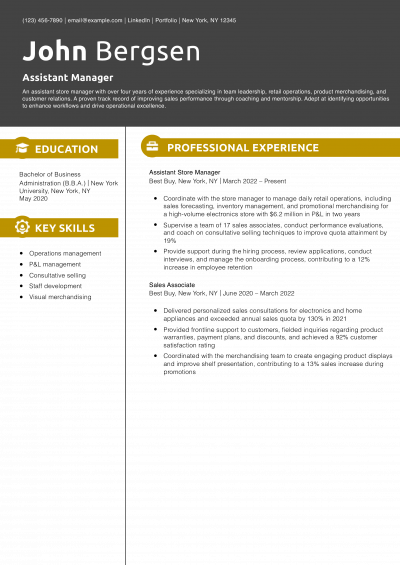
3 Best Assistant Manager Resume Examples and Templates for 2025



For your property management career, write a well-crafted resume that effectively showcases your expertise and accomplishments in the real estate industry. Whether you’re a real estate expert seeking new opportunities or a professional entering the field, our guide will help you create an impactful resume. Explore our real property manager resume examples and learn how to feature your abilities in leasing, tenant relations, property maintenance, and financial management.
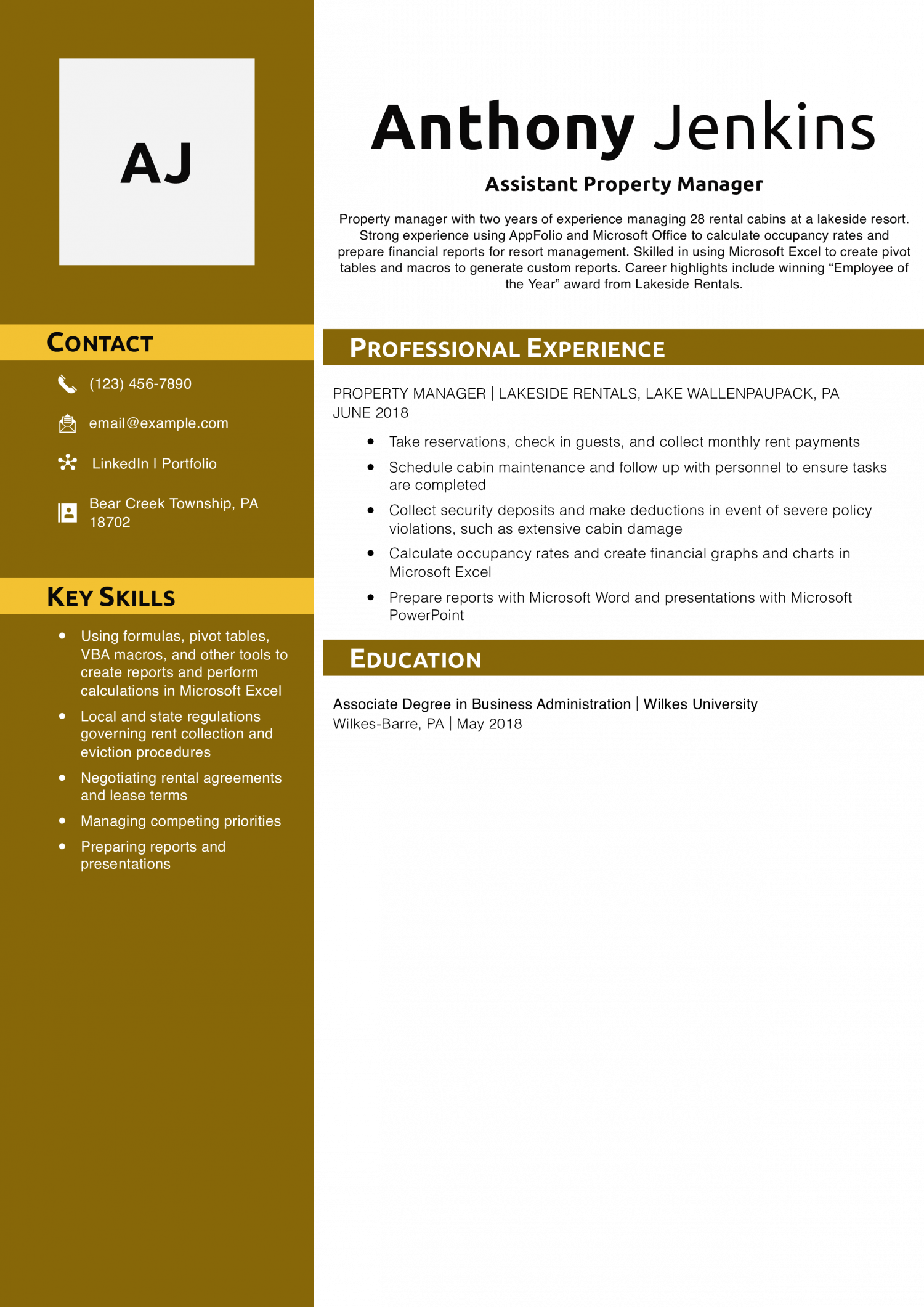
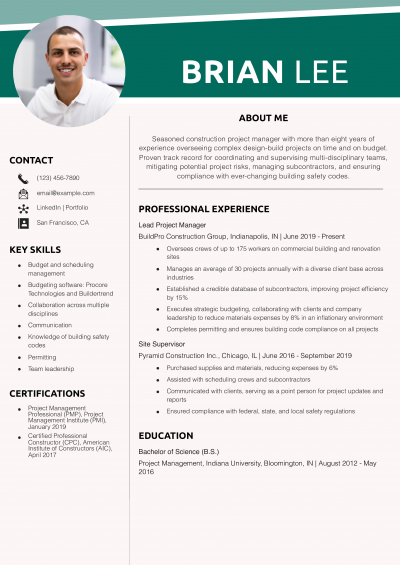
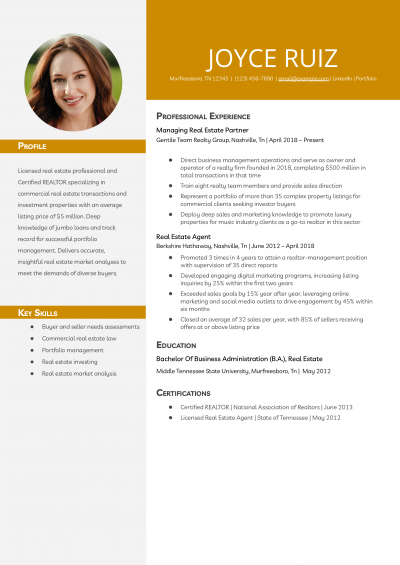
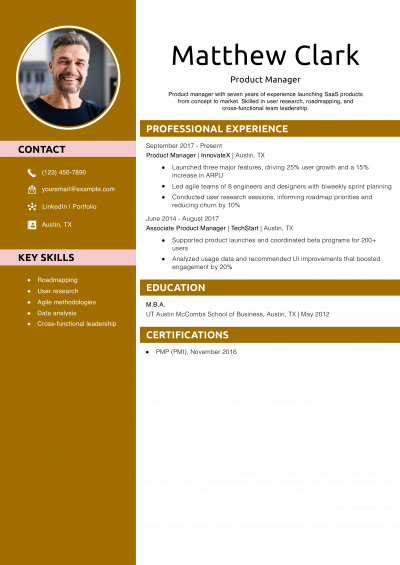
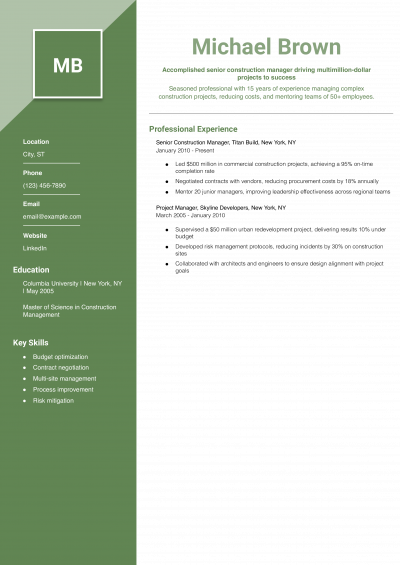
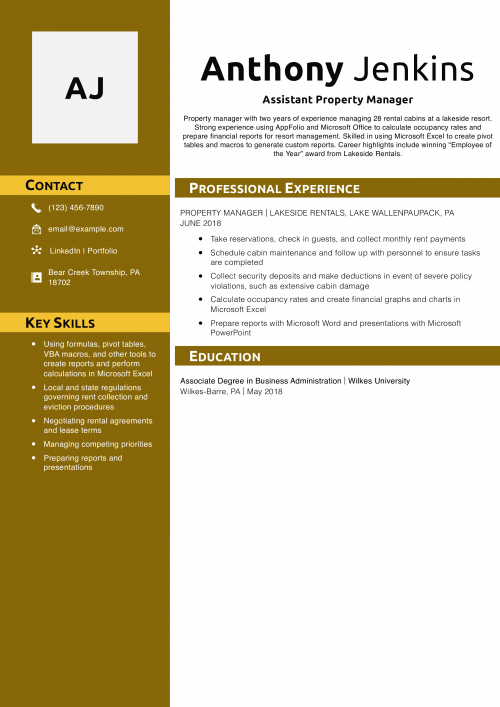
This entry-level resume lists key skills before the candidate’s limited experience to illustrate they have the skills hiring managers are looking for.
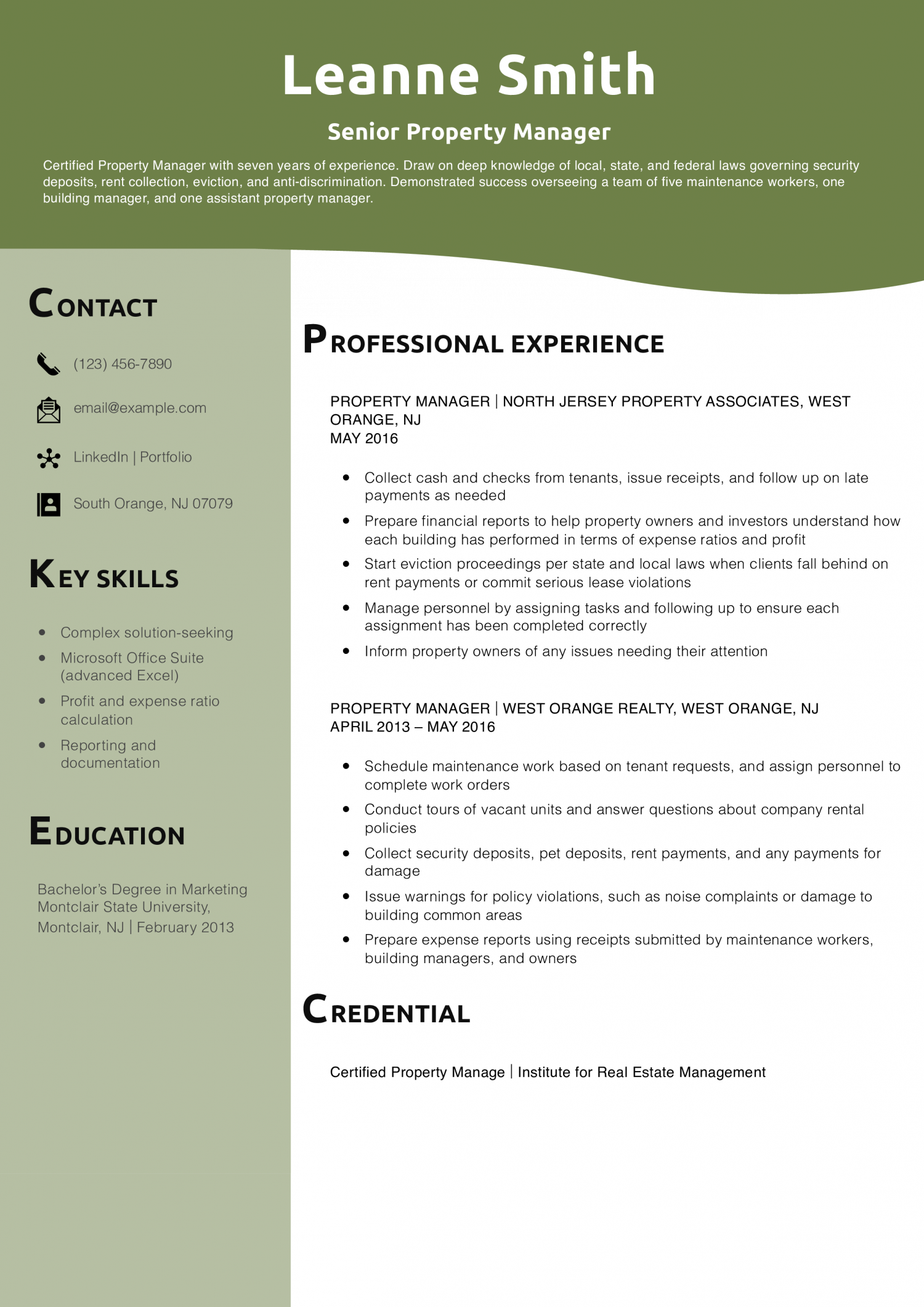
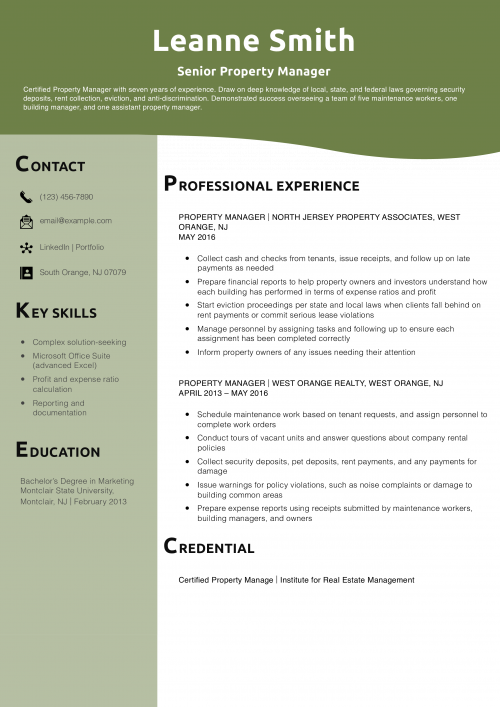
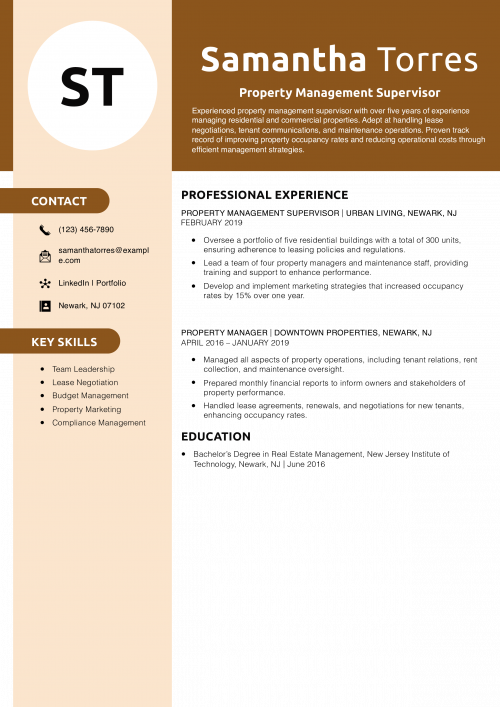
This resume uses a detailed profile, rich with keywords, to summarize the candidate’s skills and experience at the very top of the resume.
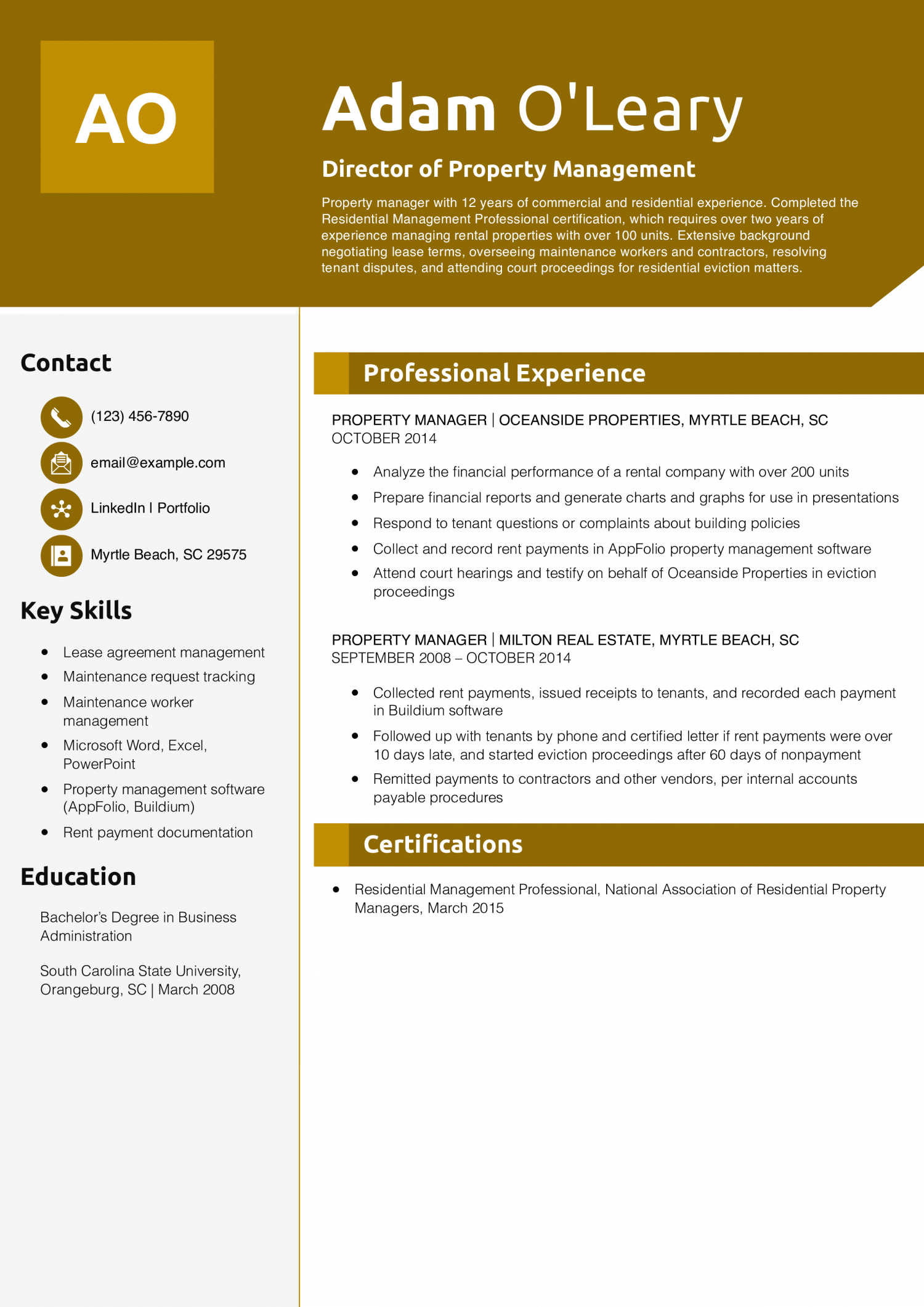
This resume lists essential statistics about the candidate’s experience and accomplishments in the profile at the top and the bullet points under the professional experience entries.
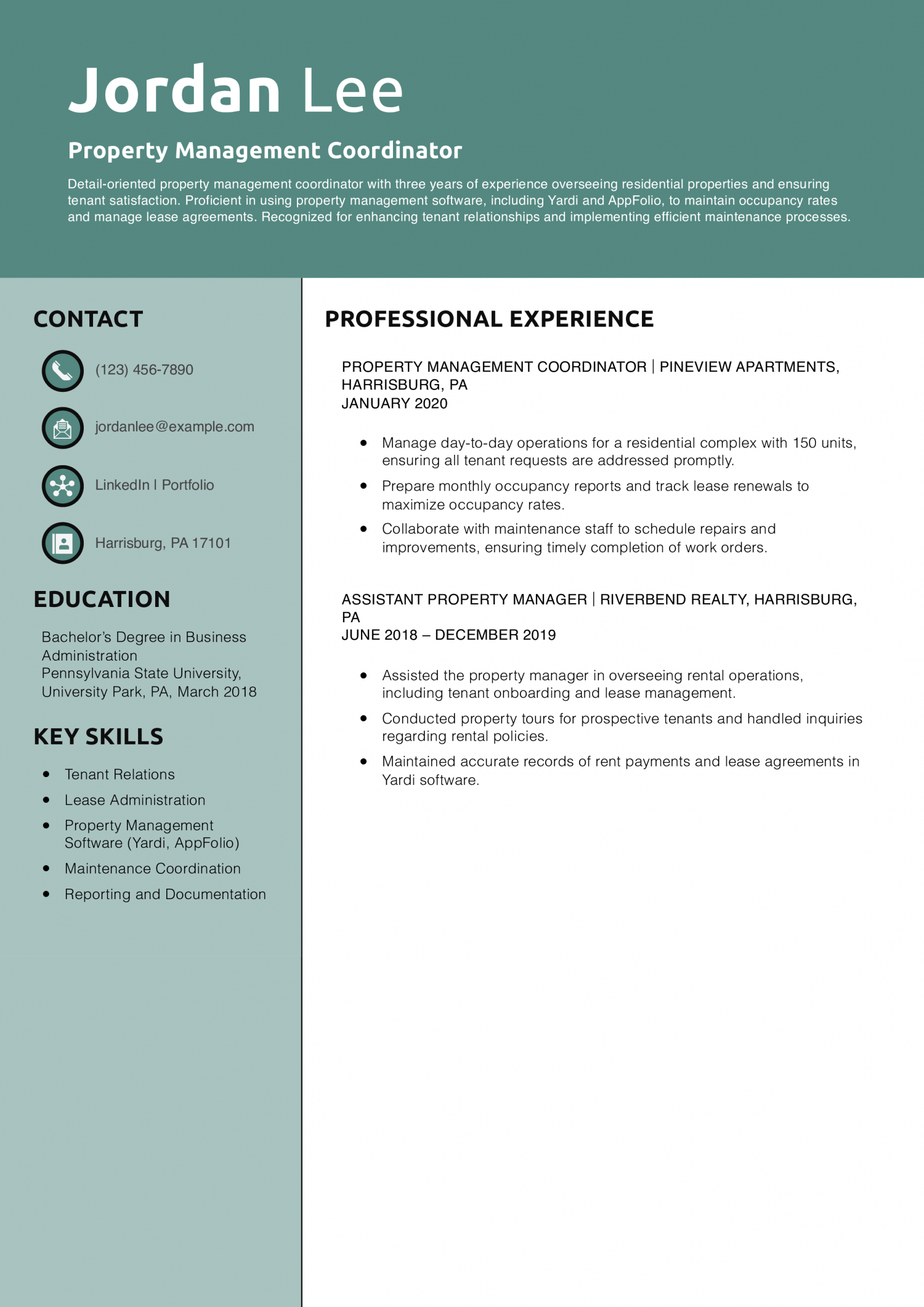
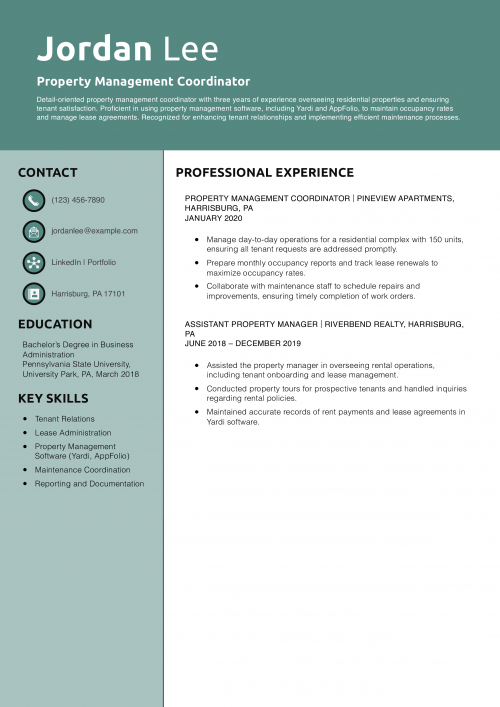
This resume emphasizes the candidate’s relevant experience in tenant relations and property management software, making it appealing for entry-level positions in property management. For tips on what to include in your resume, visit this resource on what to put on a resume.
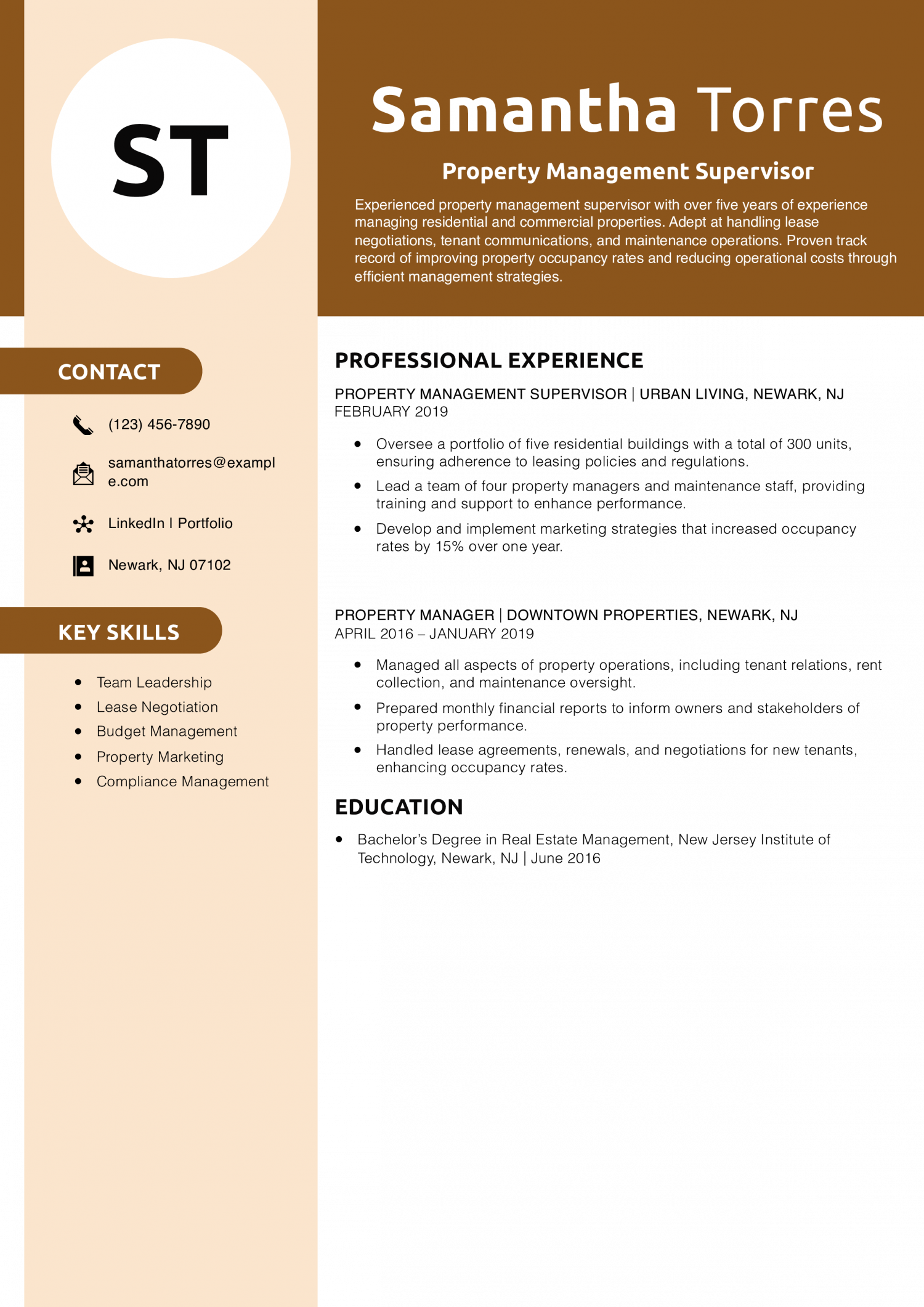
This resume uses a detailed profile rich with keywords to summarize the candidate’s skills and experience at the very top, making it easy for hiring managers to assess qualifications. For more insights on structuring your resume, check out this guide on best resume formats.

This resume effectively summarizes the candidate’s extensive experience and leadership skills, providing essential statistics about their accomplishments. For tips on showcasing your achievements, visit this resource on how to list your experience on a resume.
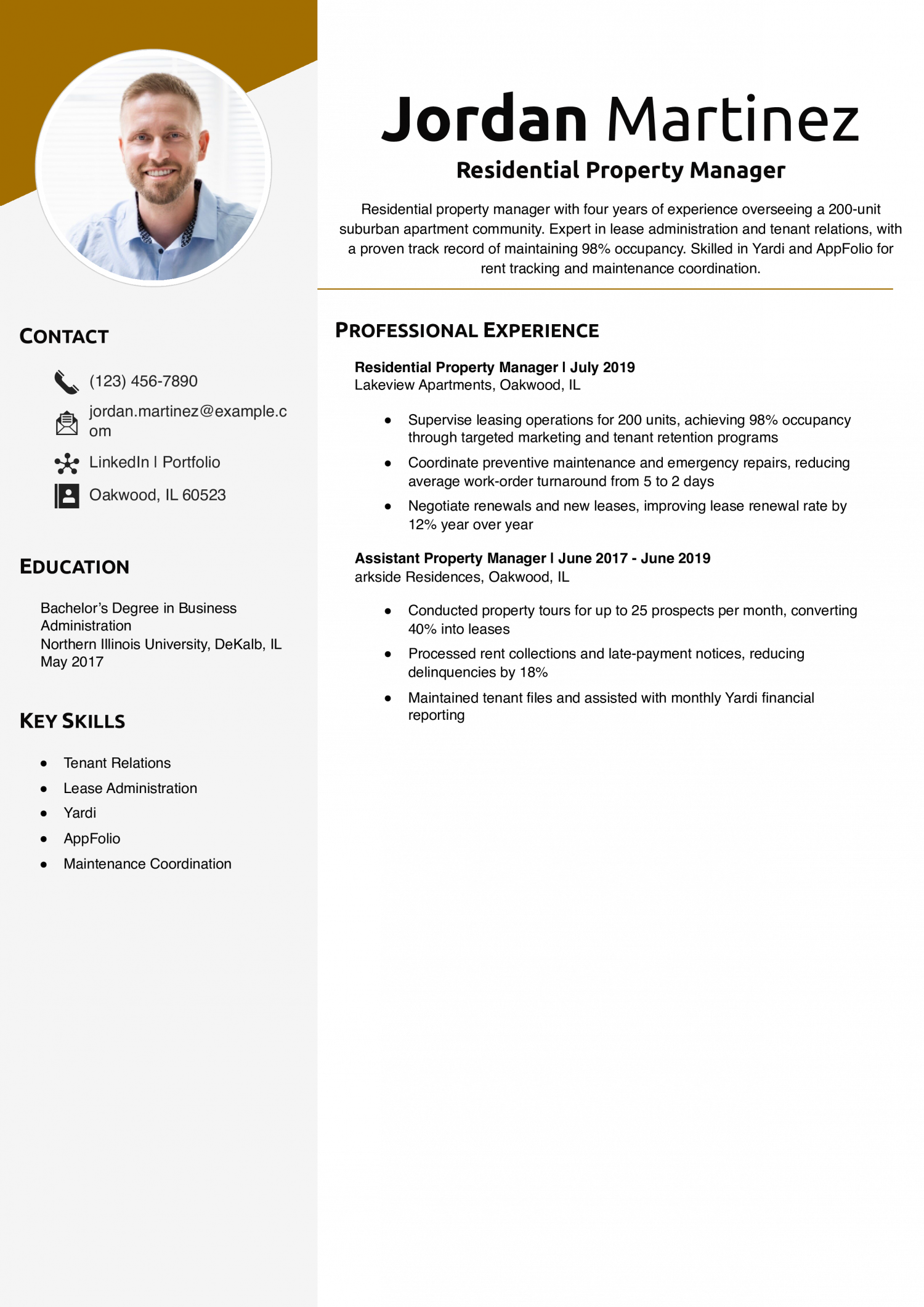
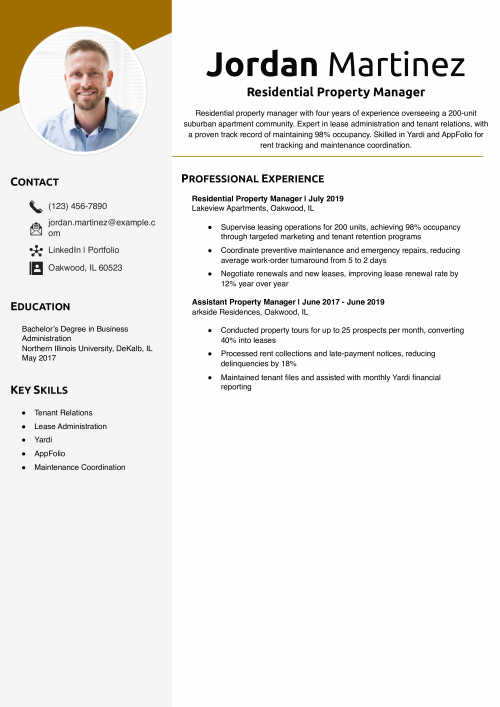
This resume highlights Jordan’s strong occupancy and retention metrics, clearly demonstrating impact through specific percentages and process improvements.
Emphasize measurable tenant retention and occupancy achievements to showcase management effectiveness. For more guidance on what to include, see What to Put On A Resume.
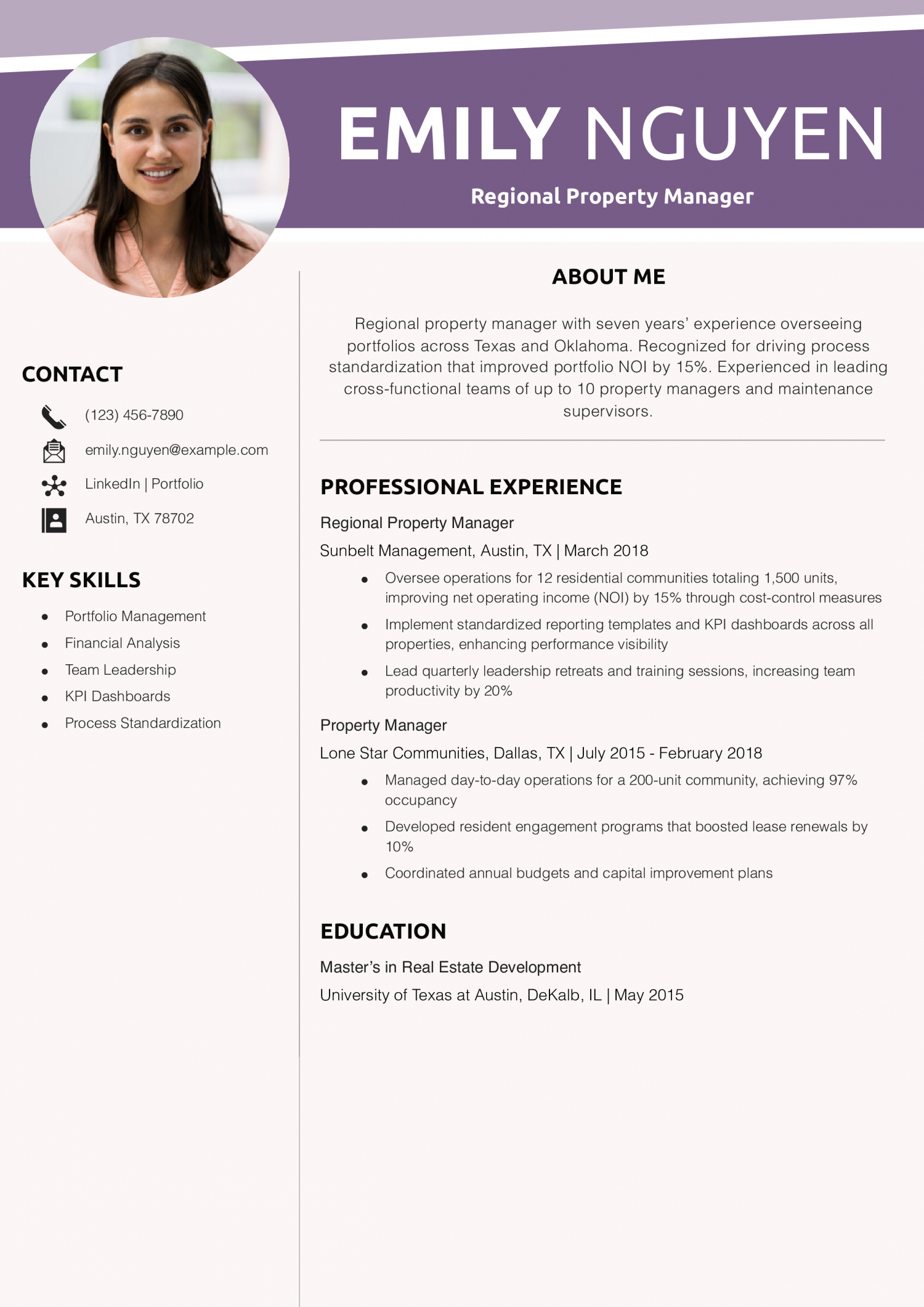
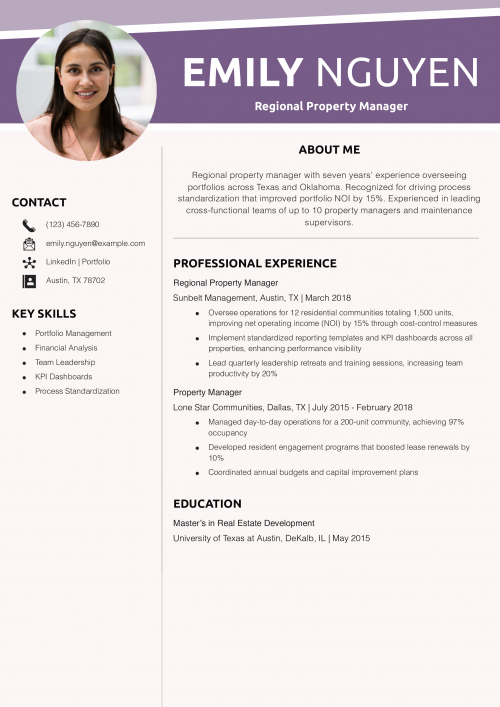
Emily’s resume underscores regional impact by citing portfolio-wide NOI improvements and leadership initiatives, proving her strategic and operational prowess.
Showcase multi-site financial improvements and leadership outcomes to demonstrate regional management strength. For tips on writing a compelling summary, see How To Write A Resume Summary.
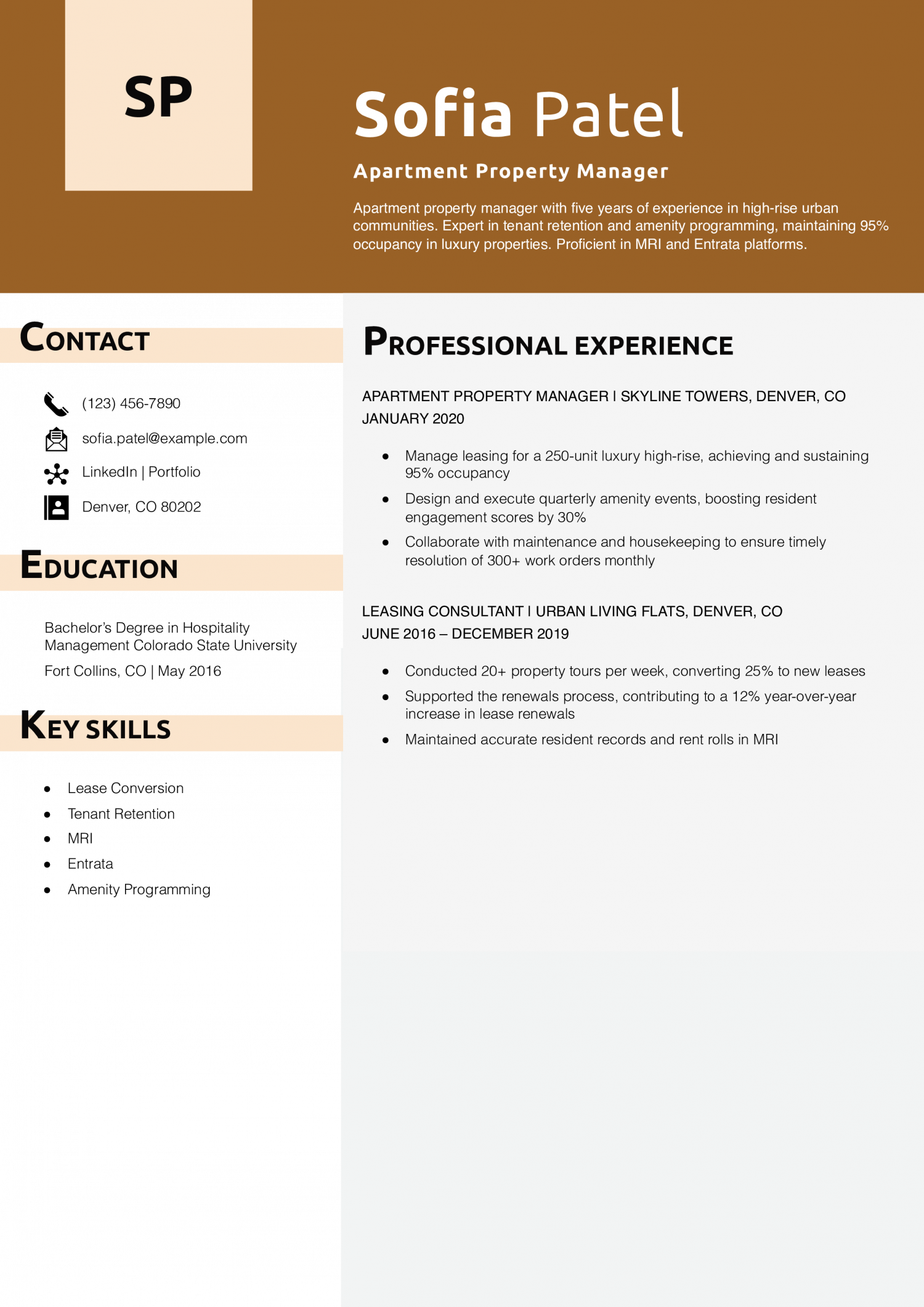
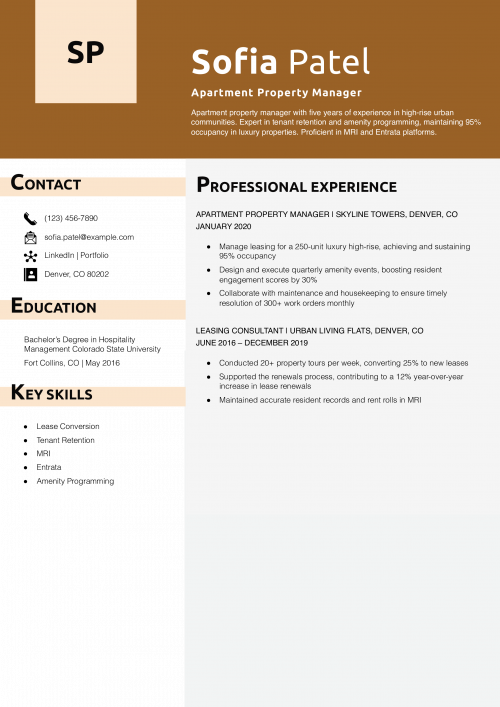
Sofia’s resume clearly connects amenity programming and occupancy performance with quantifiable improvements, showing her value to luxury communities.
Highlight unique community programs and occupancy metrics to stand out in apartment management roles. For guidance on crafting effective bullet points, see How To Use Bullet Points On A Resume Effectively.
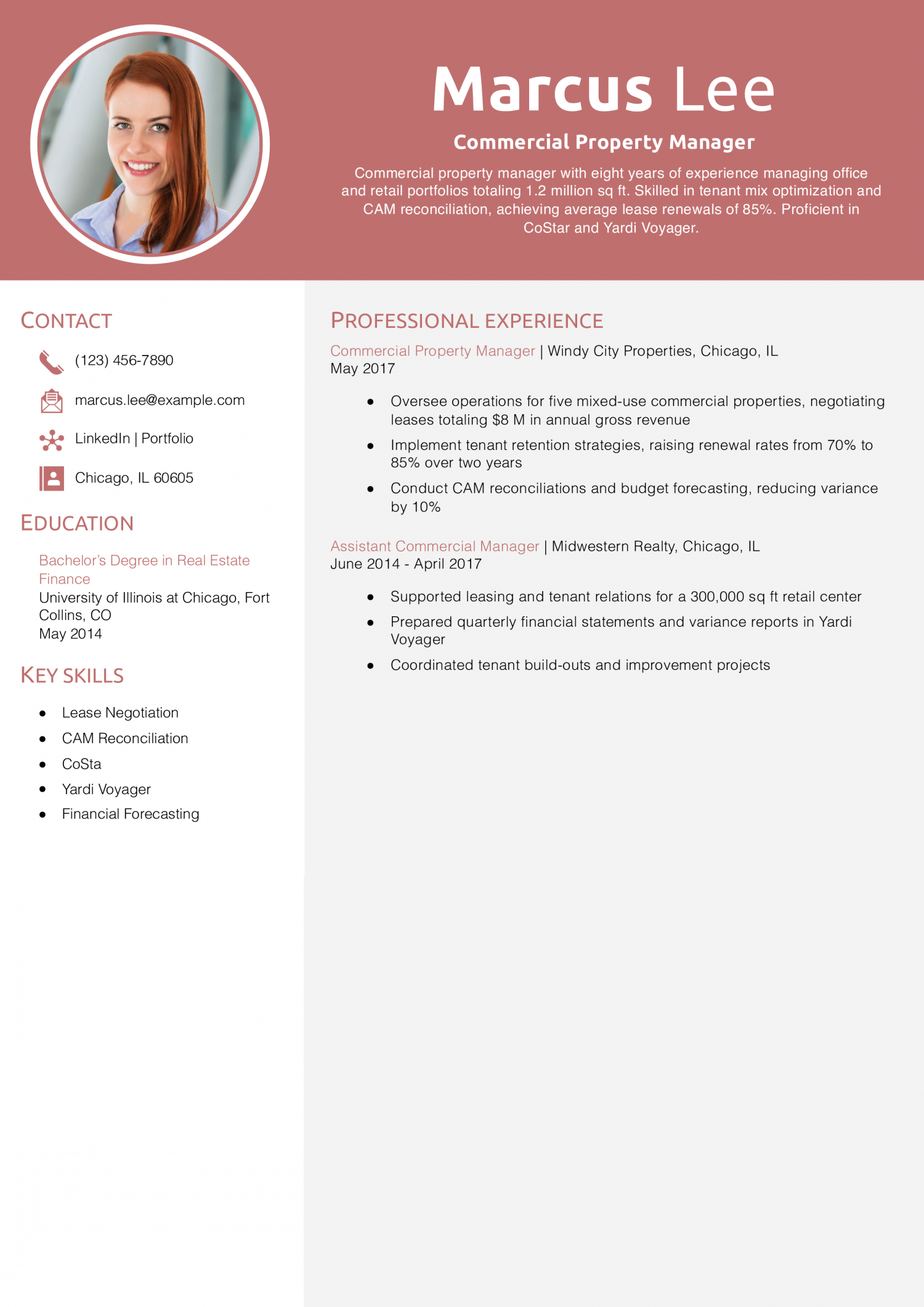
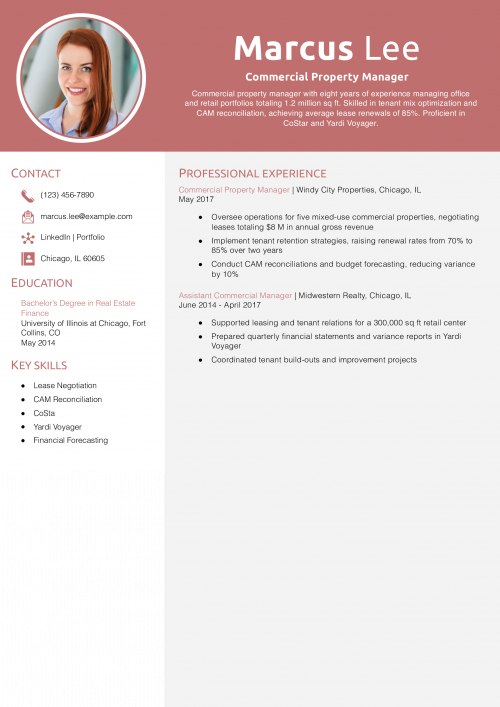
Marcus ties specific revenue and renewal metrics to his lease strategies, demonstrating direct contributions to the bottom line.
Quantify lease revenue and renewal improvements to illustrate commercial acumen. For advice on framing your work experience, see Work Experience On A Resume.
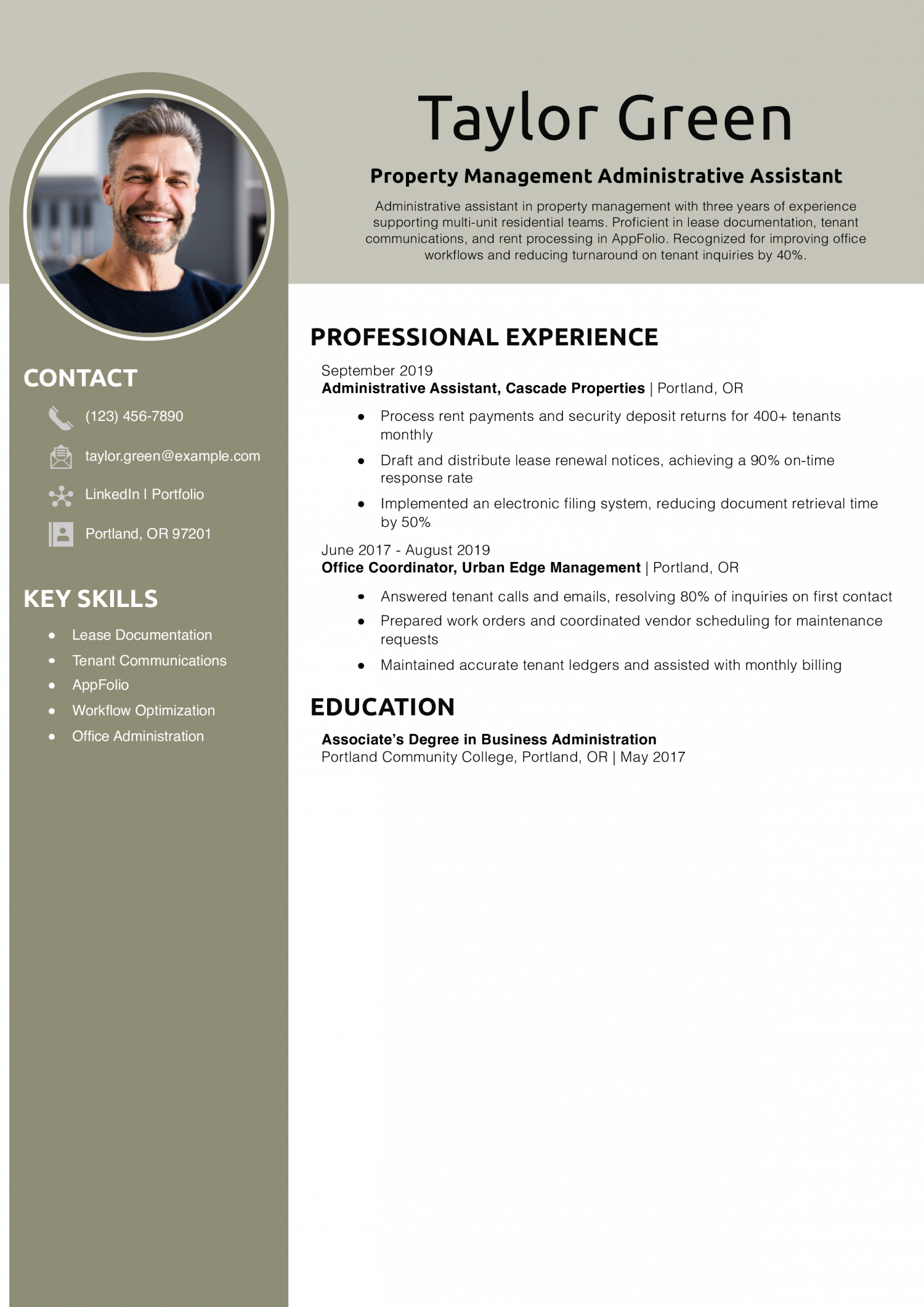
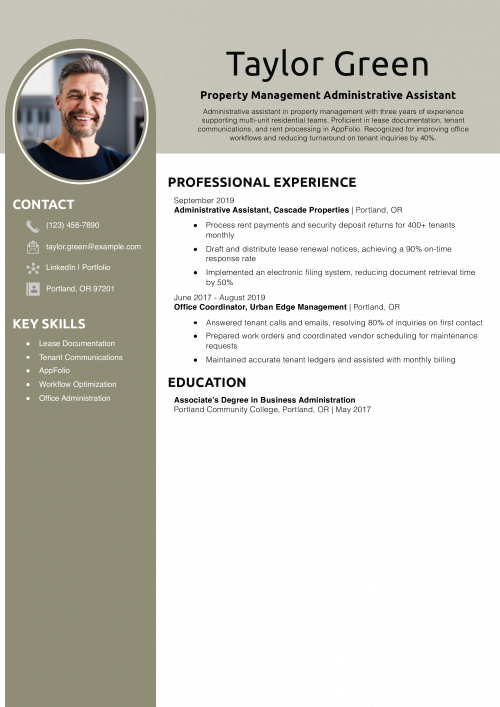
Taylor’s resume showcases process improvements and system implementations that boost team efficiency, key for administrative roles.
Highlight workflow optimizations and response-time improvements to demonstrate administrative impact. For tips on tailoring your resume, see How To Tailor Resume To Job Description.
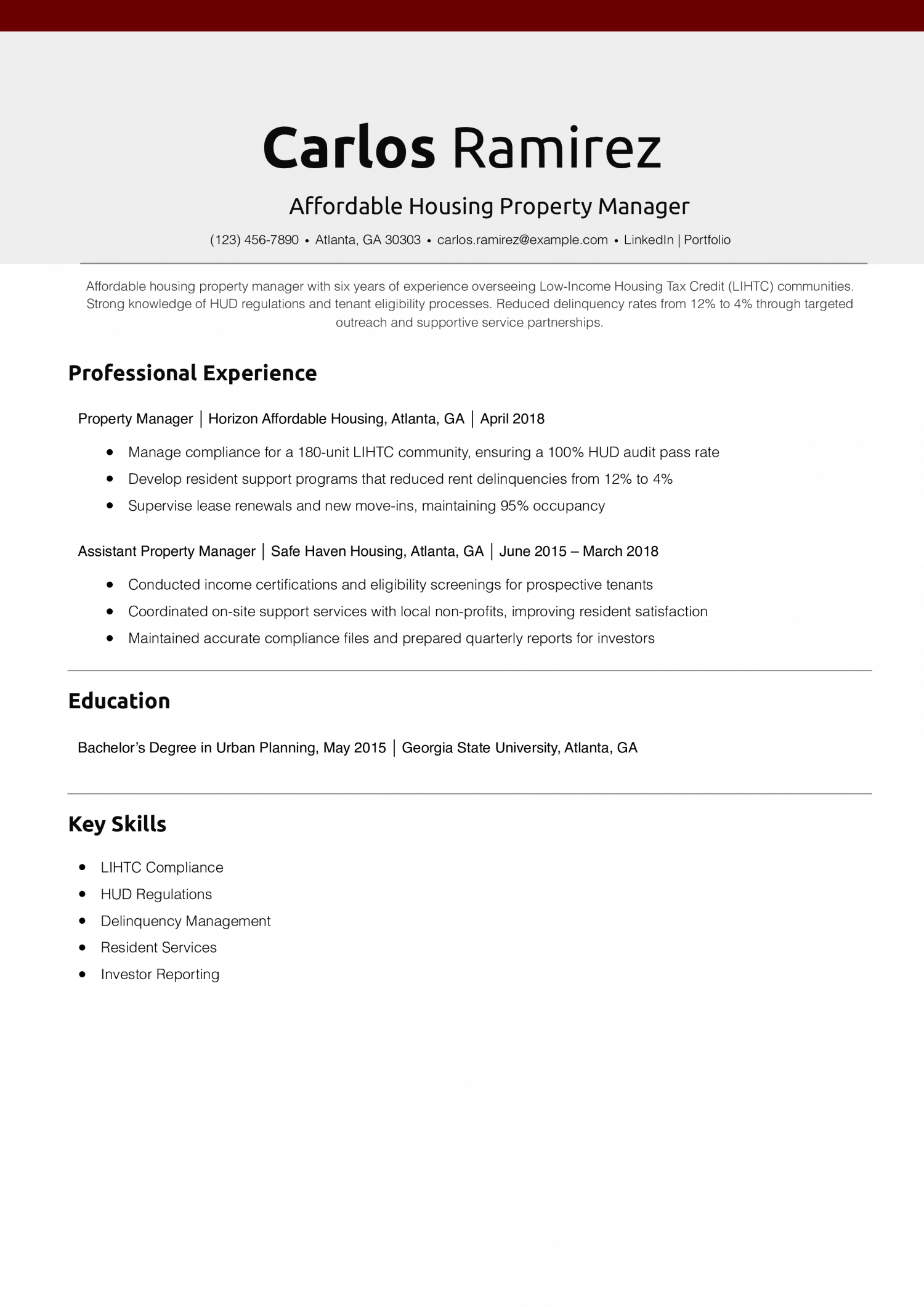
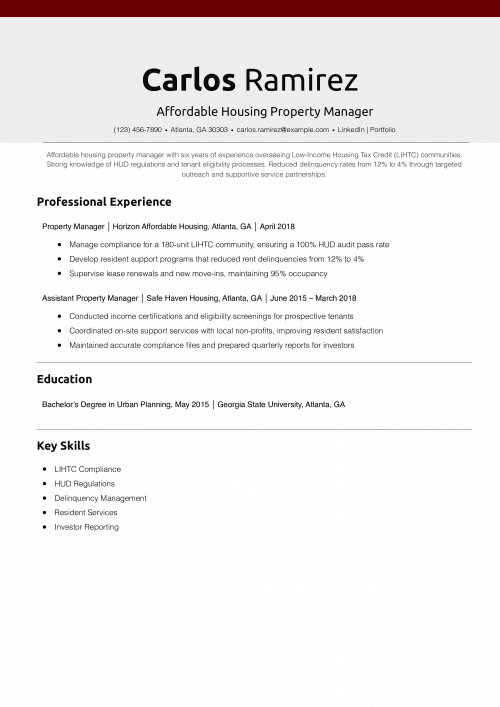
Carlos’s resume ties compliance metrics and social impact initiatives directly to quantifiable improvements, illustrating both regulatory and community expertise.
Showcase regulatory compliance success and community program outcomes to highlight specialized affordable housing skills. For more on what to include, see What To Put On A Resume.
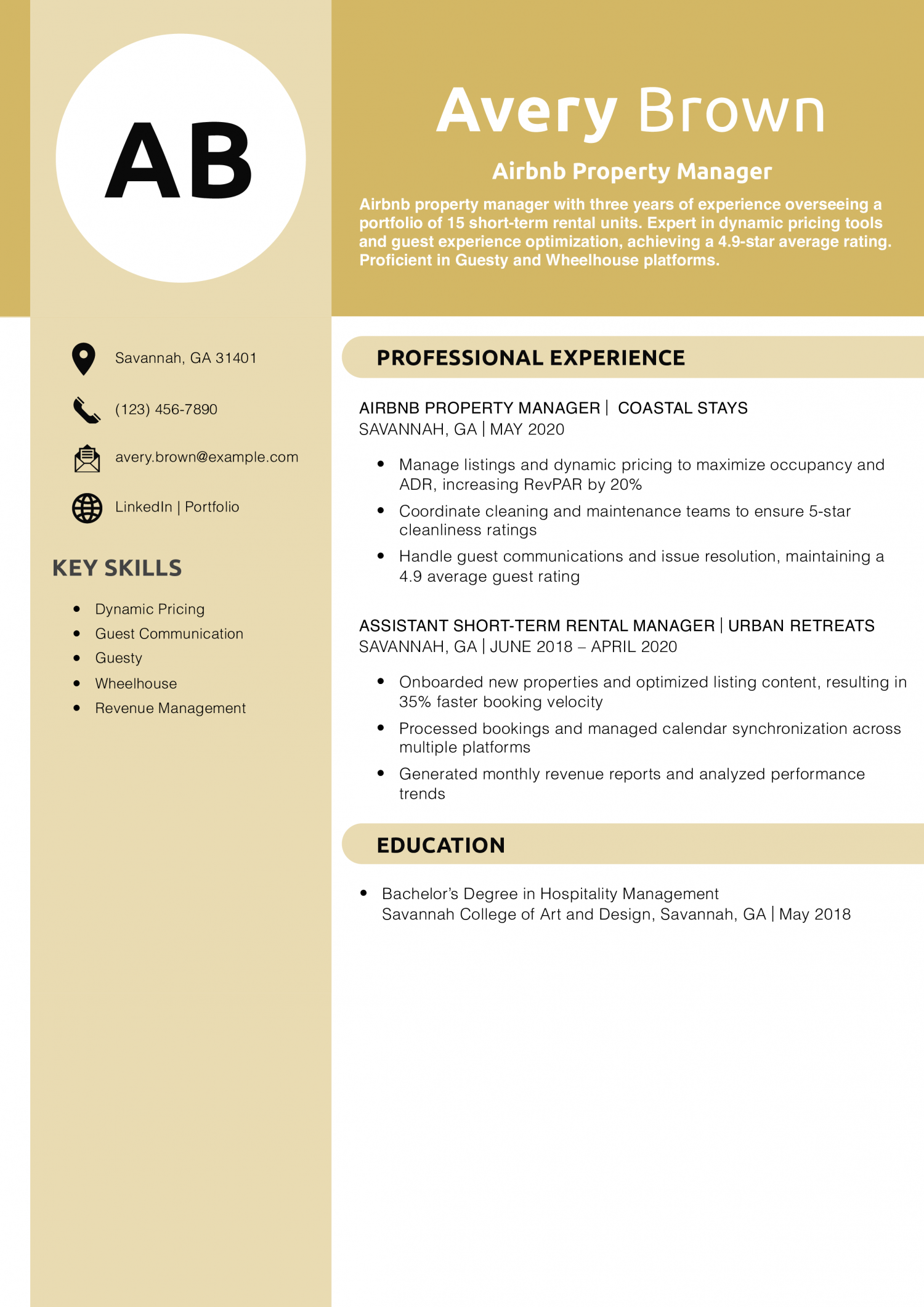
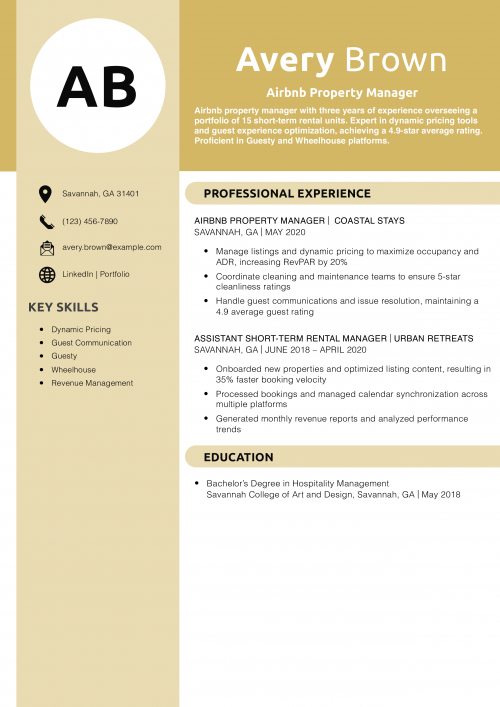
Avery’s resume emphasizes guest satisfaction metrics and revenue improvements, showcasing skills unique to short-term rental management.
Highlight platform proficiency and revenue metrics to underscore your short-term rental expertise. For more on listing your technical skills, see How To List Skills On A Resume.
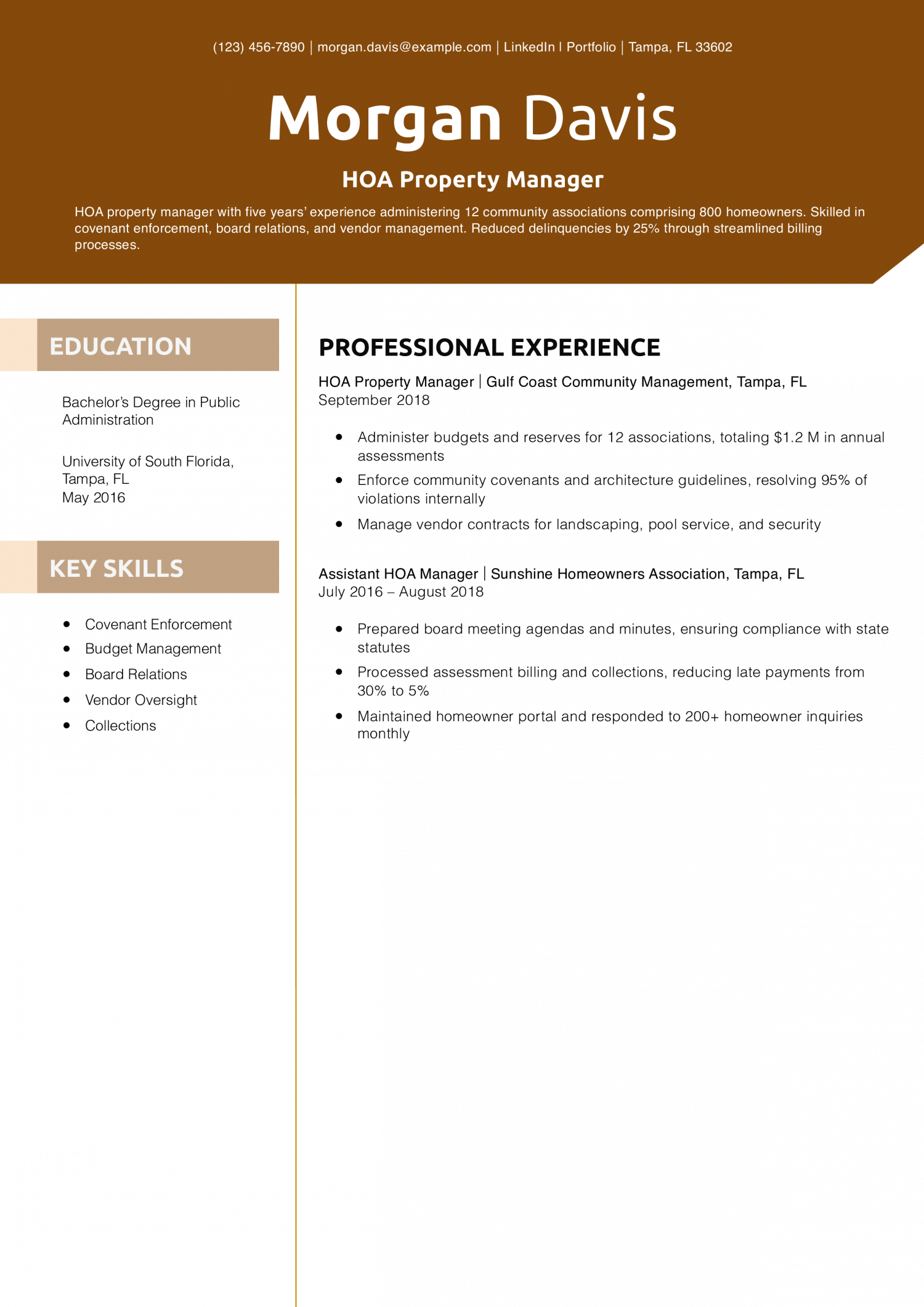
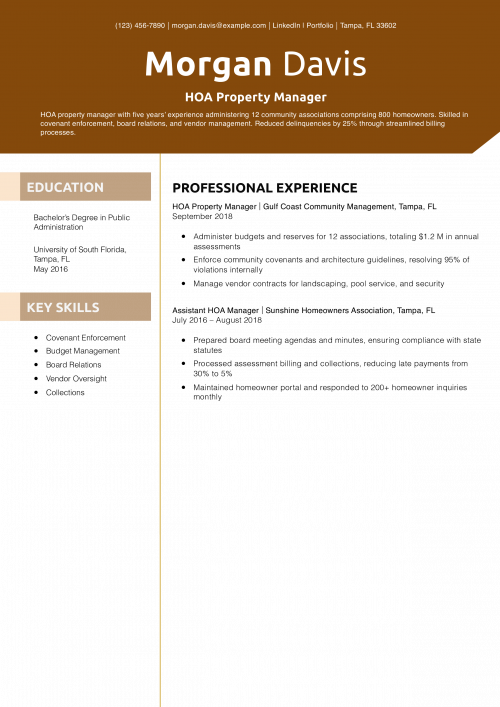
Morgan’s resume quantifies financial and enforcement outcomes, demonstrating direct benefits to community governance and operations.
Illustrate covenant compliance and financial improvements to highlight HOA-specific strengths. For insights on crafting clear job descriptions, see Resume Job Description.
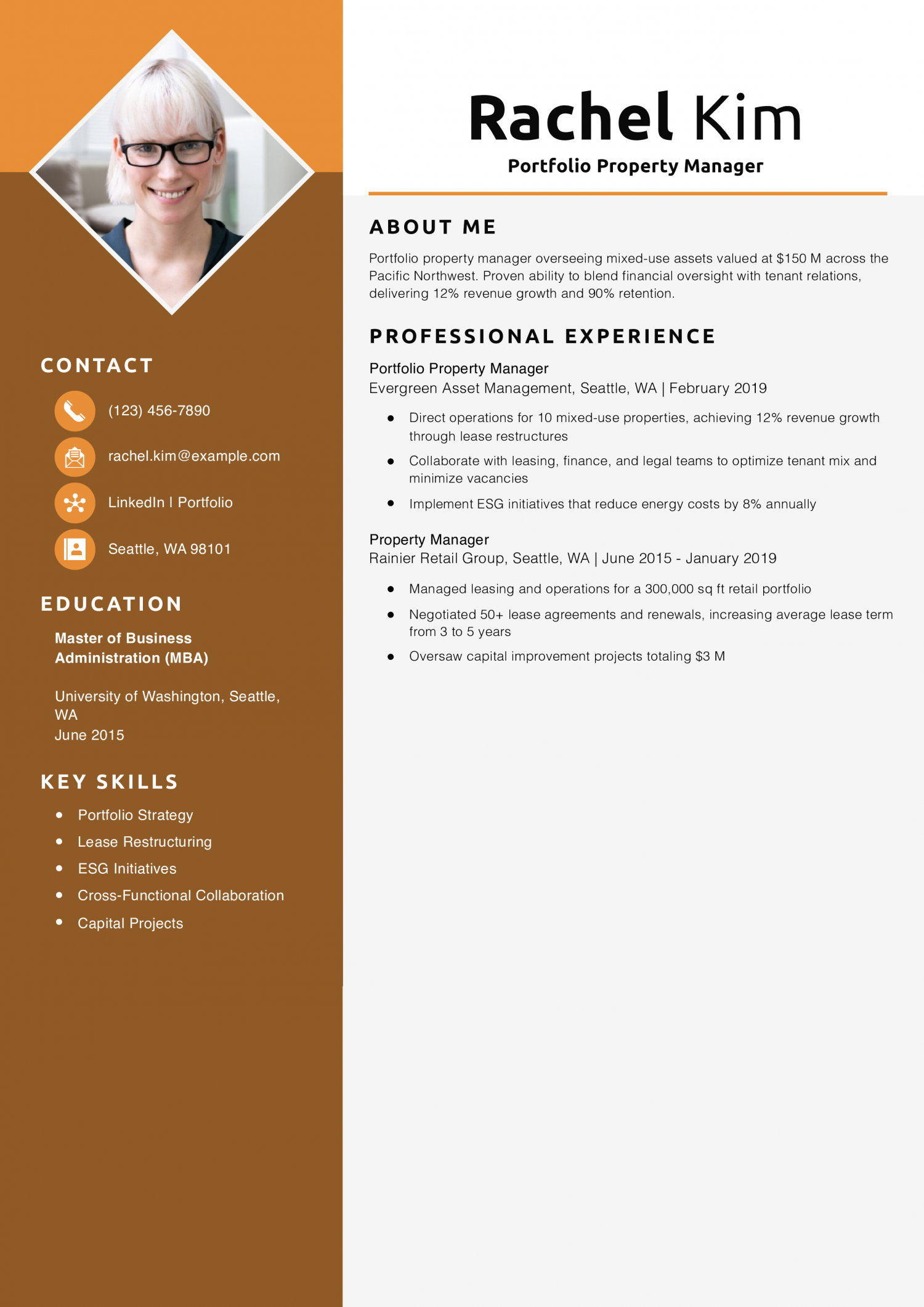
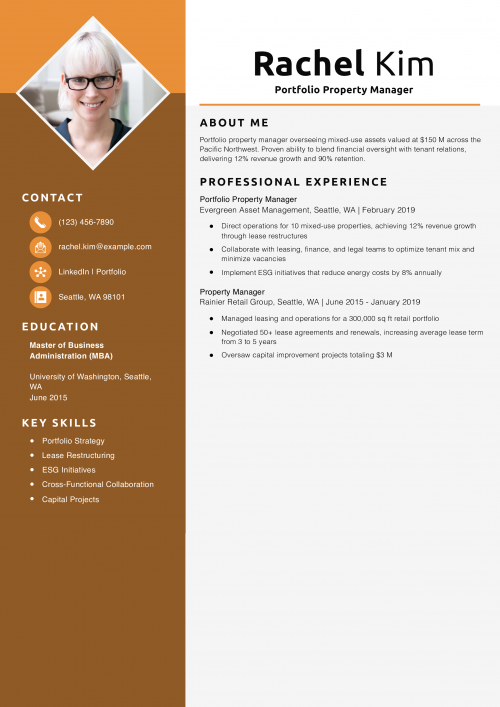
Rachel’s resume ties portfolio-level financial and sustainability metrics to strategic initiatives, demonstrating executive-level impact.
Highlight portfolio revenue growth and ESG achievements to differentiate at the executive level. For leadership examples, see Leadership Skills for Resumes With Examples.
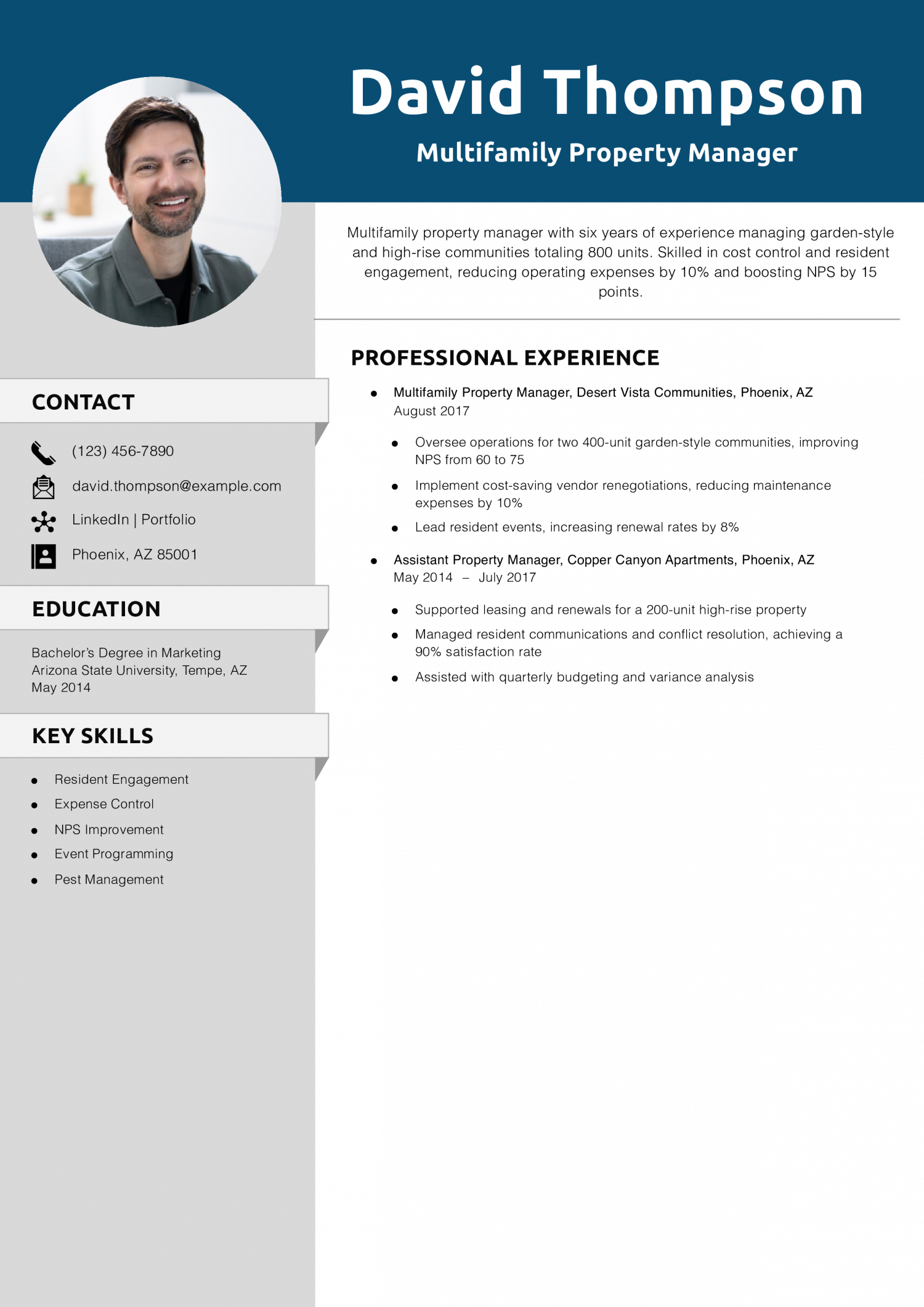
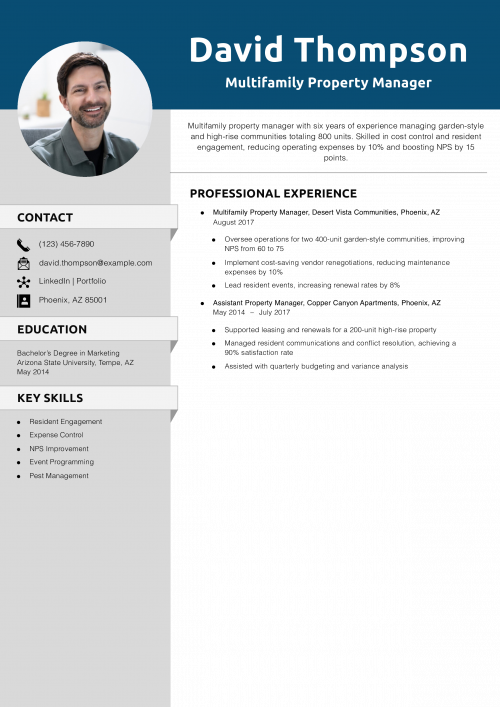
David’s resume showcases both financial controls and resident satisfaction metrics, highlighting a balanced approach to multifamily management.
Demonstrate both expense reduction and resident NPS improvements to show dual-focus management skills. For powerful action words, see Resume Keywords.
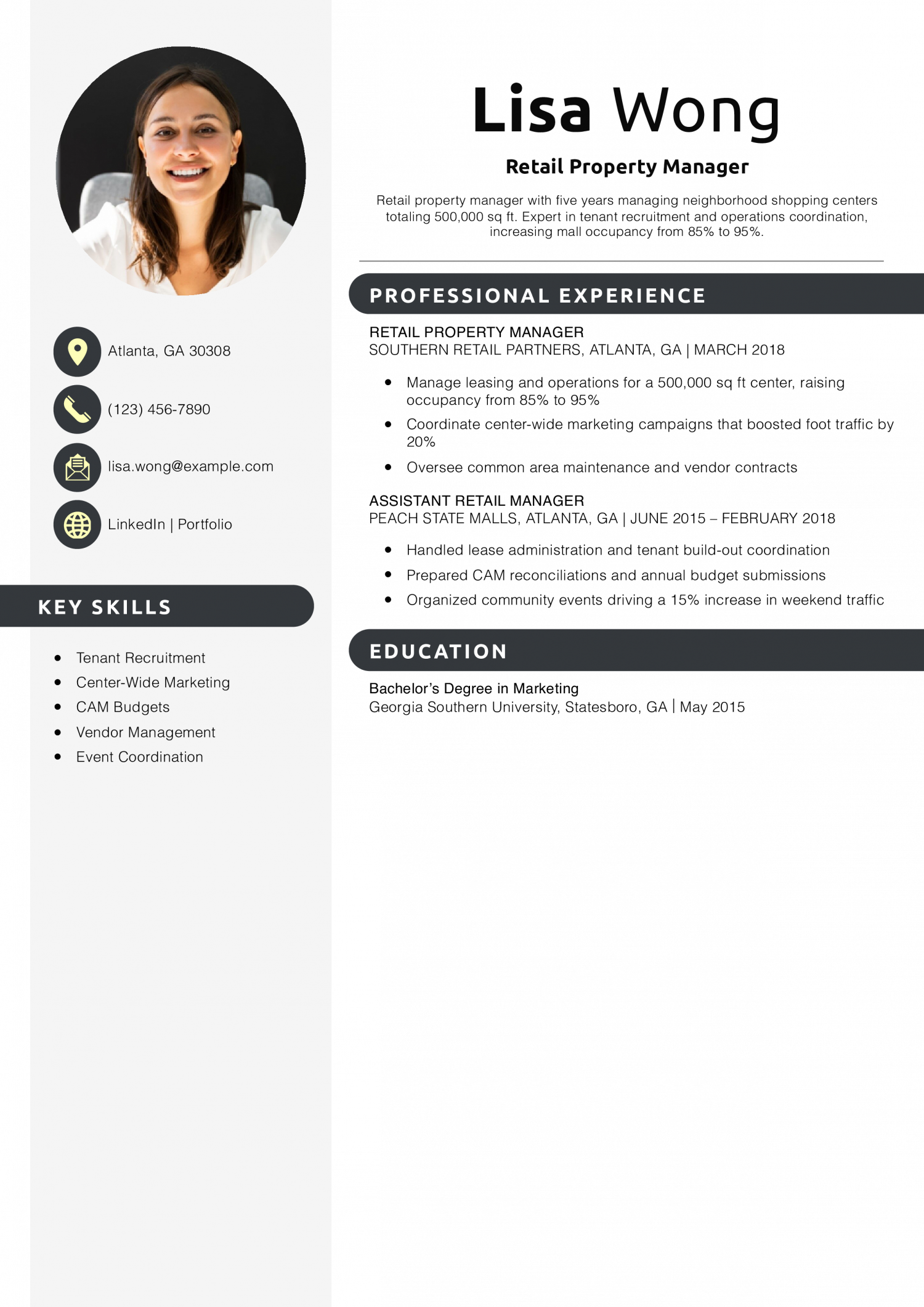
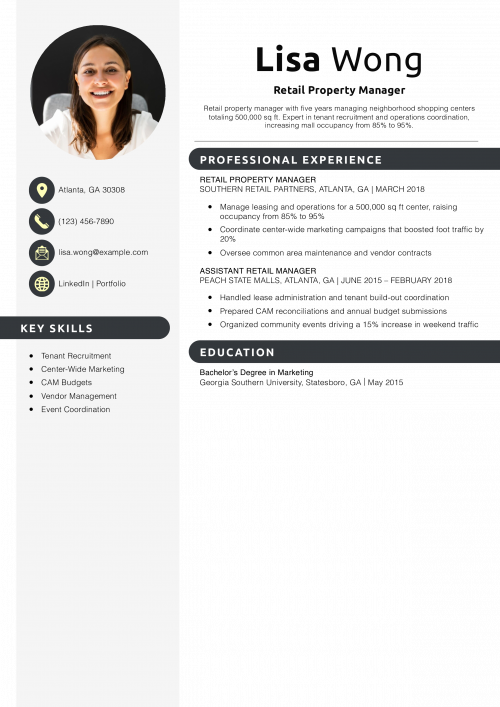
Lisa’s resume connects occupancy growth and marketing campaigns to tangible traffic and revenue gains, demonstrating retail-specific success.
Combine occupancy metrics with marketing outcomes to showcase retail property expertise. Learn more about action verbs in Resume Action Words.
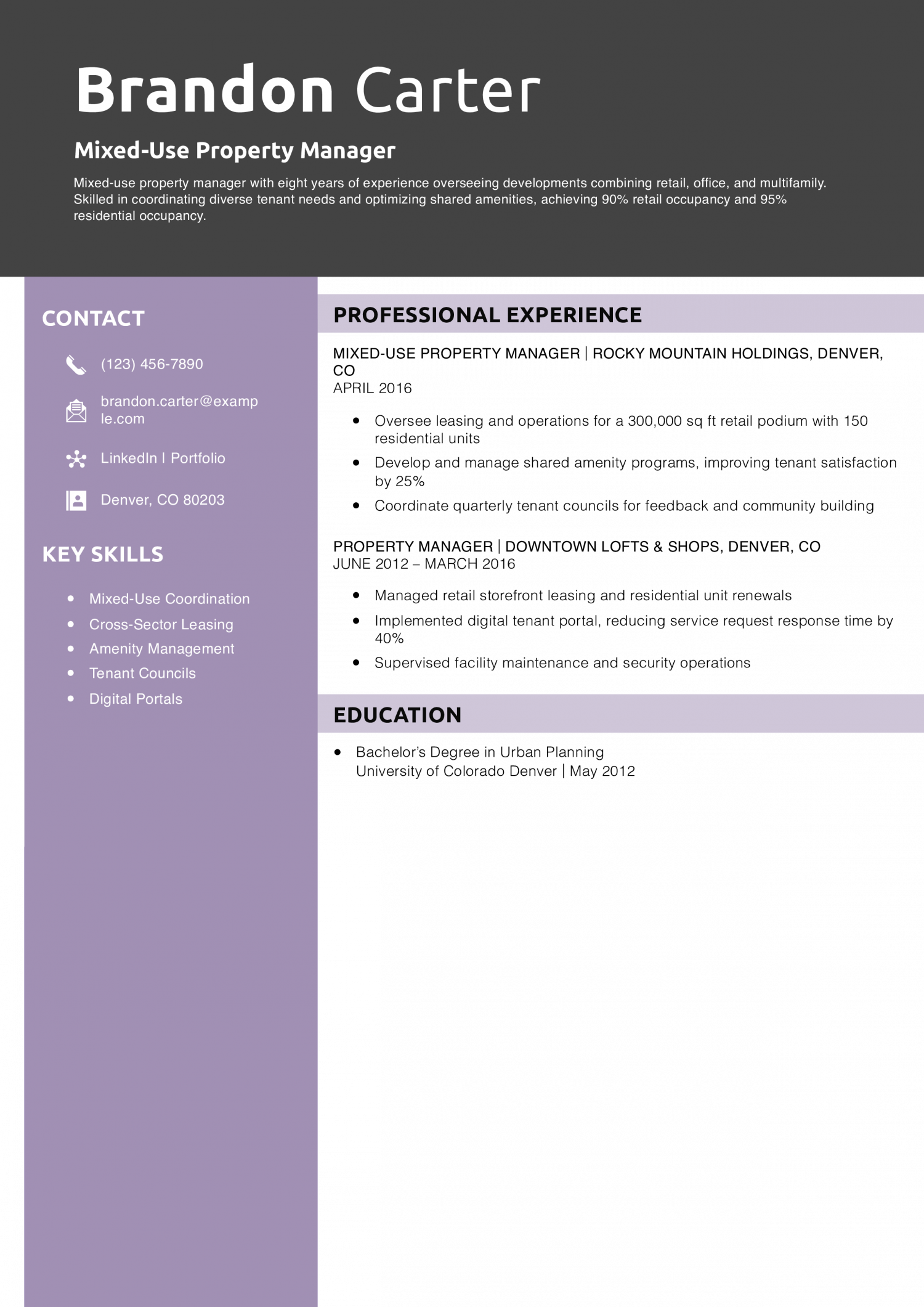
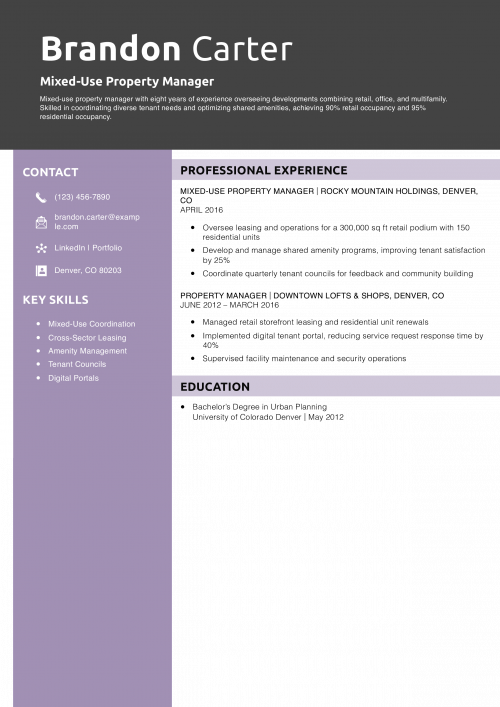
Brandon’s resume demonstrates mixed-use expertise by quantifying occupancy and satisfaction improvements across sectors.
Detail cross-sector occupancy metrics and tenant programs to highlight mixed-use strengths. See Core Competencies Resume for inspiration on structuring competencies.
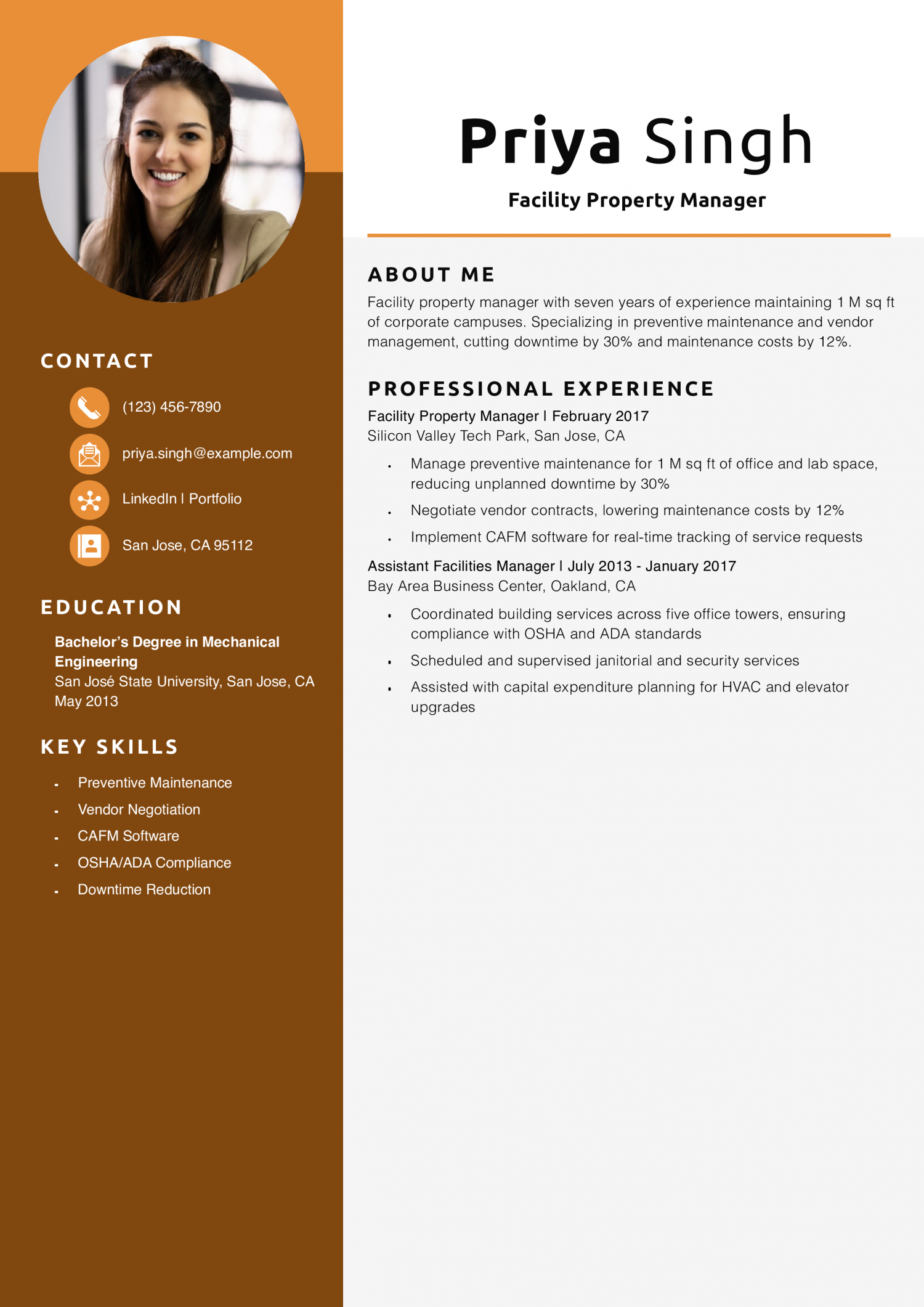
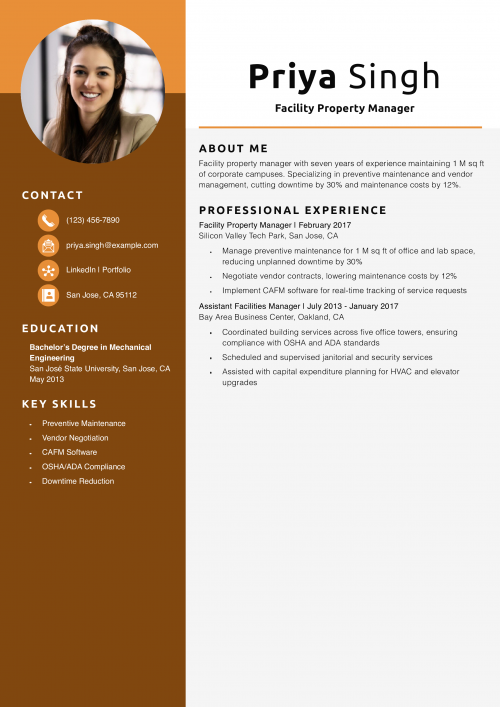
Priya’s resume links maintenance metrics and cost savings to preventive strategies and technology adoption, showcasing facility management expertise.
Highlight downtime reduction and cost savings to emphasize proactive maintenance leadership. For format inspiration, see Best Resume Formats.
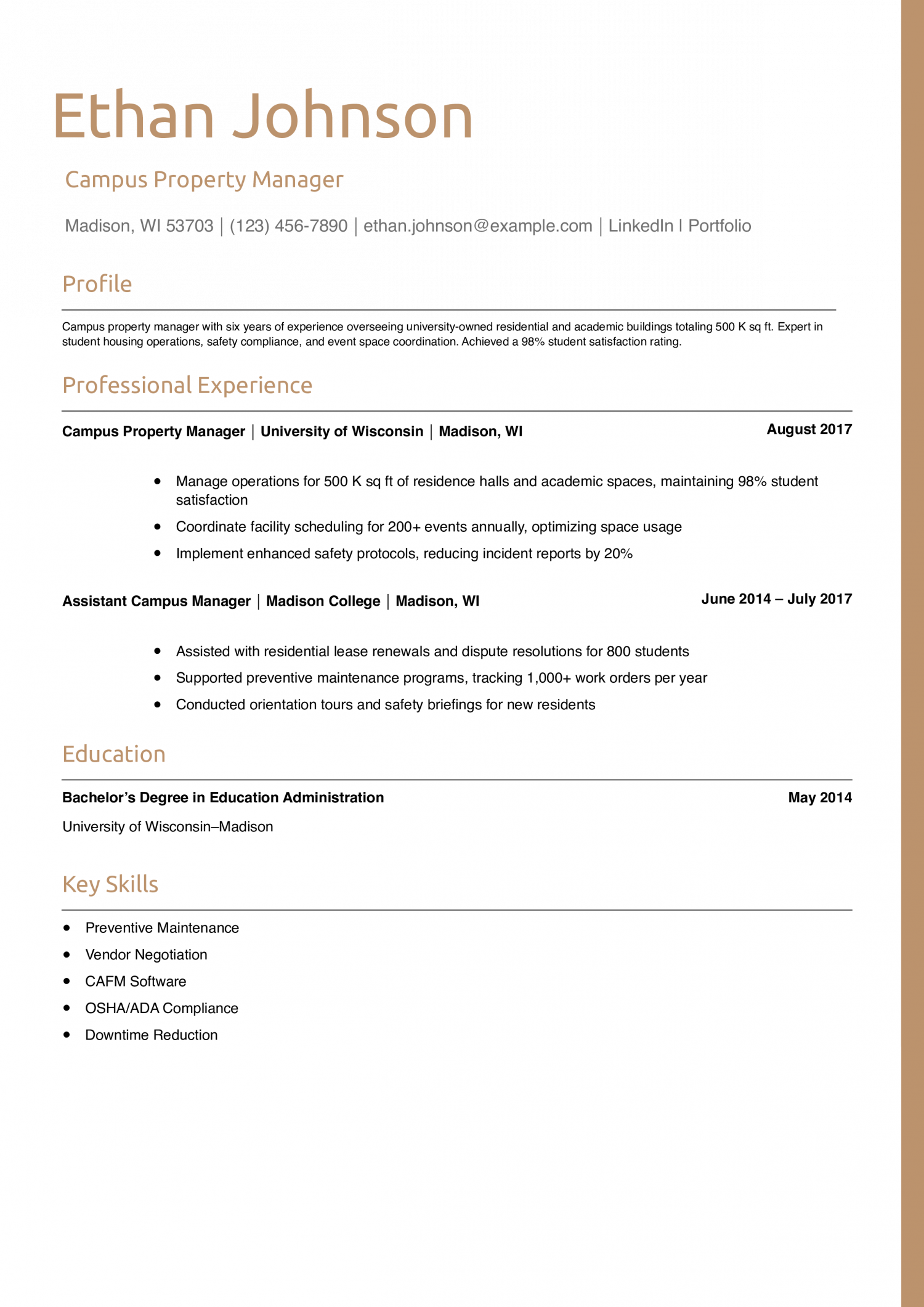
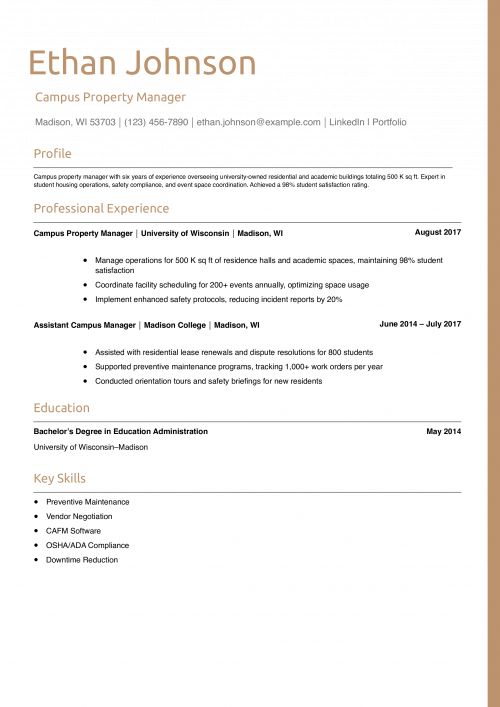
Ethan’s resume combines student satisfaction metrics with operational and safety improvements, illustrating campus-specific property management skills.
Emphasize satisfaction scores and safety metrics to showcase campus management expertise. For tailored education-sector advice, see How A Resume Should Look For College Student.
A resume profile serves as a concise overview of your qualifications, expertise, and career aspirations. In about two to three sentences, pull out your most impressive stats to grab the attention of hiring managers. Focus on highlighting the key aspects that make you an exceptional property manager.
Mention your years of experience and emphasize your track record of successfully managing properties, maximizing occupancy rates, and driving profitability. Align your profile with the job you’re applying for, incorporating a few keywords or skills you know the employer is looking for. Creating an impactful profile will encourage potential employers to explore your resume in greater detail.
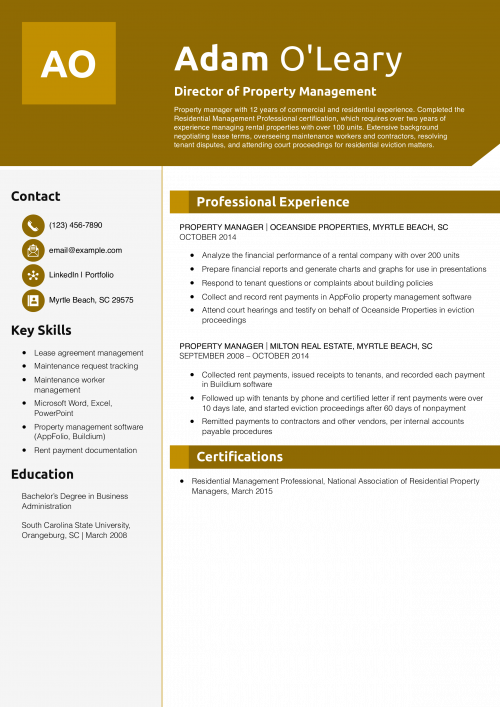
Property manager with 12 years of commercial and residential experience. Completed the Residential Management Professional certification, which requires over two years of experience managing rental properties with over 100 units. Extensive background negotiating lease terms, overseeing maintenance workers and contractors, resolving tenant disputes, and attending court proceedings for residential eviction matters.
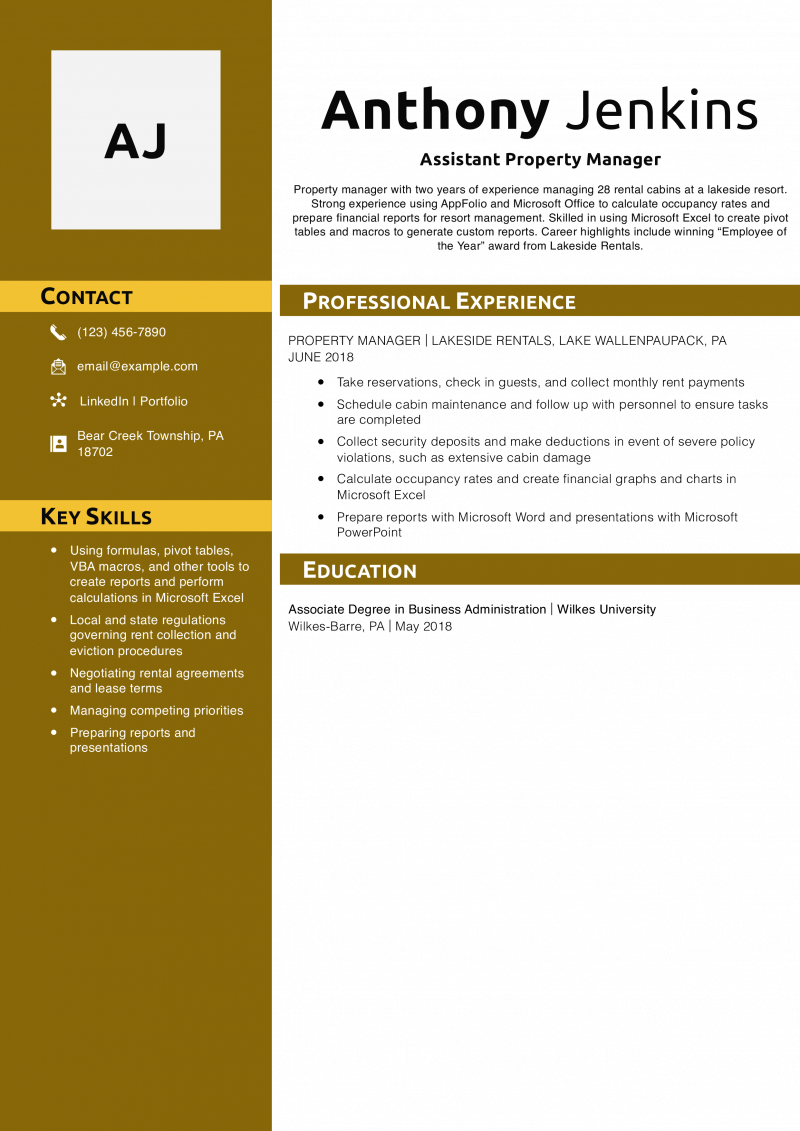
Property manager with two years of experience managing 28 rental cabins at a lakeside resort. Strong experience using AppFolio and Microsoft Office to calculate occupancy rates and prepare financial reports for resort management. Skilled in using Microsoft Excel to create pivot tables and macros to generate custom reports. Career highlights include winning the “Employee of the Year” award from Lakeside Rentals.
Use your professional experience section to demonstrate the skills and qualifications employers are seeking. Instead of listing responsibilities and daily tasks, convey your ability to handle various responsibilities and demonstrate your managerial prowess through your accomplishments. Quantify your work wherever possible to communicate your experience effectively.
For example, mention the number of properties you successfully managed, the percentage increase in occupancy rates you achieved, or the cost savings you implemented through efficient maintenance strategies. Start your bullet points with action verbs to increase reader engagement and highlight your proactive approach. By quantifying your experience and using strong action verbs, you’ll present an engaging case to potential employers and prove your ability to drive success as a property manager.
Property Manager, Oceanside Properties, Myrtle Beach, SC | October 2014 to present
Property Manager, Lakeside Rentals, Lake Wallenpaupack, PA | June 2018 to present
Employers value a commitment to professional development and continuous learning in the real estate industry. They want to see you have the knowledge and qualifications to manage properties well. Always include relevant academic history, from degrees to certifications. Starting with your highest level of education, list the degree name, institution, location, and graduation date.
Enhance your resume further by including a separate section for certifications. Credentials such as Certified Property Manager (CPM) or Residential Management Professional (RMP) validate your expertise and give employers confidence. Format this section similarly, providing the certificate name, issuing organization, and date received.
Template:
[Degree Name]
[School Name], [City, State Abbreviation] [Dates Enrolled]
Example:
Bachelor’s Degree in Business Administration
South Carolina State University, Orangeburg, SC | 2008
Template: [Certification Name], [Awarding Organization], [Completion Year]
Example:
A key skills section works to demonstrate your competence and suitability for the role. When including skills, focus on those specific to property management and the position you’re applying for. Study the job description and align the skills you include with those the employer seeks. Be sure to emphasize technical and interpersonal skills, showcasing your well-rounded approach to handling day-to-day tasks and resident relationships. Below, we’ve created a list of skills that could be included on your property manager resume:
| Key Skills and Proficiencies | |
|---|---|
| Accounting | AppFolio |
| Budgeting | Buildium |
| Collection management | Communication skills |
| Conflict resolution | Contractor supervision |
| Customer service | Financial analysis |
| Lease management | Legal compliance |
| Maintenance coordination | Marketing |
| Property inspection | Risk management |
| Scheduling | Tenant relations |
| Time management | Vendor management |
Before assembling your resume, you’ll need to construct a solid framework for your document with a resume template. Choosing a template that aligns with your professional image and effectively features your qualifications is essential. The best resume template for a property manager is clean and organized, allowing recruiters to navigate and absorb the information quickly.
Consider the overall aesthetic appeal of the template and ensure it aligns with the real estate industry. Prioritize readability, opting for a format that presents your information without distracting graphics and fonts. By selecting an appropriate resume template, you’ll create a visually appealing and impactful document that impresses potential employers in the real estate industry.
Crafting the professional experience section of a resume can be challenging. We've created a list of common action verbs to portray your property management responsibilities. Using action verbs brings a sense of energy and impact to your resume. They help show your ability to take the initiative and achieve results. Consider using some of the words below to create an engaging narrative that captures the attention of hiring managers:
The key difference between a Property Manager CV and a Property Manager resume example is the level of detail. A CV is typically more comprehensive, listing all relevant experience and achievements, whereas a resume example is more concise, focusing only on the most relevant information for a particular job. The CV can also include academic background and research work, while a resume is usually more focused on professional experience and key accomplishments.
With a projected increase of only 3% across the property management field, we expect to see about 11,000 new jobs added over the next decade. With such little growth, the competition for positions will be tight, and applicants will need standout resumes.
If you want a specific property manager job, it's vital to tailor your resume to speak to the needs of that organization and position yourself as a top candidate. To achieve this, carefully review the job description and identify the required qualifications and experiences on your resume. Customize your resume by aligning your professional summary, skills, and work experience sections with the specific requirements of the property manager role.
Typically, the most suitable resume format for property managers is chronological. This format highlights your work experience in reverse chronological order, presenting your career progression and accomplishments in a timeline. It allows hiring managers to quickly assess your relevant experience and track record in property management.
However, a combination format can be beneficial if you have limited property management experience or are transitioning from a different field. This format combines the chronological and functional formats, allowing you to showcase your transferable skills and qualifications while mentioning your work experience. Ultimately, the choice of format should depend on your specific circumstances and what you want to emphasize.
Writing a compelling cover letter is essential to increasing your chances of securing an interview in your job search. Customize your document for the company you’re applying to to create a document that captivates employers. Learn how to do this by exploring our comprehensive cover letter guide. Find inspiration and insights from similar guides for the related occupations of project manager and real estate agent.
Executive Resume Writer and Career Coach
Andrew Stoner is an executive career coach and resume writer with 17 years of experience as a hiring manager and operations leader at two Fortune 500 Financial Services companies, and as the career services director at two major university business schools.
Resume Templates offers free, HR approved resume templates to help you create a professional resume in minutes. Choose from several template options and even pre-populate a resume from your profile.