
3 Best High School Resume Templates and Examples for College Applications for 2025



To write a good volunteer resume, focus on how you can help nonprofits or other organizations maximize their efforts and resources related to non-paid personnel. This guide provides expert tips to help you create an accomplishment-driven resume highlighting the best aspects of your experience.
Key takeaways:
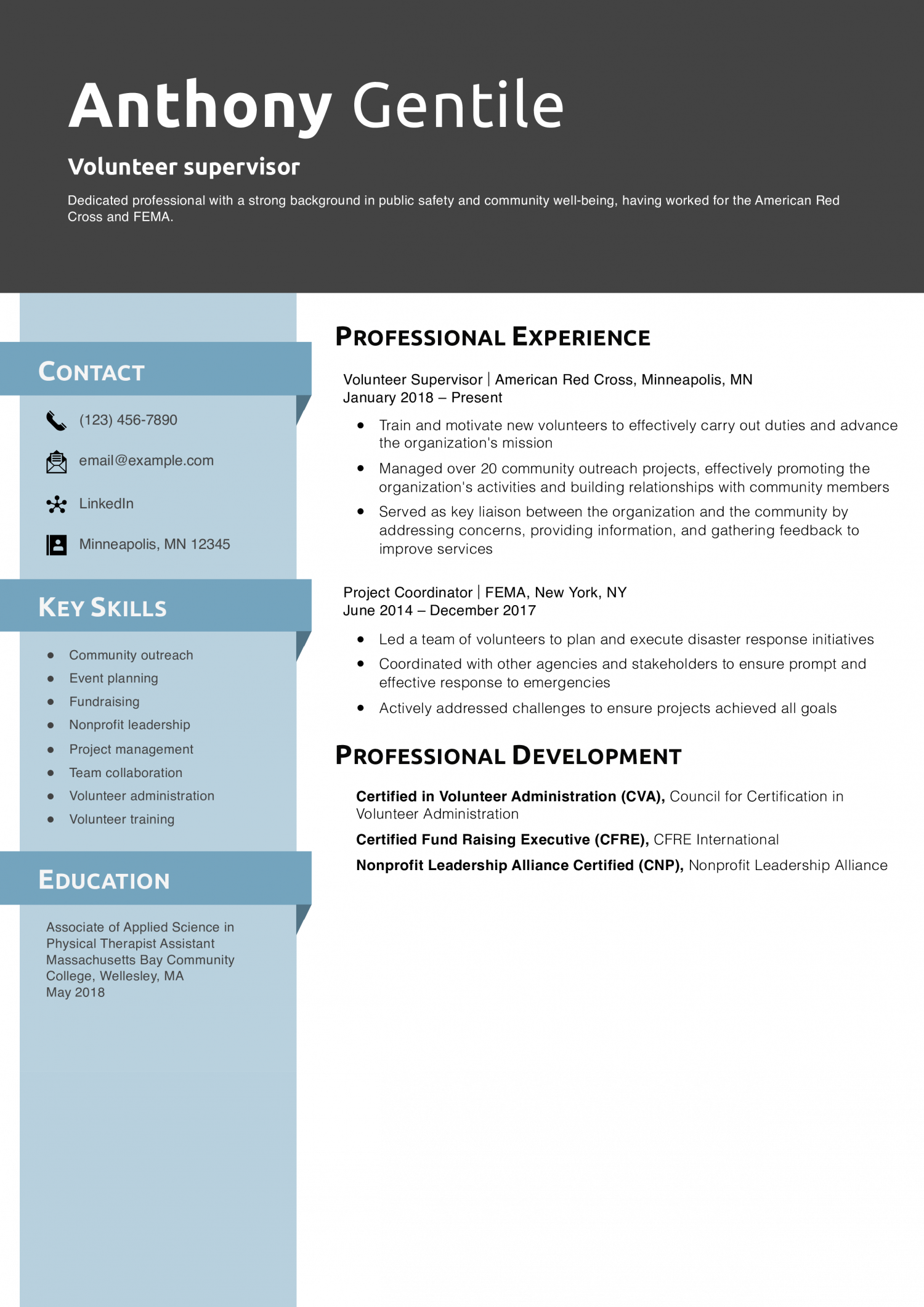
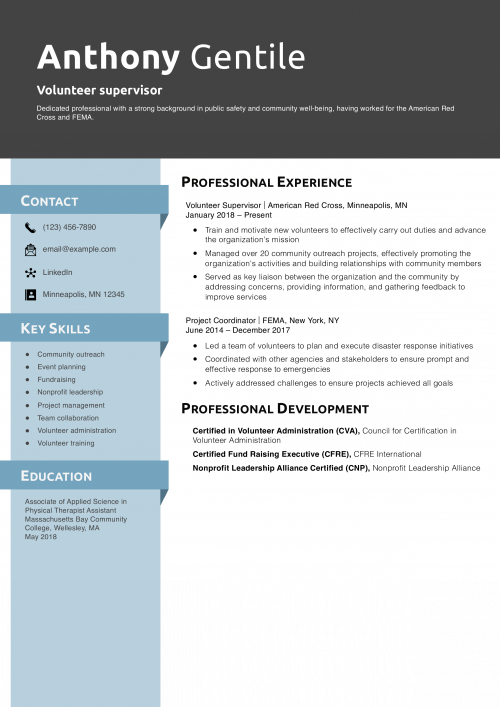
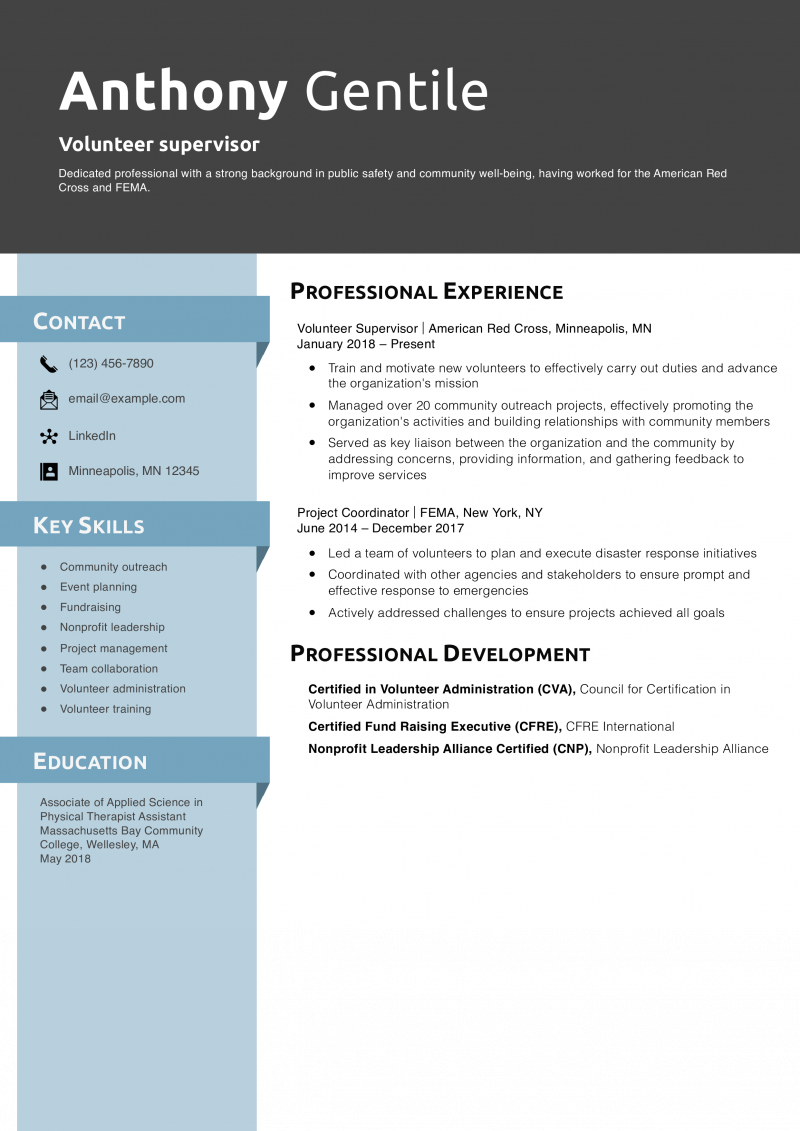
This resume excels with a prominent skills section showing the various ways Anthony can add value to an organization, such as training volunteers or planning events.

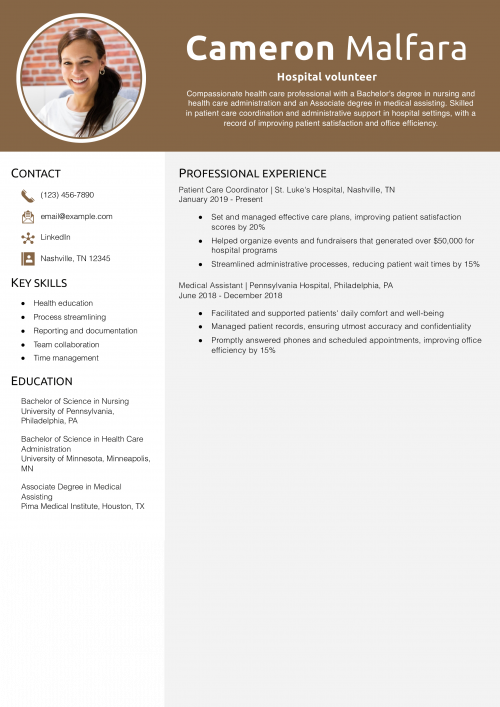
This resume has impressive performance data in the experience section, showing how Cameron drove gains in key areas like hospital efficiency.

This resume uses dynamic verbs like “introduced” and “recruited” to express how Hideo built powerful volunteer organizations.
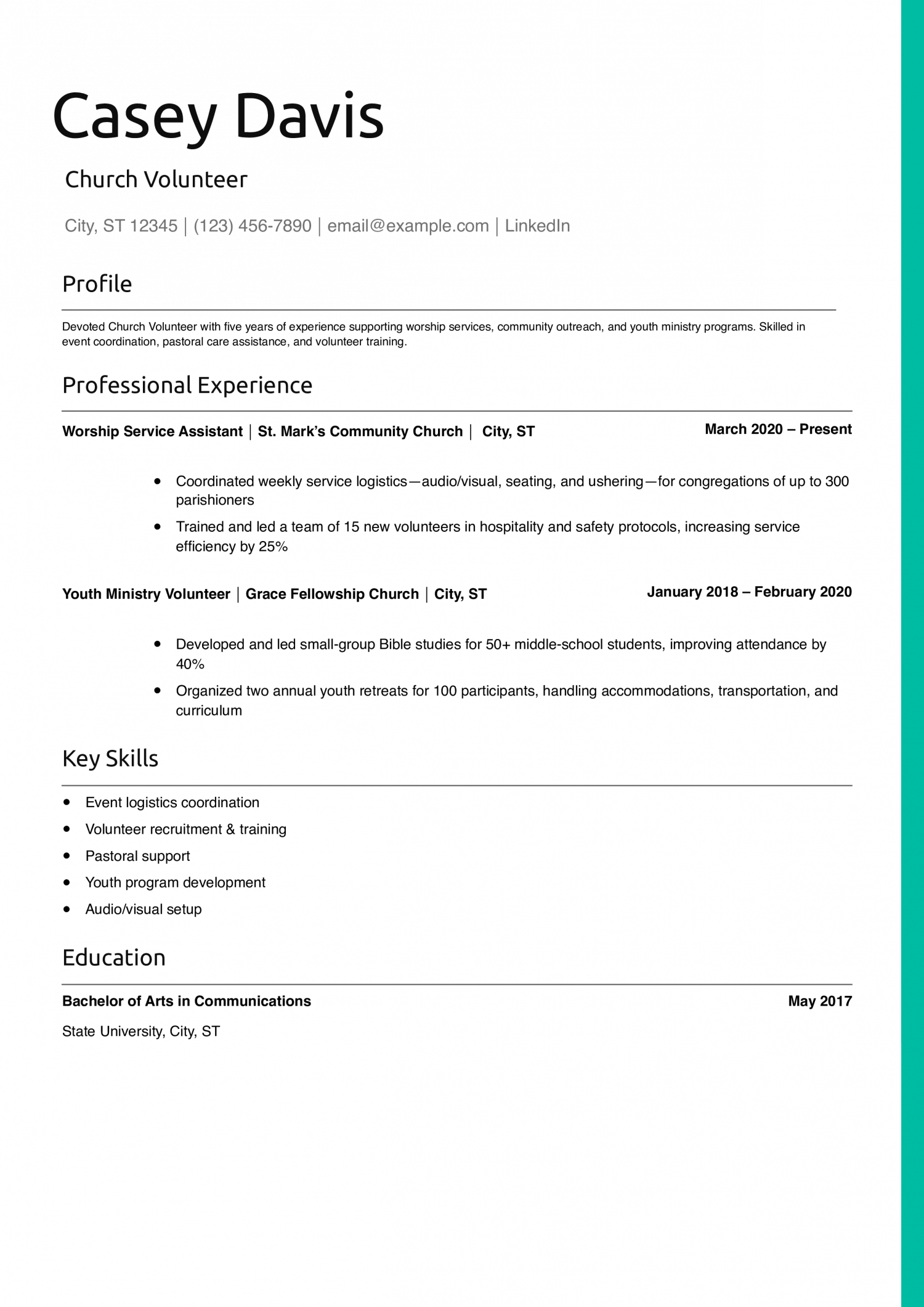
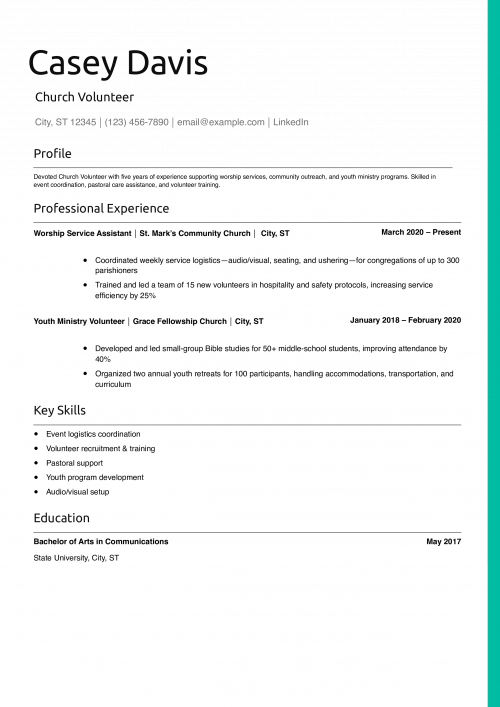
Casey highlights measurable improvements, such as “25% faster service setup” and “40% higher youth attendance,” demonstrating impact in volunteer roles.
Showcase specific improvements in attendance or efficiency to prove your program’s impact. For guidance on listing volunteer roles, see How to List Volunteer Work Experience on a Resume.
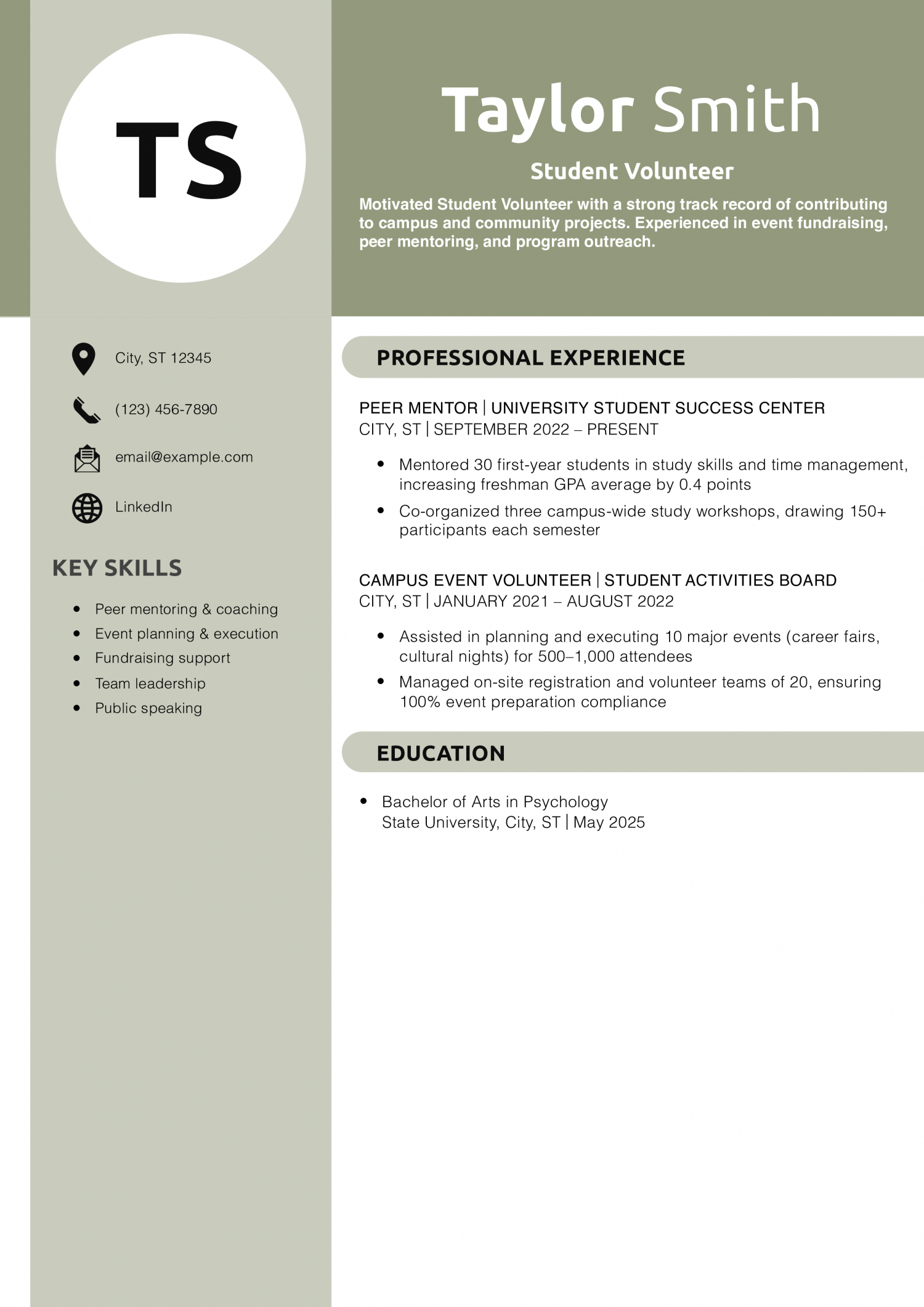
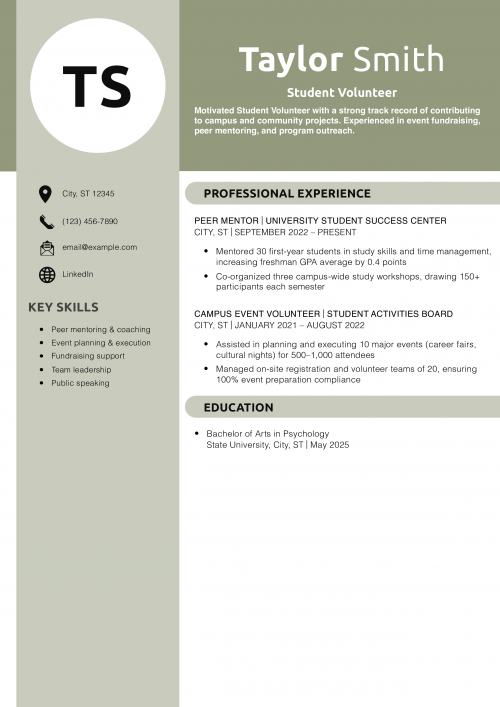
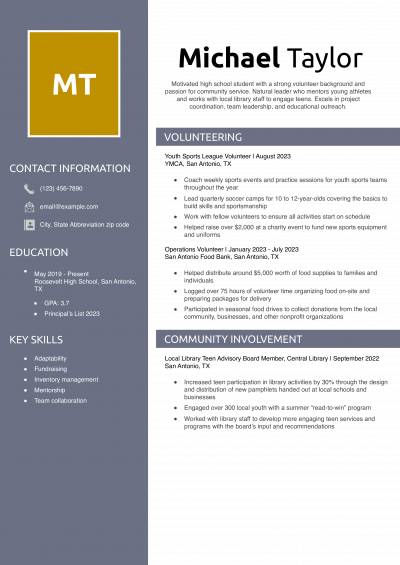
Taylor quantifies academic support and event scale, proving leadership and organizational skills.
Include both academic and event metrics to illustrate your versatility. For advice on student resumes, see How a Resume Should Look for a College Student.
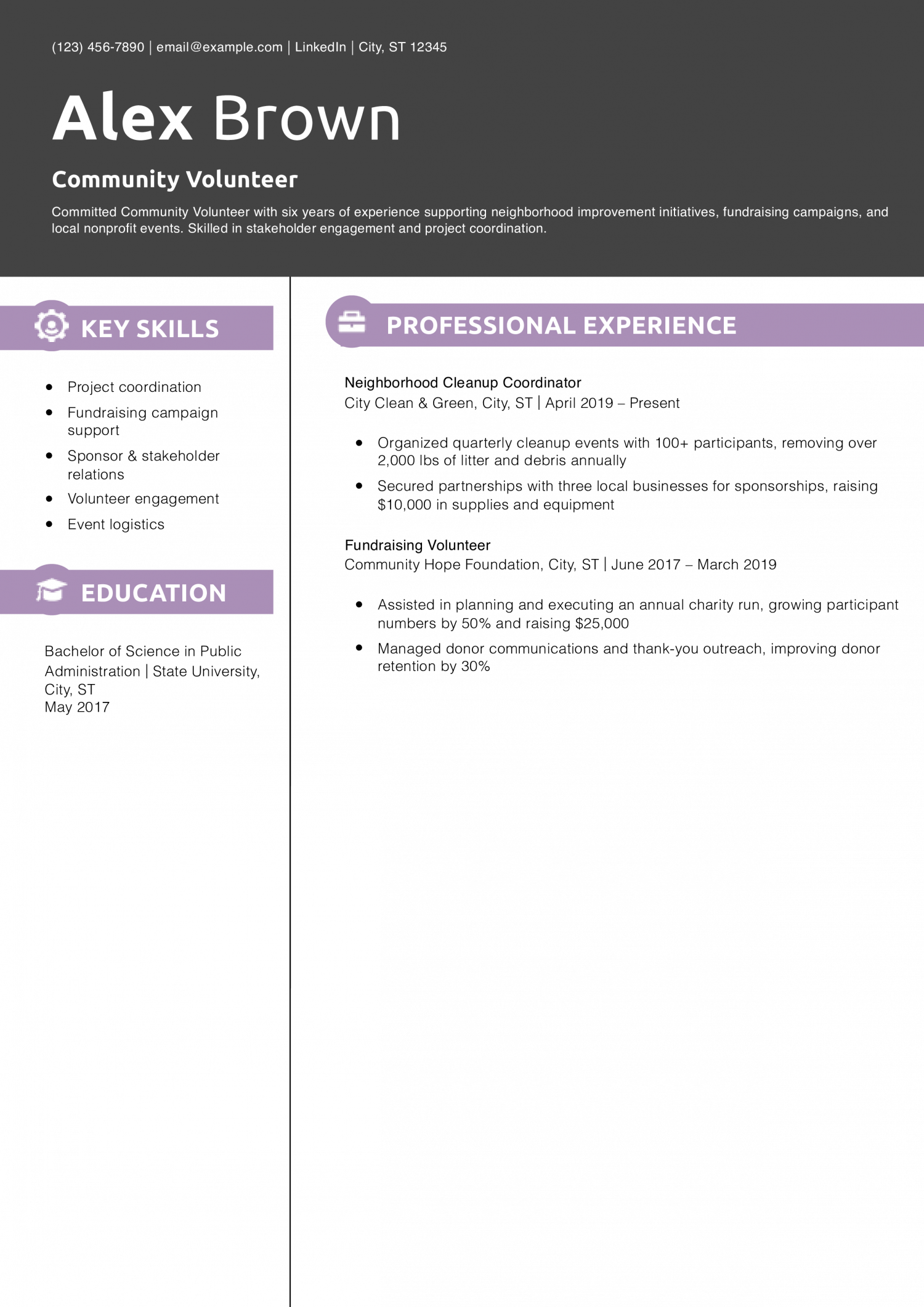
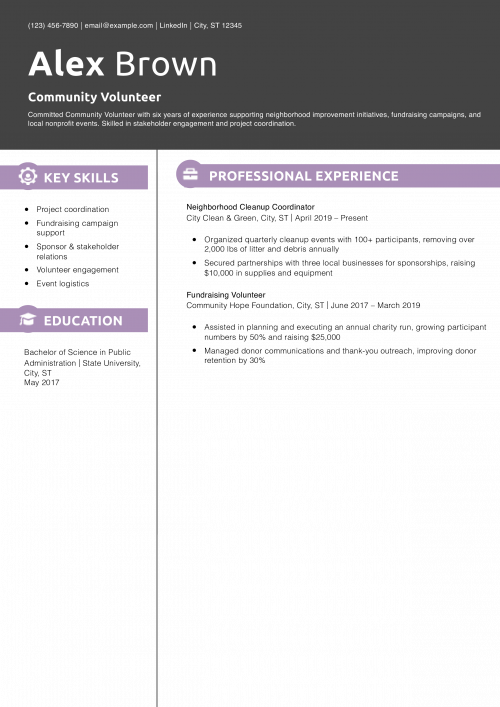
Alex combines community-impact metrics, such as “2,000 lbs removed,” “50% run participation growth,” to demonstrate effective project leadership.
Highlight both environmental and fundraising outcomes to show diverse volunteer impact. For general volunteer-resume tips, see What to Put on a Resume.
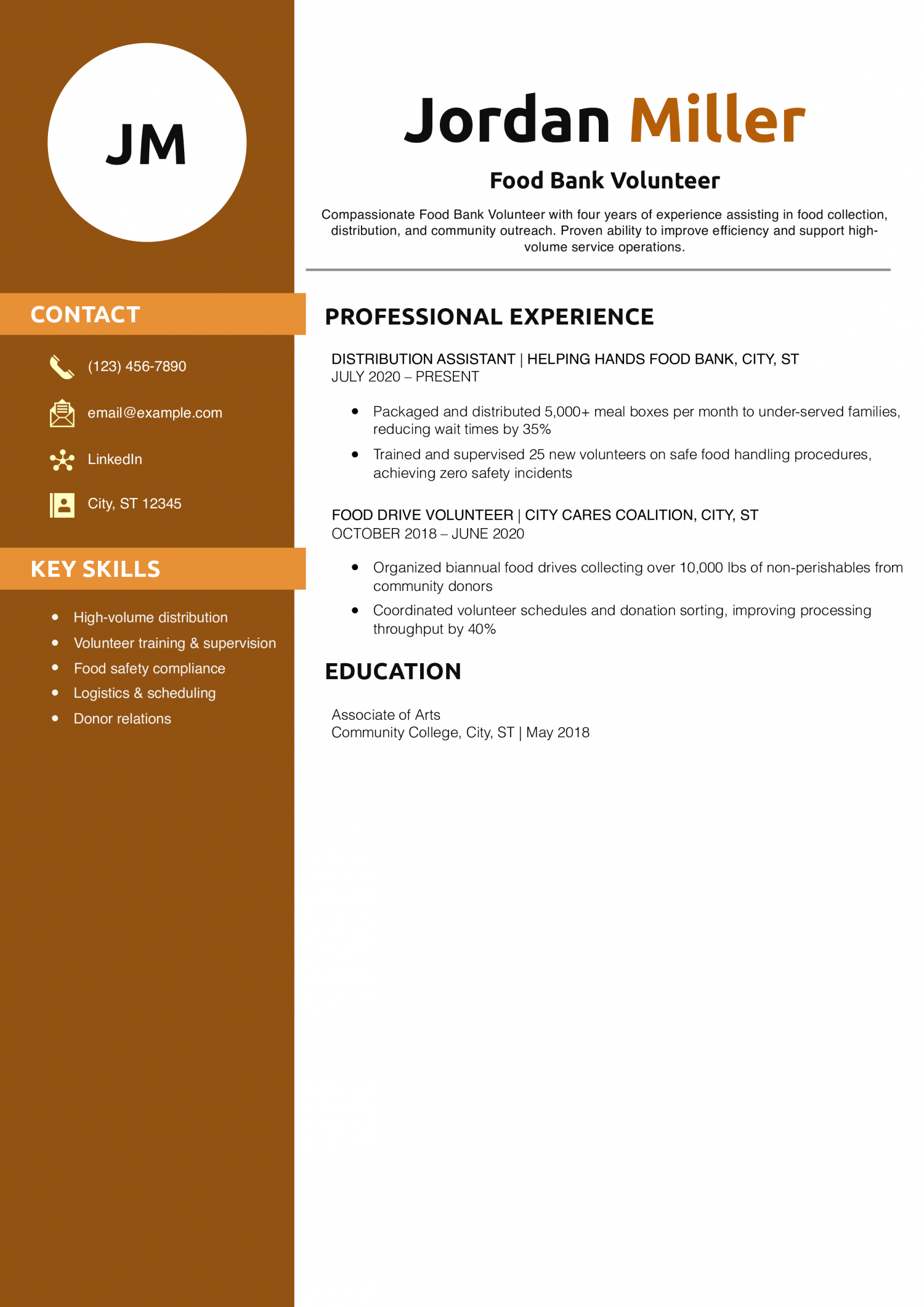
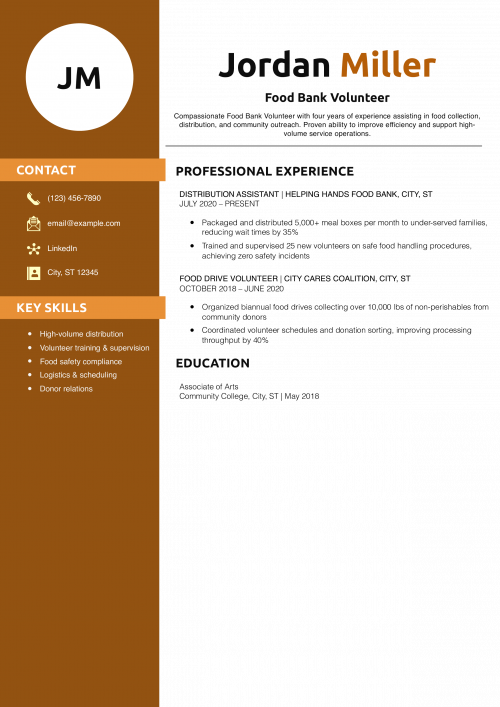
Jordan uses distribution and throughput metrics, like “5,000+ meals” and “40% faster processing” to highlight operational strengths.
Combine service-volume data with safety metrics to showcase reliability. For tips on entry-level volunteer roles, see How to Write a Resume with No Experience.
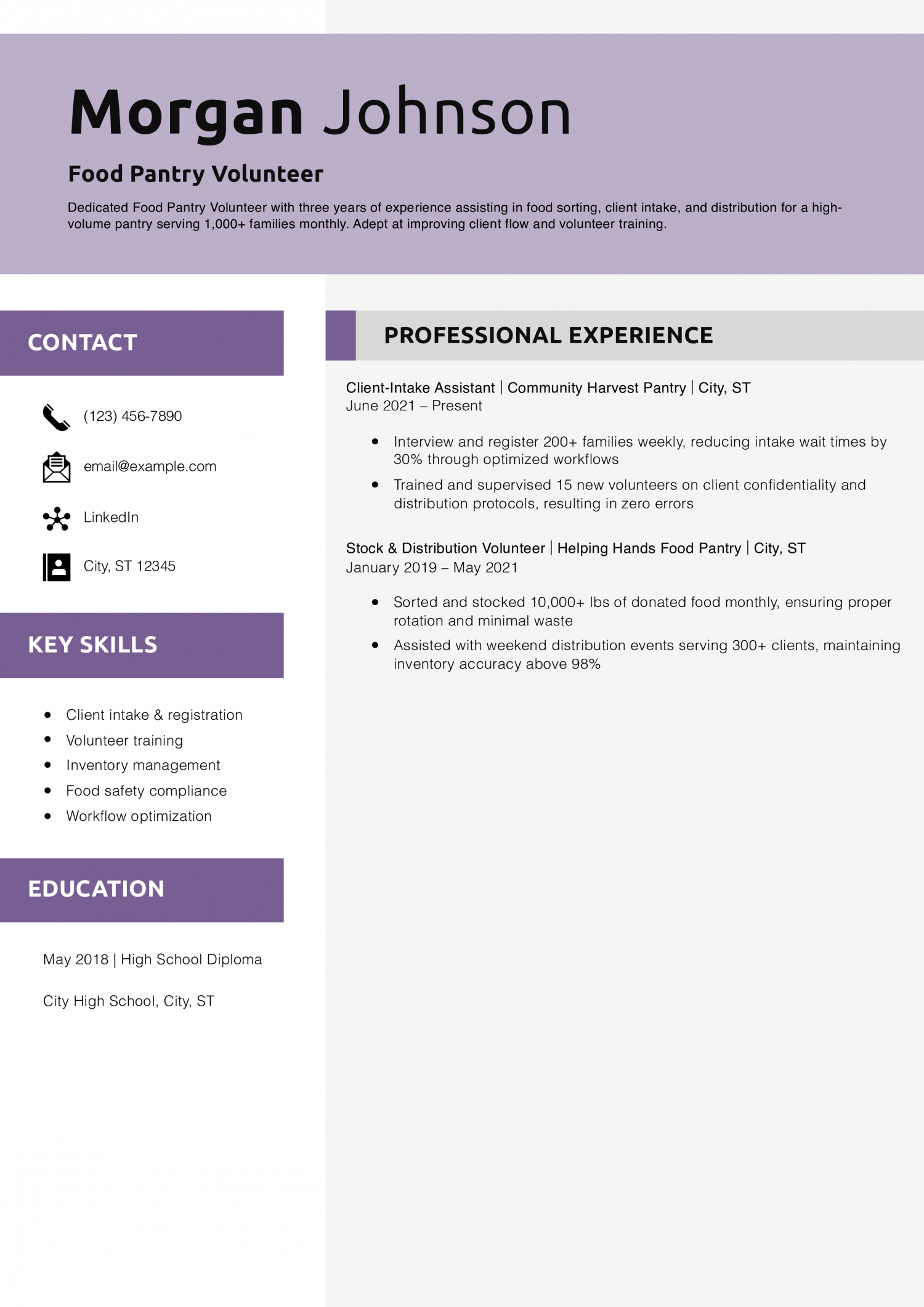
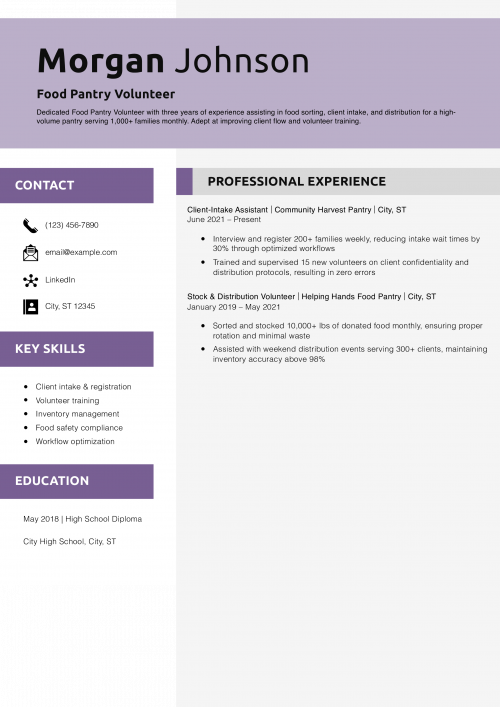
Morgan highlights both client-service metrics, such as “200+ families weekly” and “30% faster intake” and inventory accuracy, showing operational strength.
Quantify service-volume improvements to demonstrate your process impact. For more on listing volunteer work, see How to List Volunteer Work Experience on a Resume.
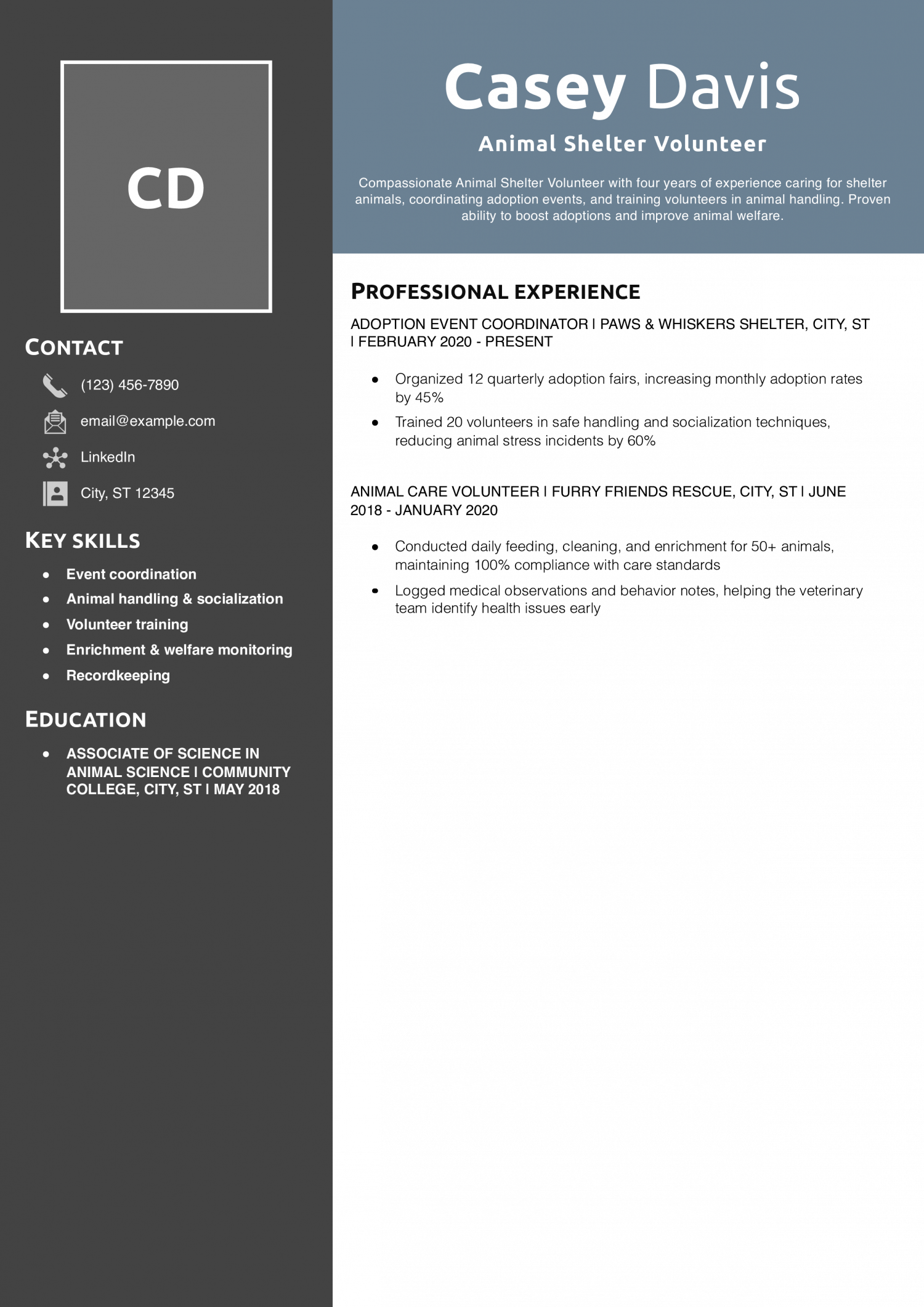
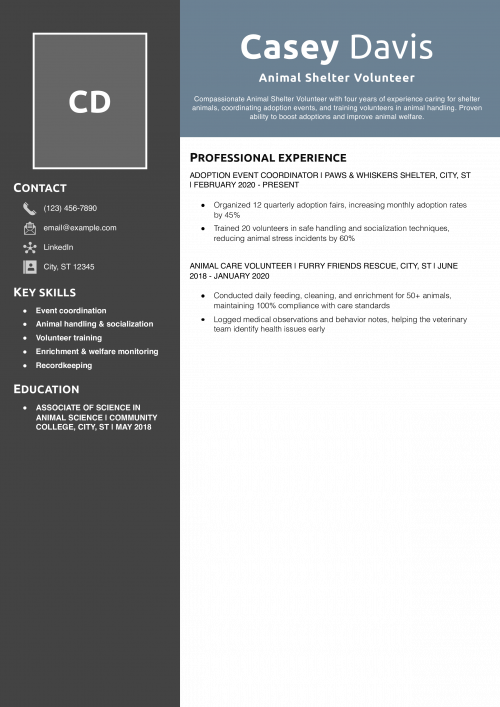
Casey uses clear adoption-rate growth and reduced stress metrics to showcase both event and animal-care expertise.
Highlight both community-facing and behind-the-scenes metrics to convey full-scope impact. For more on volunteer roles, see What to Put on a Resume.
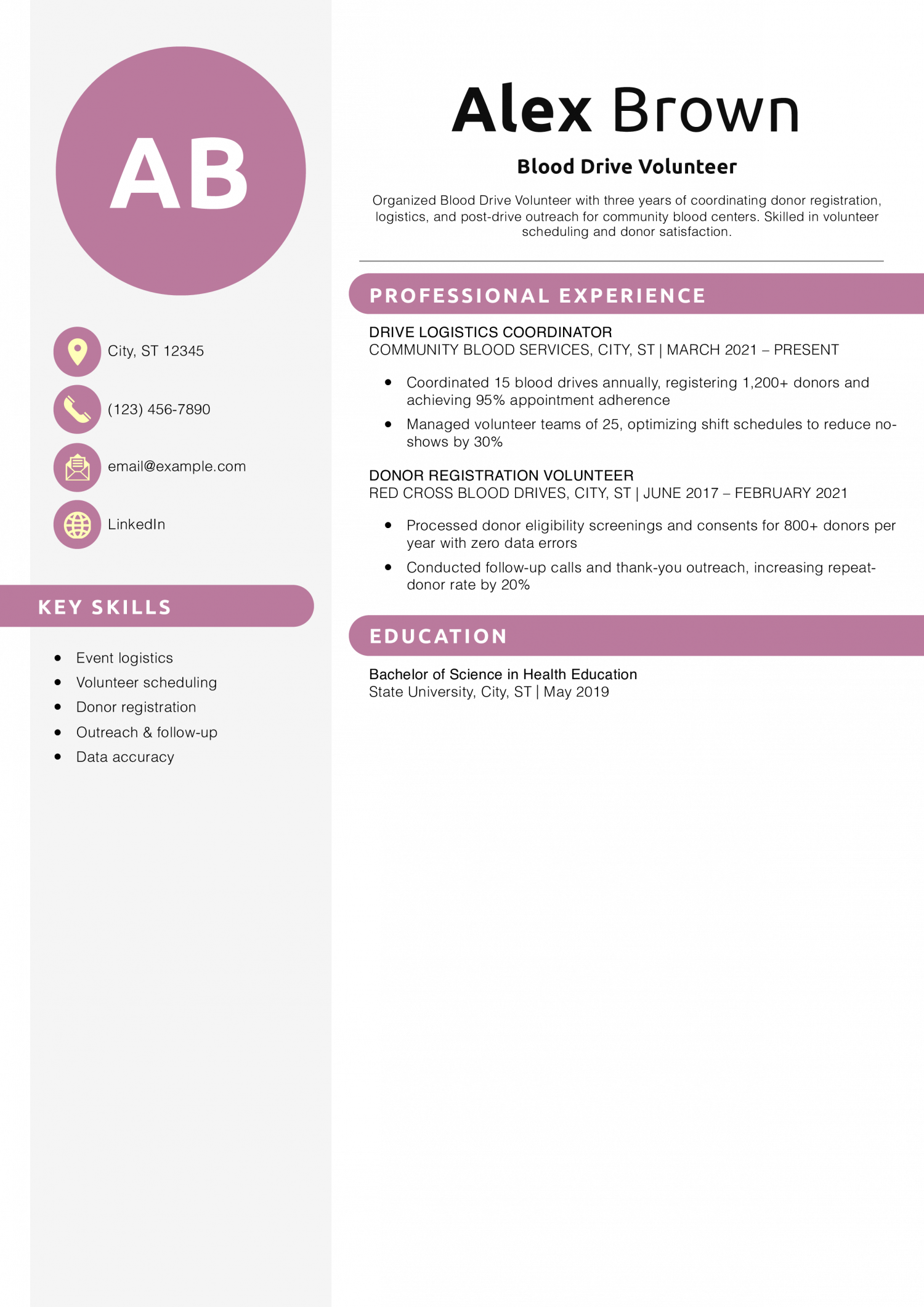
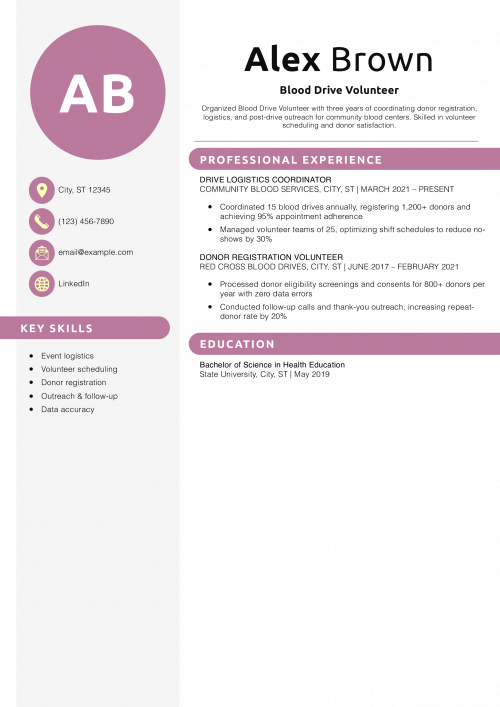
Alex couples donor-volume metrics (1,200+ donors) with retention increases, demonstrating strong coordination and outreach.
Combine event scale and follow-up success to show full drive-cycle impact. For guidance on high-volume volunteer work, see How to Make a Resume with No Experience.

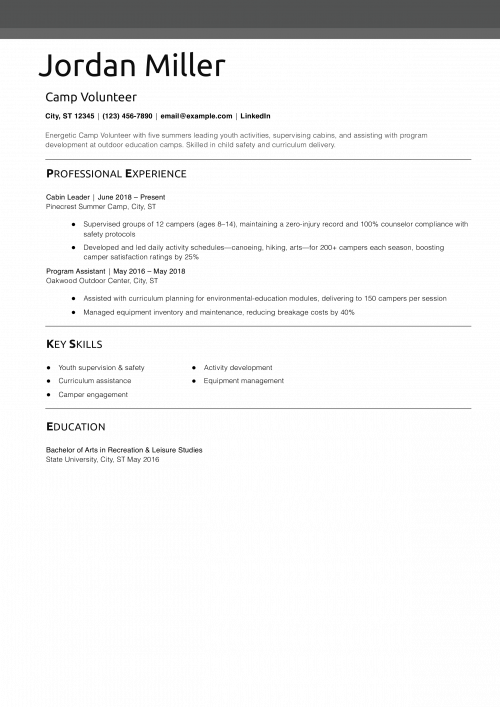
Jordan showcases both flawless safety (zero injuries) and satisfaction gains (25% higher ratings), demonstrating program and supervisory strengths.
Highlight both safety records and engagement metrics to prove well-rounded camp leadership. For more on youth volunteer roles, see What Hobbies to Put on a Resume.
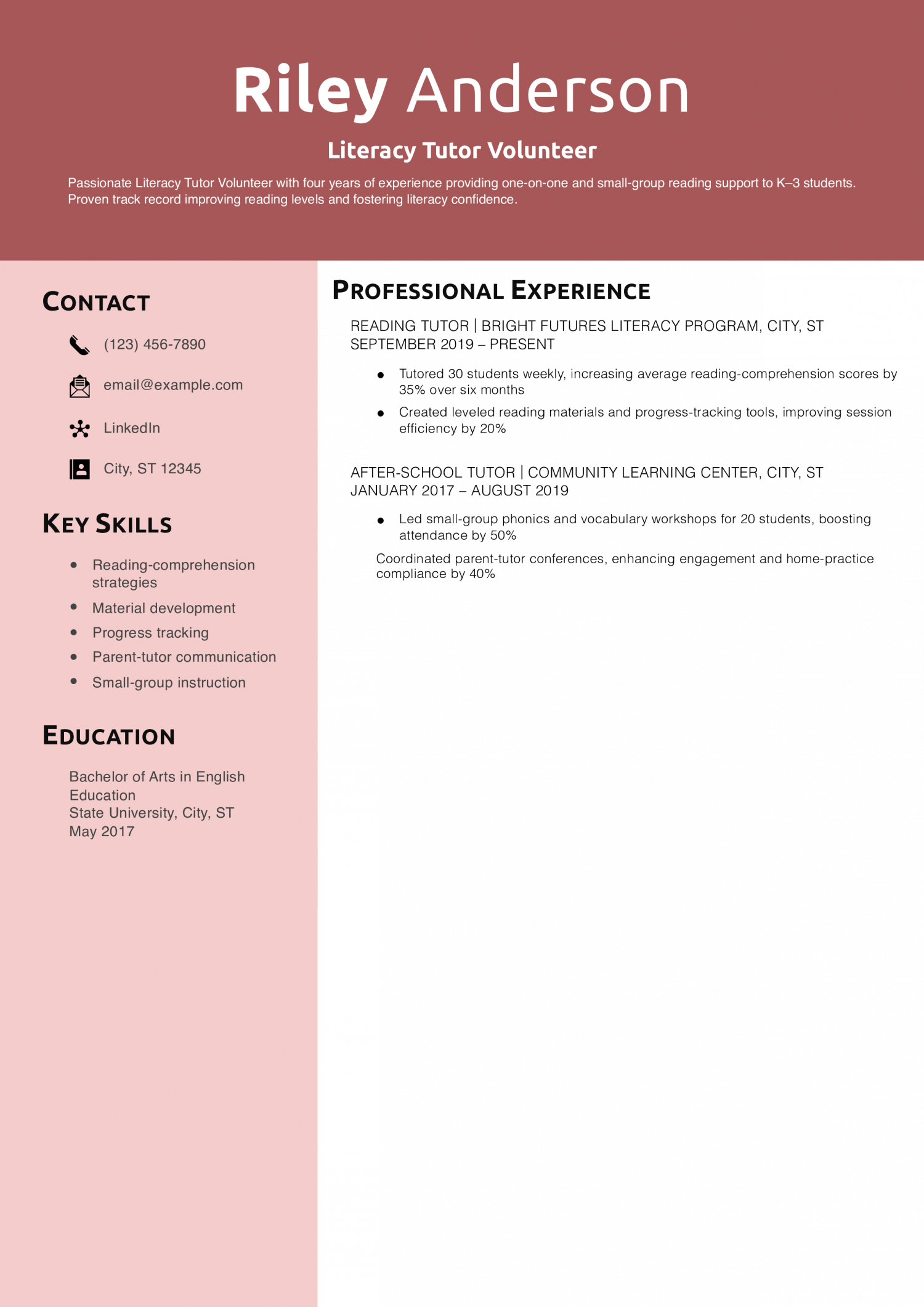
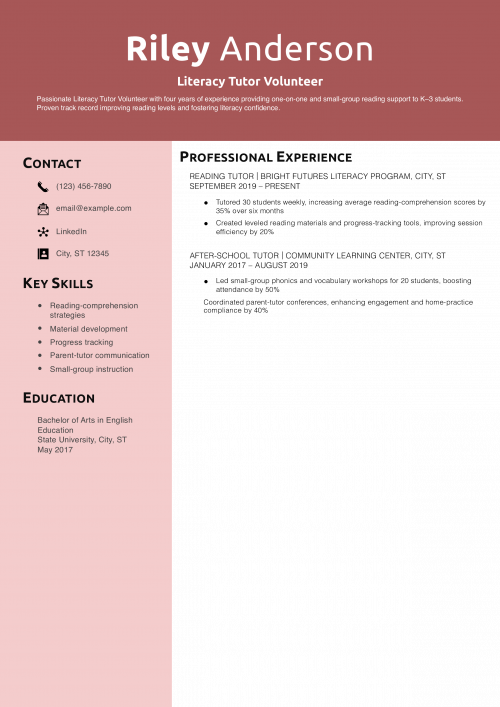
Riley quantifies comprehension gains and efficiency increases, showcasing pedagogical impact.
Key Tips:
Use pre- and post-assessment metrics to illustrate your tutoring effectiveness. For more on instructional roles, see How to Write a Convincing Resume Profile.
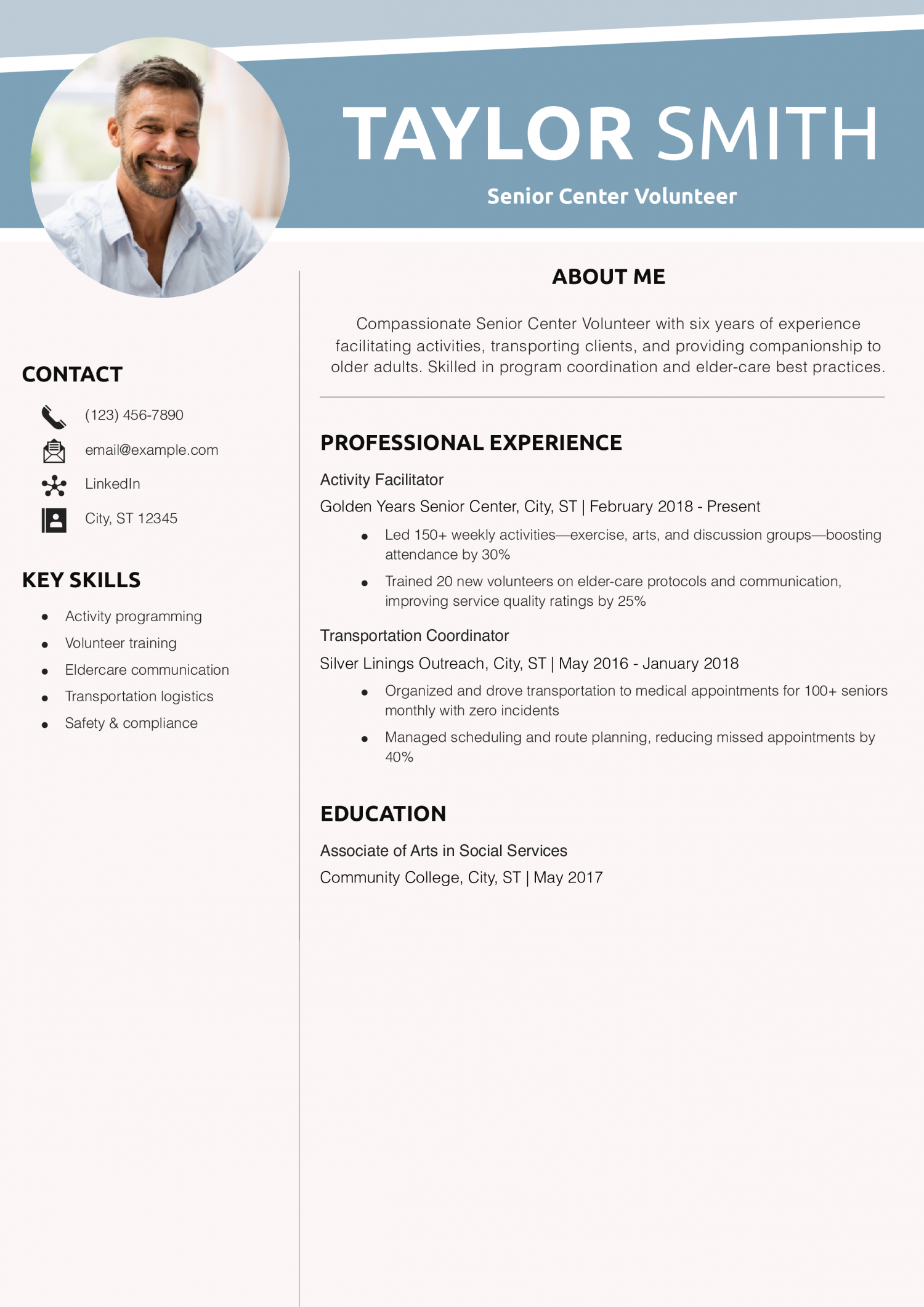
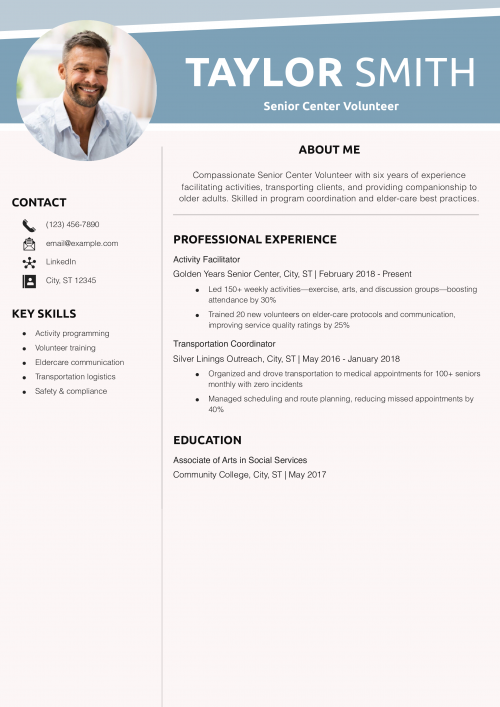
Taylor combines attendance growth (30% more participants) with safety metrics, demonstrating both programming and logistical strengths.
Highlight both program- and transport-related improvements to show comprehensive senior-care impact. For general volunteer advice, see How to Make a Resume.
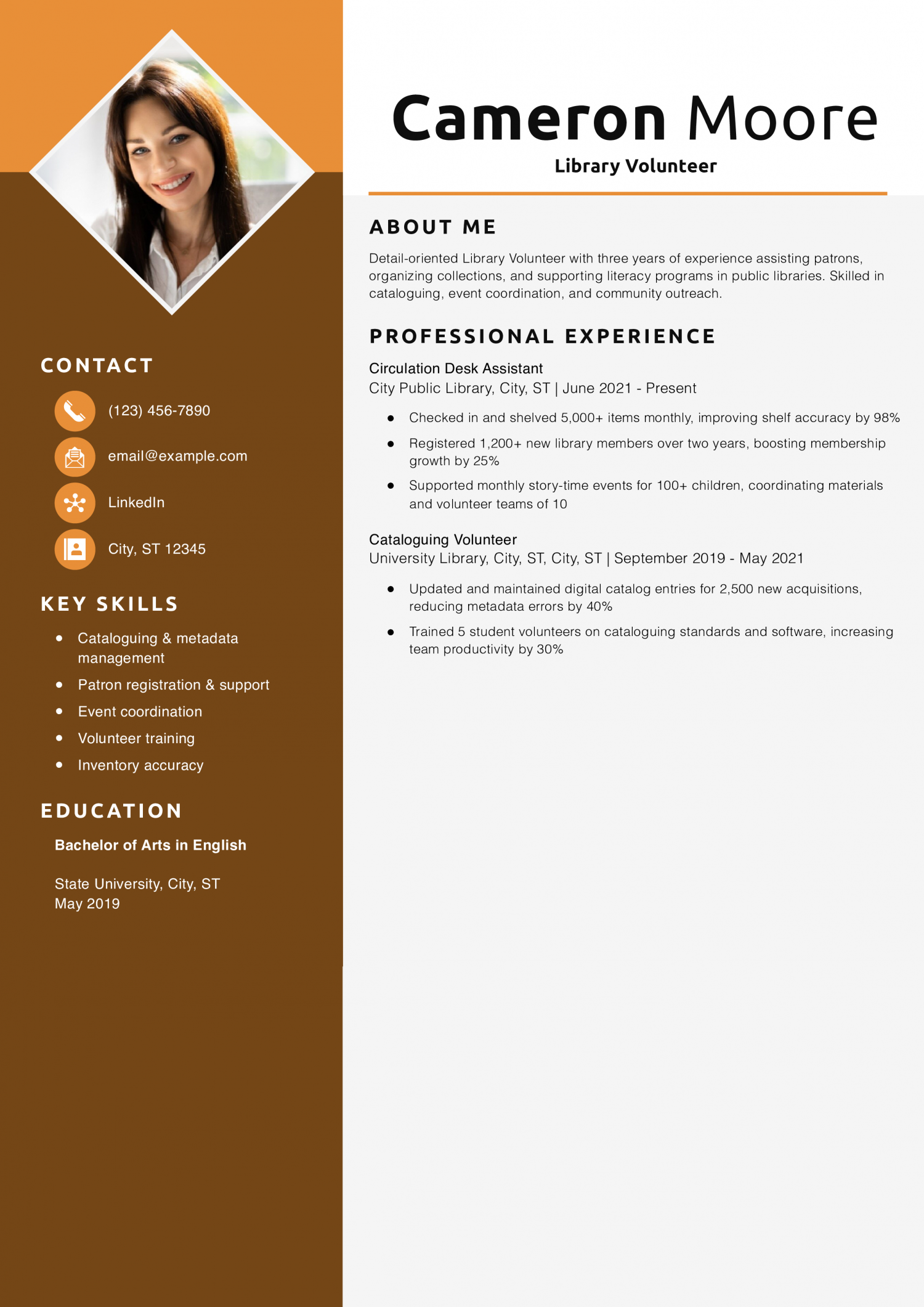
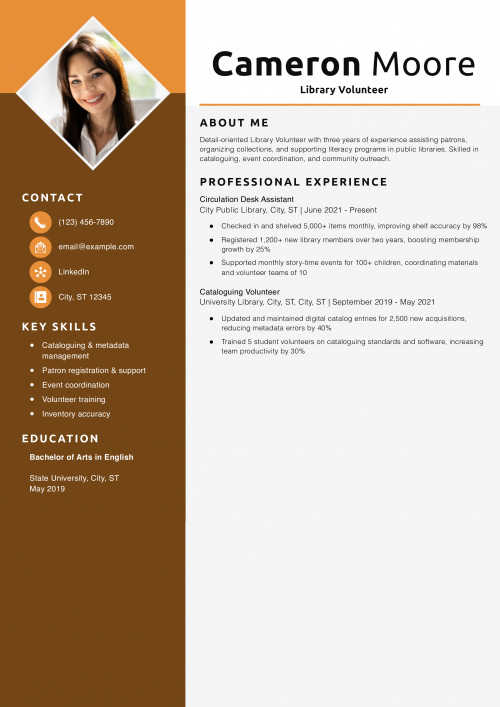
Cameron highlights both process accuracy and membership growth, showcasing operational and outreach strengths.
Key Tips:
Quantify both service volumes and accuracy improvements to prove your reliability. For specifics on volunteer formatting, see How to List Volunteer Work Experience on a Resume.
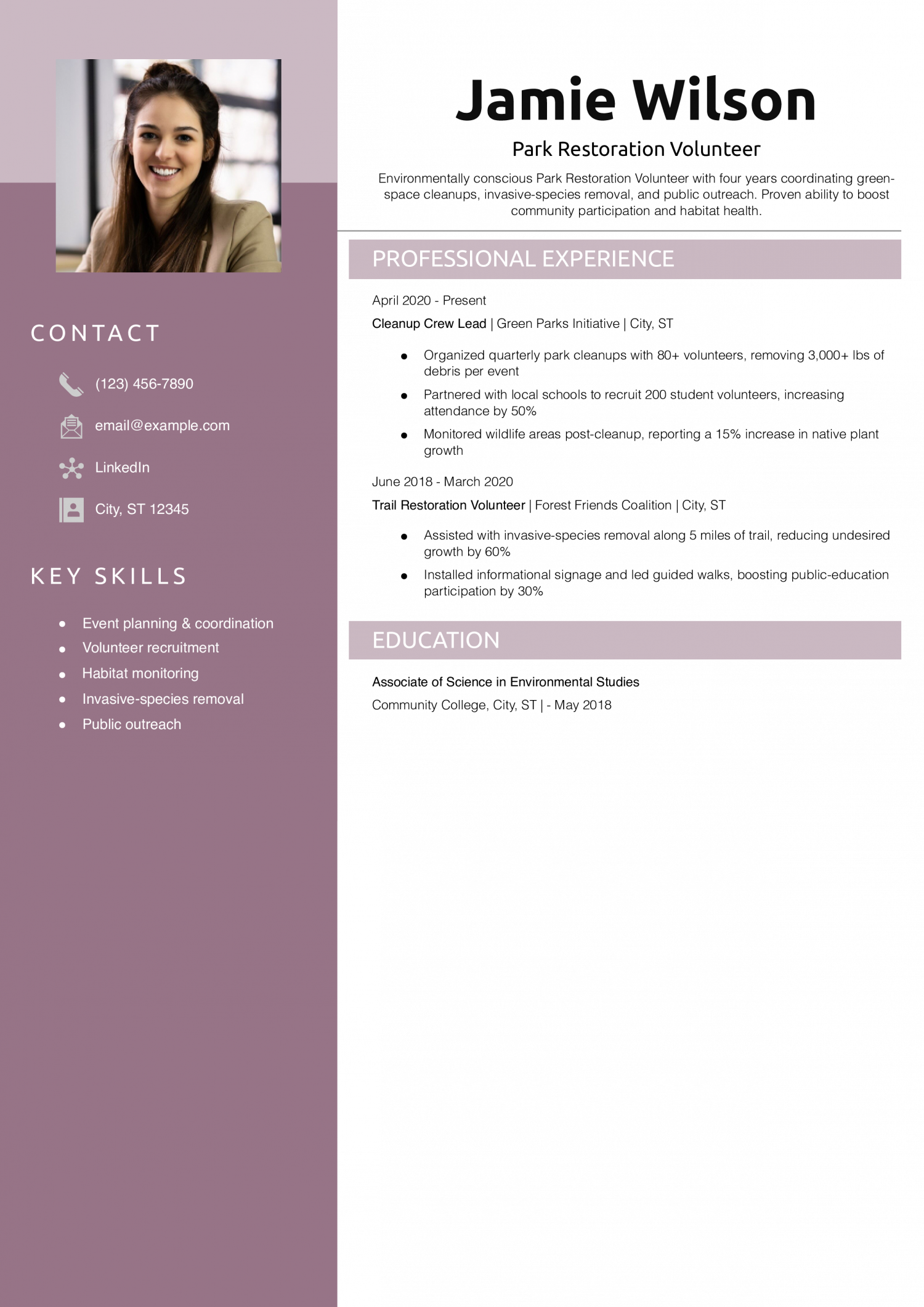
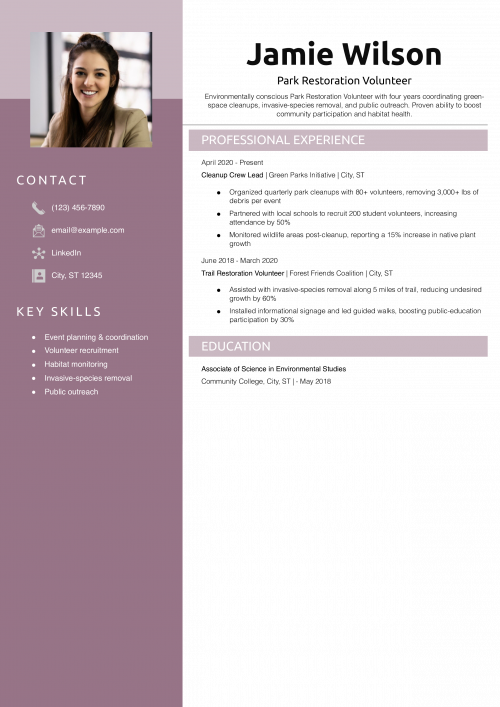
Jamie combines cleanup metrics with habitat improvements to show environmental impact.
Use both volume and ecological-health metrics to demonstrate conservation outcomes. For ideas on structuring objectives, see Resume Objective Examples.

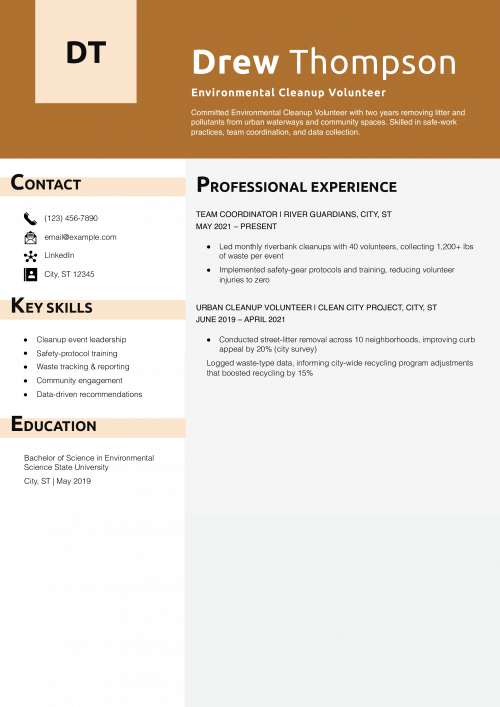
Drew quantifies both waste removal and program improvements, showing effective cleanup and analysis.
Include both removal metrics and data-driven program changes to highlight analytical impact. For volunteer-resume guidance, see What to Put on a Resume.
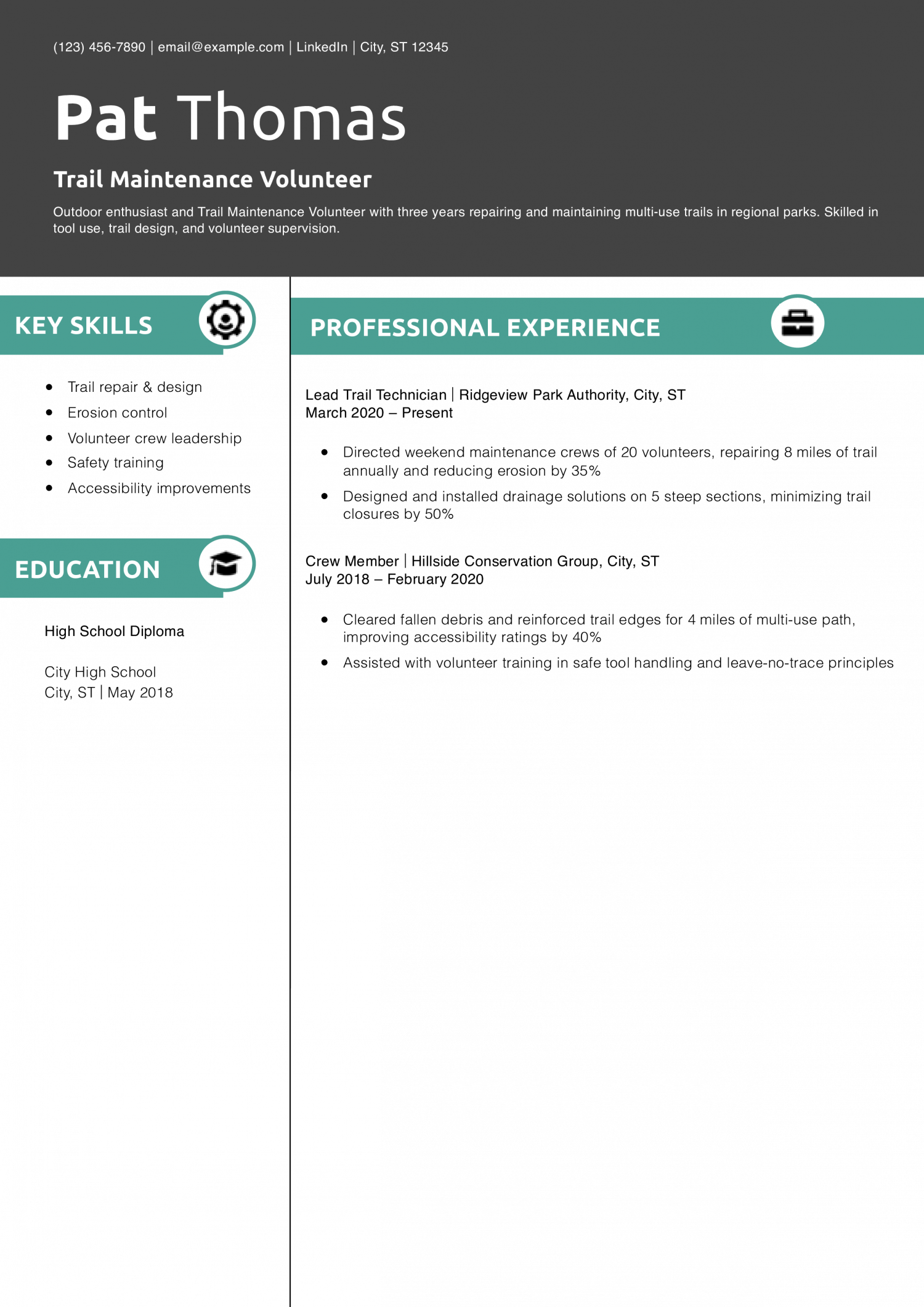
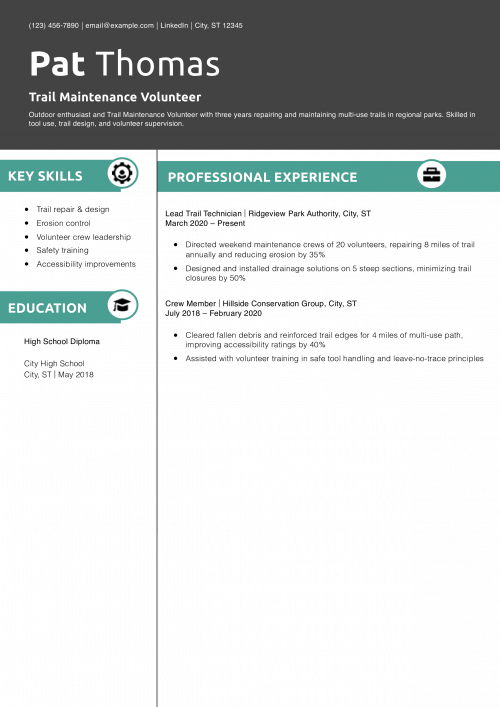
Pat’s resume ties erosion-control metrics and accessibility gains to clear maintenance impact.
Use both environmental and user-experience improvements to illustrate trail-maintenance success. For more on listing field experience, see Skills to Put on a Resume.
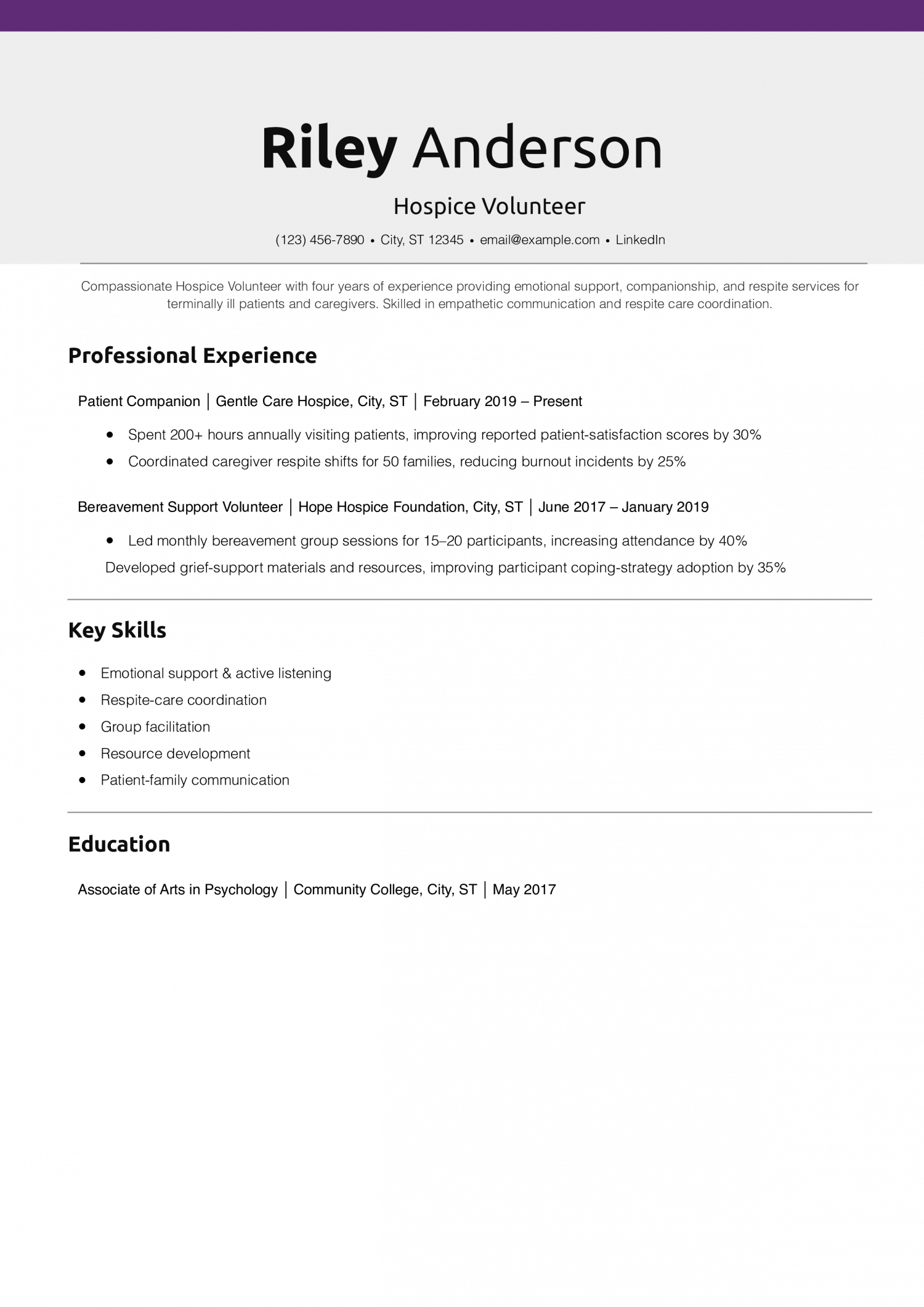
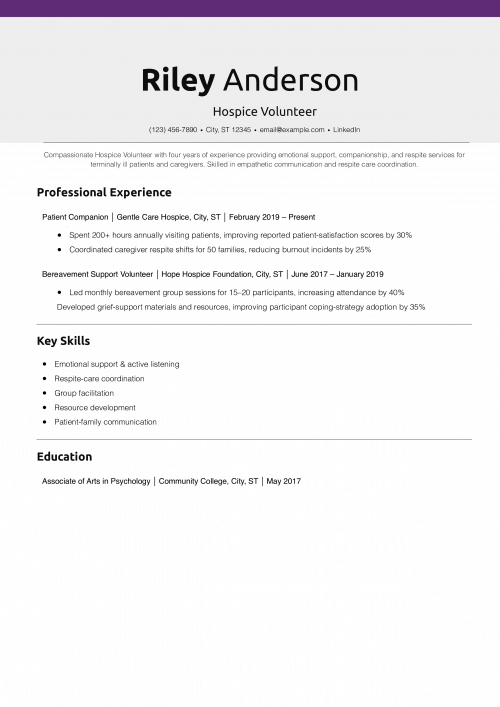
Riley combines satisfaction and burnout-reduction metrics to show holistic hospice support impact.
Highlight both patient and caregiver outcomes to demonstrate your empathetic effectiveness. For volunteer resume inspiration, see How to Write a Resume Summary.
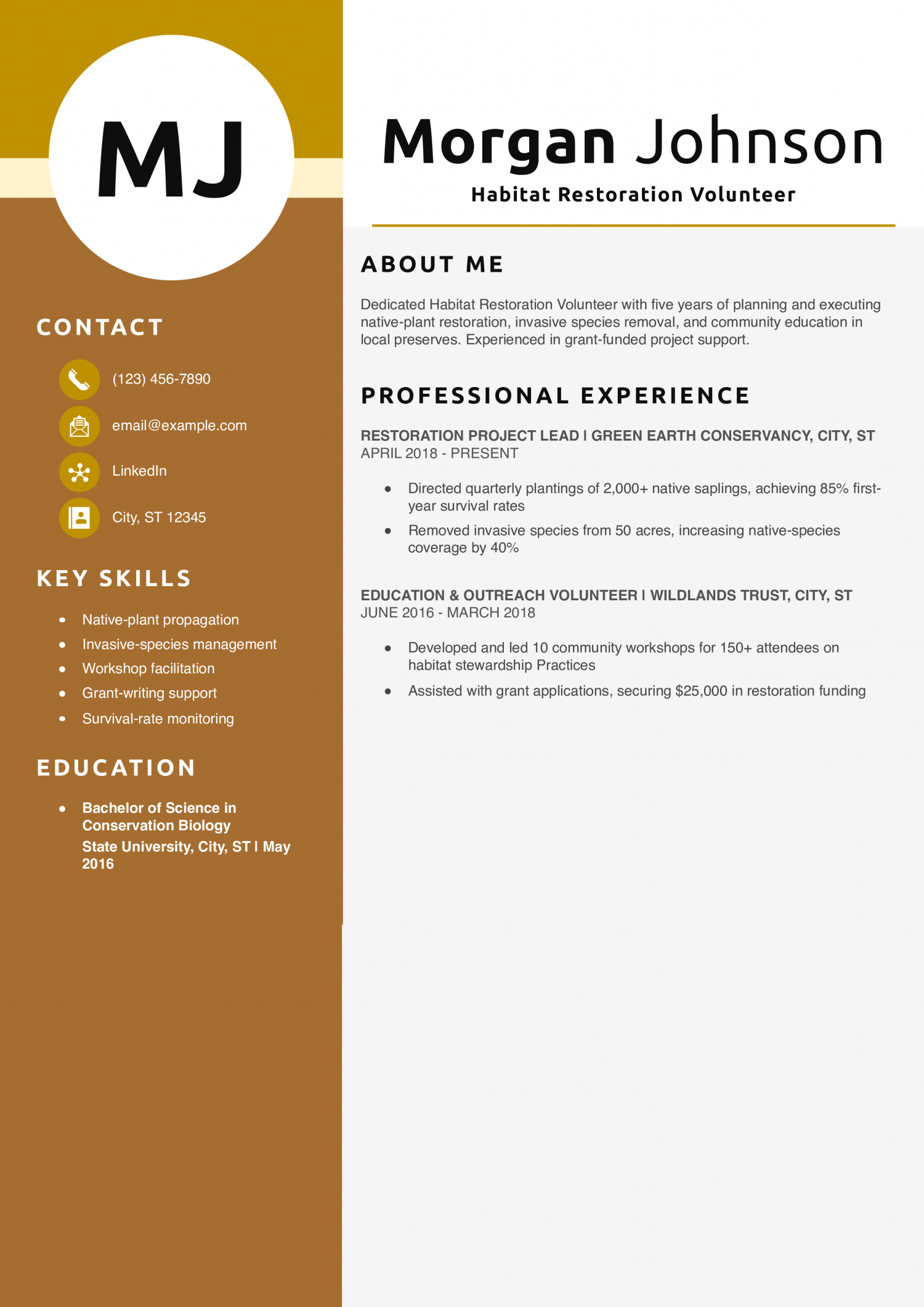
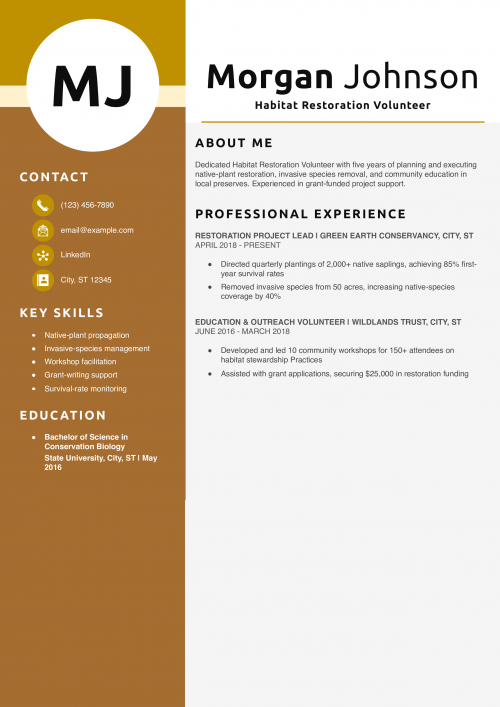
Morgan quantifies planting and coverage gains, demonstrating ecological and educational impact.
Include planting survival rates and funding figures to highlight both field and support contributions. For more on volunteer formatting, see What to Put on a Resume.
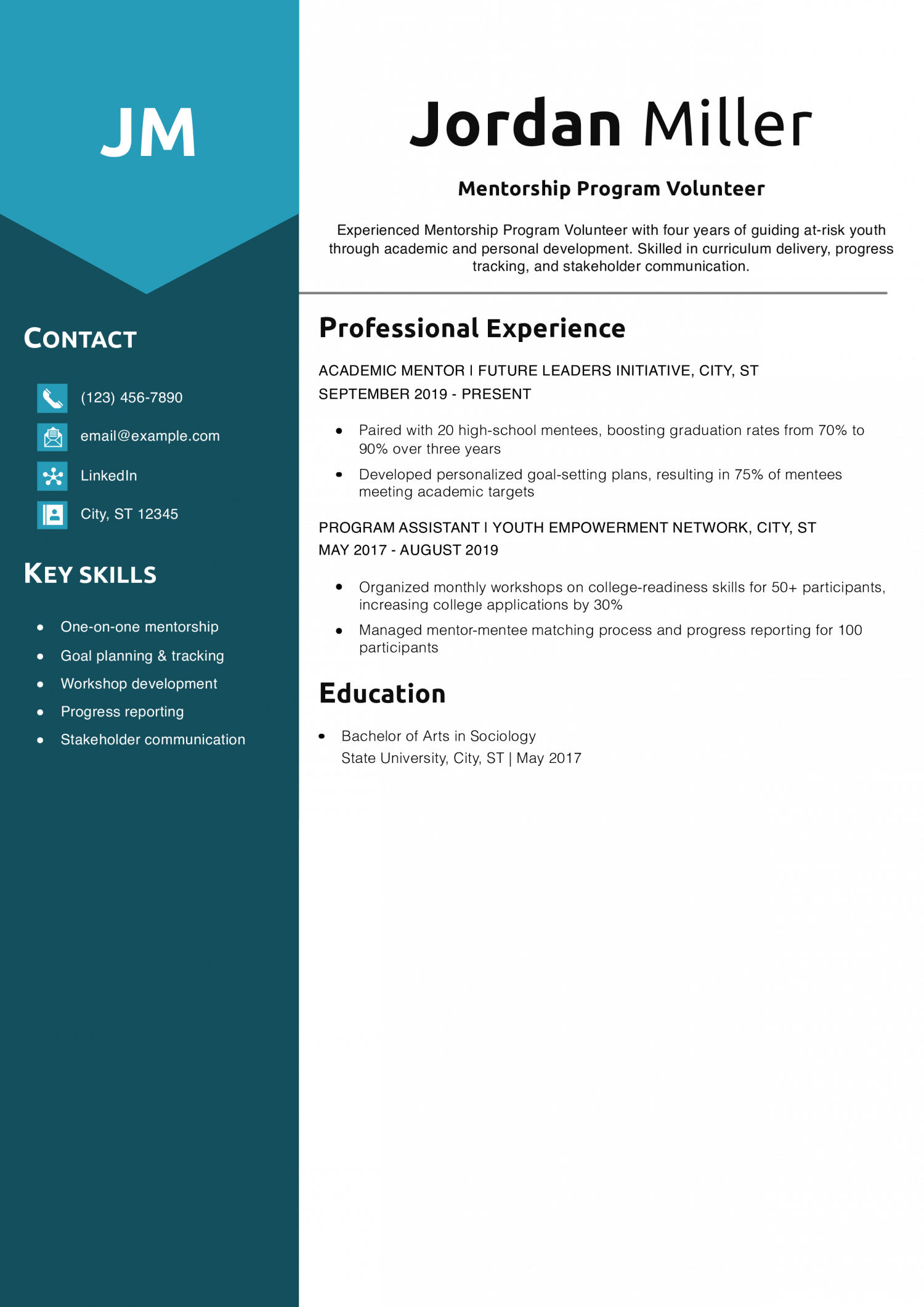
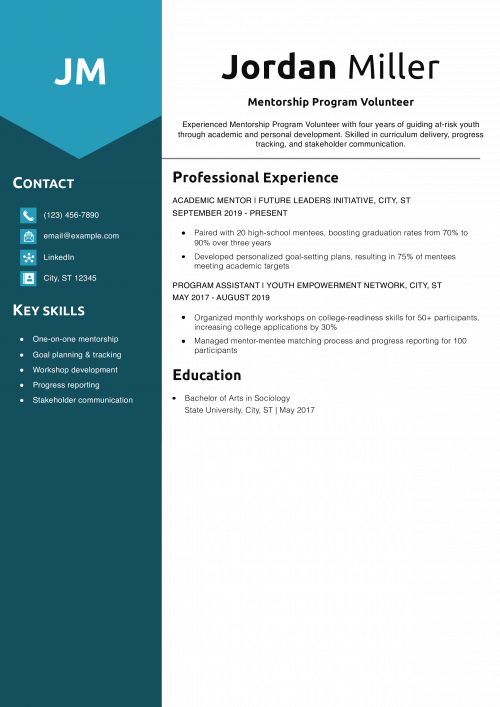
Jordan pairs graduation-rate gains, like “from 70% to 90%,”with application increases, showing measurable mentoring effectiveness.
Highlight both academic and process metrics to showcase mentoring impact. For suggestions on volunteer resumes, see Resume Keywords.
Using a template can help you write an effective volunteer resume. Your volunteer resume should usually include these sections:
Give your full name, phone number, email address, location, and links to any online profiles. Ensure your contact information is current so hiring managers can reach you for an interview.
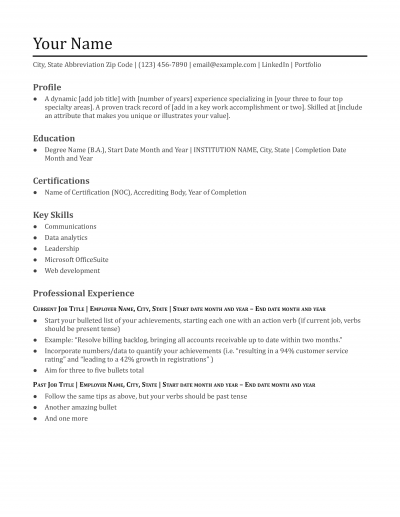
Your Name
(123) 456-7890
[email protected]
City, State Abbreviation Zip Code
Impress hiring managers at the top of your resume by giving the three to five primary reasons you’d excel at their organization. For instance, you might describe your focus on public safety and community well-being if those are key causes of the volunteer program in question.
Compassionate health care professional with a Bachelor’s degree in nursing and health care administration and an Associate degree in medical assisting. Skilled in patient care coordination and administrative support in hospital settings, with a record of improving patient satisfaction and office efficiency.
View the experience section as a chance to give detailed examples of your work and success in roles similar to the one you’re now pursuing. For example, maybe you started a volunteer recognition program in your current role. Describe how that program made the team more cohesive or helped improve volunteer retention.
Volunteer Coordinator, Federal Emergency Management Agency (FEMA), Indianapolis, IN | January 2018 to December 2018
Use relevant performance data and metrics to show the results you’ve achieved in your career so far. Hard numbers provide context to your work history and give recruiters a better sense of your scope and impact.
Most organizations rely on some form of applicant tracking system (ATS) to identify qualified candidates for job openings. To get your resume through the initial screening and into the hiring manager’s hands, incorporate keywords from the job posting directly into your profile, professional experience, and skills section.
Creating a resume can be challenging if you don’t have real-world experience yet. But you still have valuable skills and knowledge from your education and training. Emphasize any relevant coursework you’ve done or certifications you’ve earned. Also, consider describing internships you’ve completed in your field, and emphasize your work ethic and willingness to learn. By highlighting these qualities, you can show how you’d be an asset to any team.
With the education and certifications sections, you can show you have a strong knowledge base in your field. Cite any credentials you’ve earned that speak to your abilities as a volunteer or volunteer supervisor. Also, include any training you’ve done that relates to your target employer’s mission or areas of focus. Following are templates to help you organize this information on your volunteer resume (note, years are optional).
Template:
[Degree Name], [School Name], [City, State Abbreviation] | [Graduation Year]
Example:
Bachelor of Science in Nonprofit Management, Indiana University, Indianapolis, IN
Template:
[Certification Name], [Awarding Organization] | [Completion Year]
Example:
Certified in Volunteer Administration (CVA), Council for Certification in Volunteer Administration
A separate skills section lets you quickly display the different ways you can add value to an organization.
Below, you’ll find a list of key terms and skills that you may encounter while applying for volunteer-related positions:
| Key Skills and Proficiencies | |
|---|---|
| Community outreach | Conflict resolution |
| Database management | Event planning and coordination |
| Fundraising | Nonprofit leadership |
| Process streamlining | Project management |
| Recruitment and training | Reporting and documentation |
| Team collaboration | Time management |
| Volunteer administration | Volunteer retention and recognition |
| Work scheduling | |
One of the best ways to enhance your resume is by starting each bullet point with a strong action verb. Dynamic verbs help you keep the hiring manager’s attention and show the varied nature of your experience. The following list can help you find a good mix of action verbs for your volunteer resume:
| Action Verbs | |
|---|---|
| Advanced | Created |
| Decreased | Enhanced |
| Established | Fostered |
| Generated | Grew |
| Improved | Increased |
| Introduced | Lowered |
| Prevented | Ranked |
| Reduced | Streamlined |
| Supported | Updated |
| Won | |
A resume is a simple tool for professional communication and should be formatted that way. Choose a template that’s clear and straightforward, and avoid any with elaborate graphics or various colors and font styles. Simple resume design helps a hiring manager more quickly scan for relevant information. It also helps you more easily tailor the document to each job application and make updates to your work history going forward.
First, look closely at the job post text and highlight words that are repeated, emphasized, or otherwise seem important. Compare these highlighted phrases to the language you're using in your resume, particularly the profile and key skills sections. Then, seek ways to align your resume language with the job posting while not copying phrases or misstating your background.
For example, if the nonprofit seeks someone collaborative, you may want to call out that aspect of your experience in your profile. Or say the organization has many non-English speaking customers. You could highlight your foreign language skills both in your profile and as a separate section farther down the document. With adjustments like these, you can make your resume more relevant to each opportunity.
The key difference between a Volunteer CV and a Volunteer resume example is the level of detail. A CV is typically more comprehensive, listing all relevant experience and achievements, whereas a resume example is more concise, focusing only on the most relevant information for a particular job. The CV can also include academic background and research work, while a resume is usually more focused on professional experience and key accomplishments.
The combination or hybrid format merges a functional resume's profile section with a chronological resume's experience section. Most modern resumes (including the three on this page) follow this format because it gives hiring managers the clearest view of an applicant's strengths and work history.
A good cover letter makes a valuable addition to most job applications. To make your letter stand out, tell the hiring manager why you’re interested in their organization and the specific volunteer role they hope to fill.
Executive Resume Writer and Career Coach
Andrew Stoner is an executive career coach and resume writer with 17 years of experience as a hiring manager and operations leader at two Fortune 500 Financial Services companies, and as the career services director at two major university business schools.
Resume Templates offers free, HR approved resume templates to help you create a professional resume in minutes. Choose from several template options and even pre-populate a resume from your profile.