
Licensed Practical Nurse Resume Examples and Templates



To market yourself effectively to hospitals and health care organizations, you need an exceptional resume that illustrates the strongest aspects of your experience as an intensive care unit (ICU) nurse. Communicate your background in providing essential care and adapting to rapid changes in patient conditions during life-threatening situations. Demonstrate your ability to collaborate effectively with nurses, physicians, and multidisciplinary teams to drive positive clinical outcomes. In this guide, we’ll provide expert tips and advice to help you craft a results-driven ICU nurse resume that truly sets you apart from other applicants.
Key Takeaways:

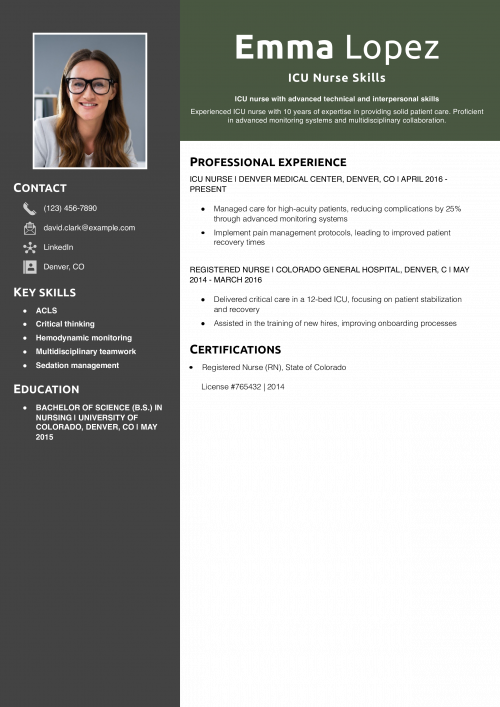
Emma’s resume highlights her clinical expertise and measurable achievements, such as improving patient satisfaction scores. For advice on emphasizing critical care skills, visit How To List Skills On A Resume.
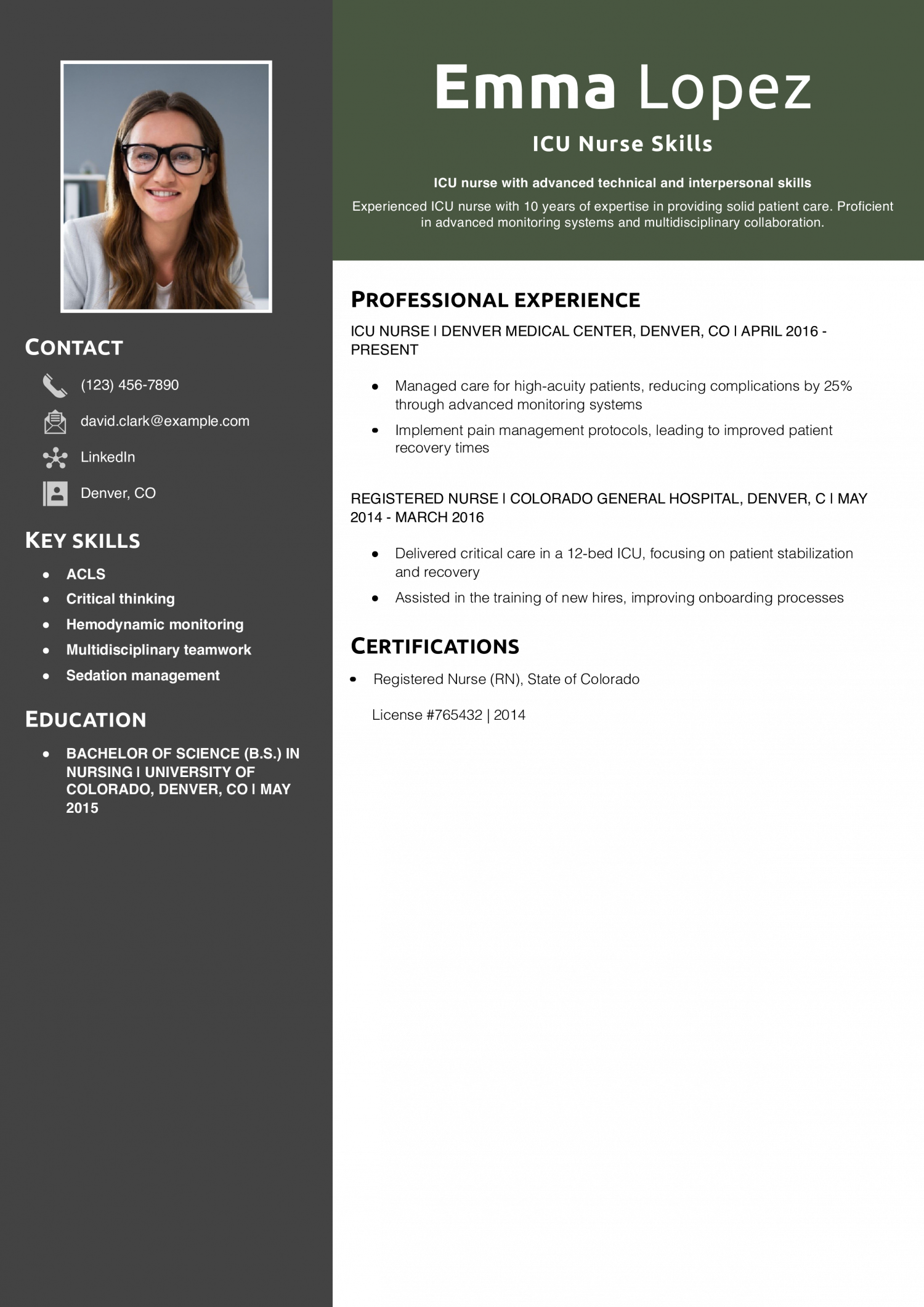
David’s resume emphasizes key technical and interpersonal skills essential for ICU nurses. To learn more about structuring your skills section, visit Skills To Put On Resume.
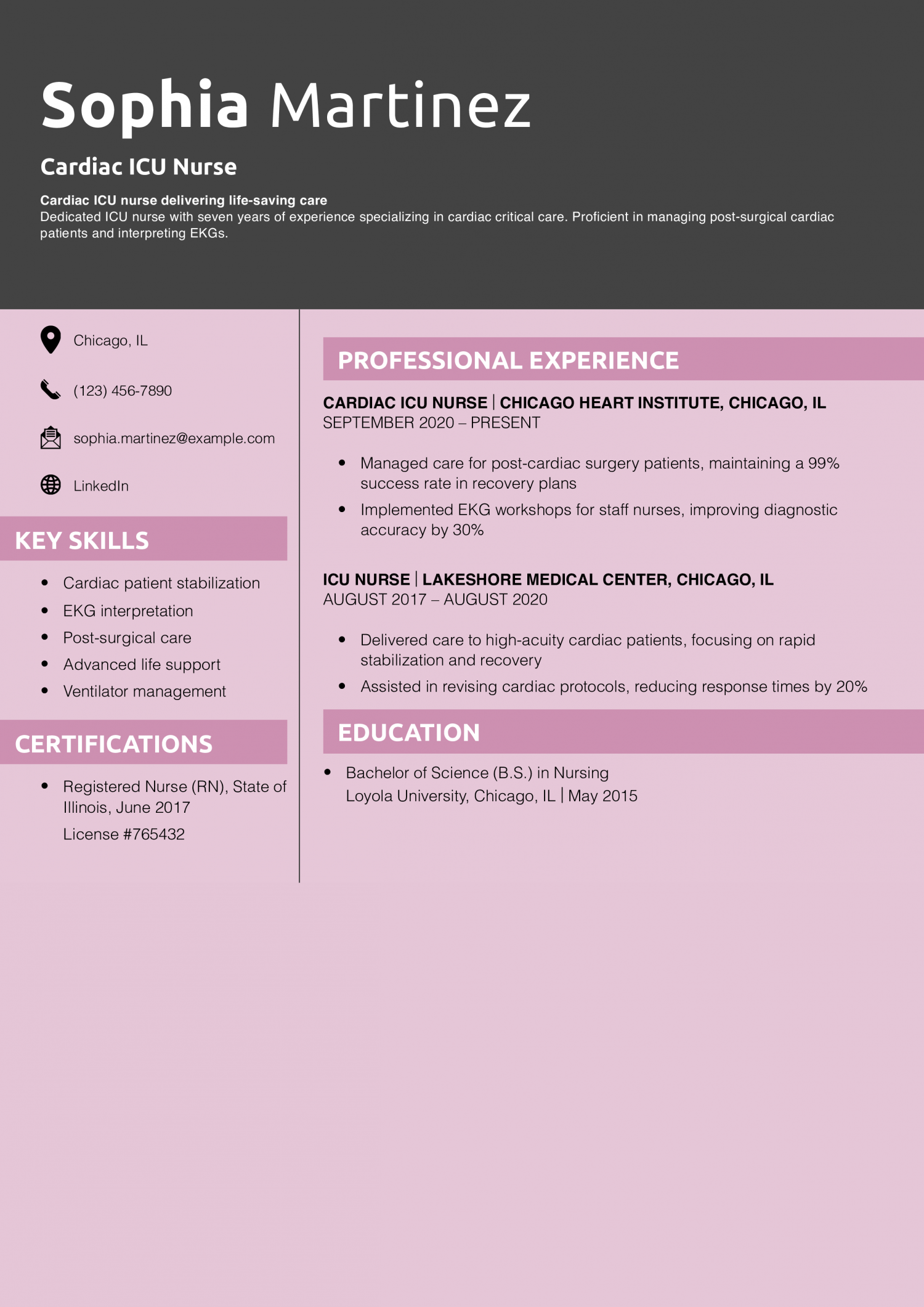
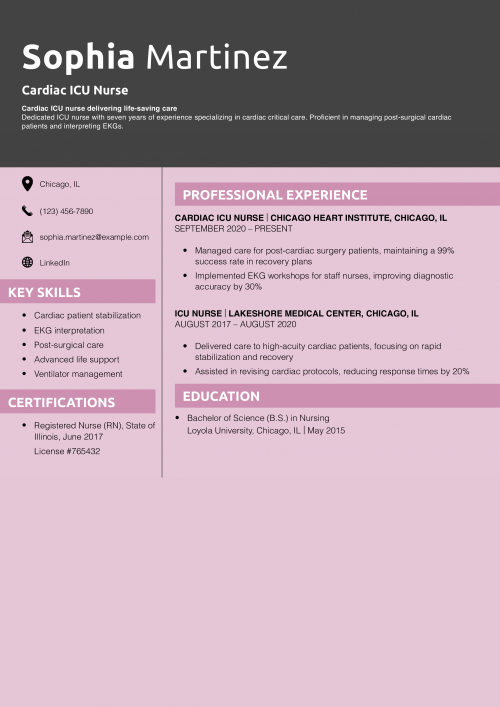
Sophia’s resume demonstrates her expertise in cardiac care, highlighting measurable improvements like diagnostic accuracy. To help frame your career accomplishments effectively, visit Resume Action Words.
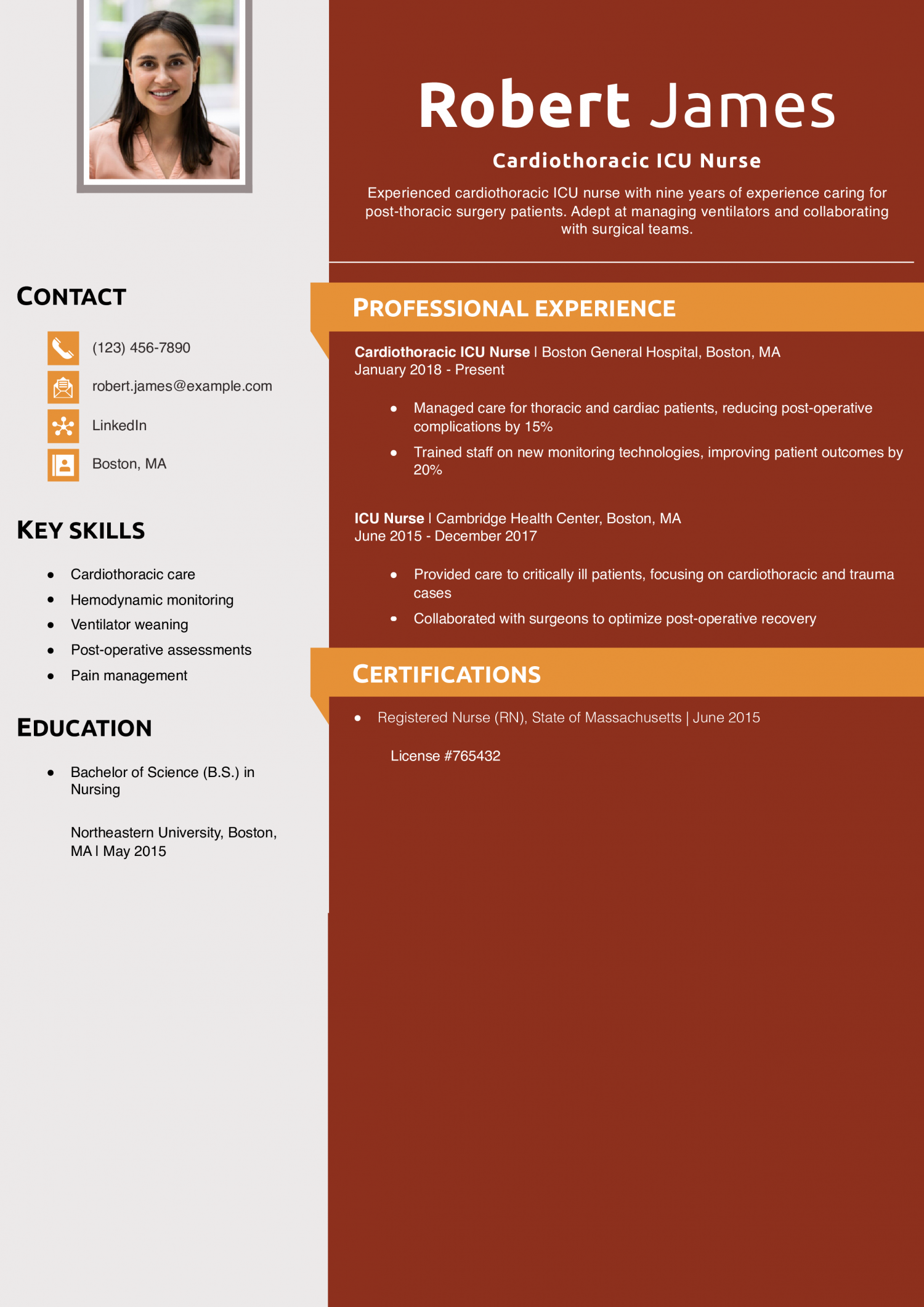
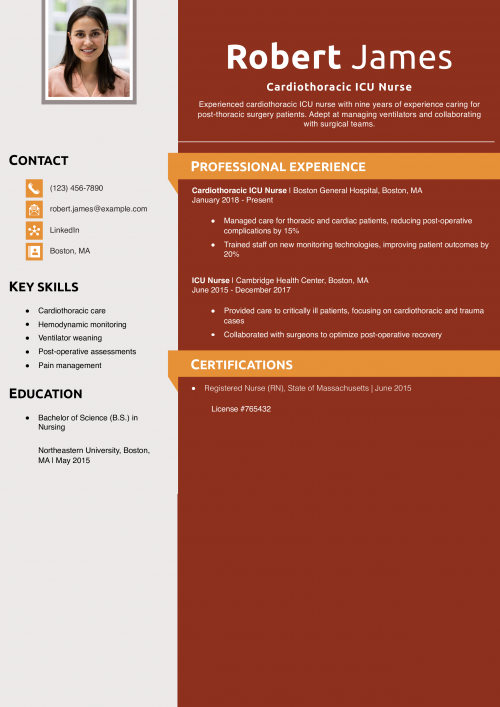
Robert’s resume highlights his specialized experience in cardiothoracic care, showcasing measurable contributions to patient recovery. For tips on describing your previous roles and accomplishments, visit Work Experience On A Resume.
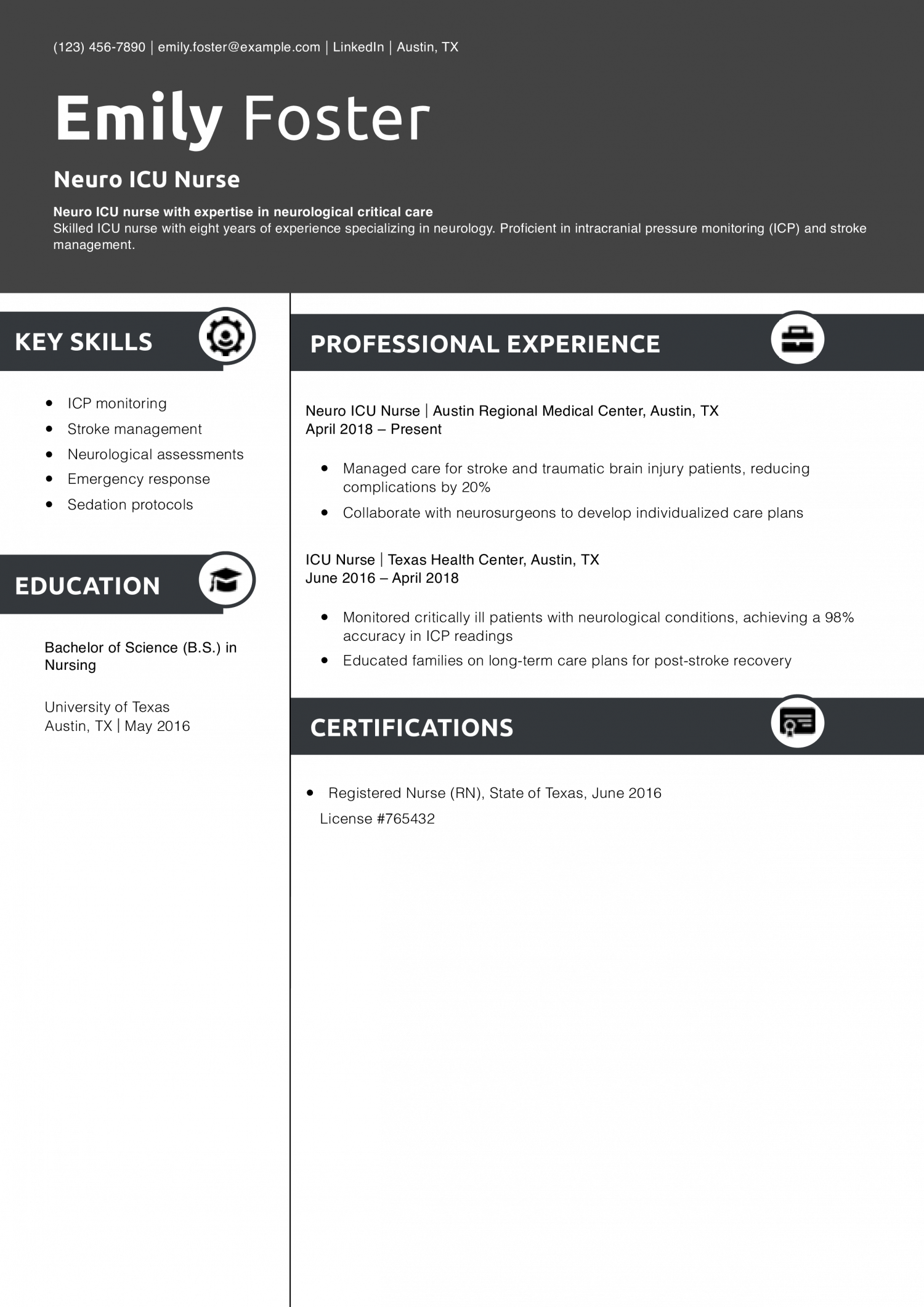
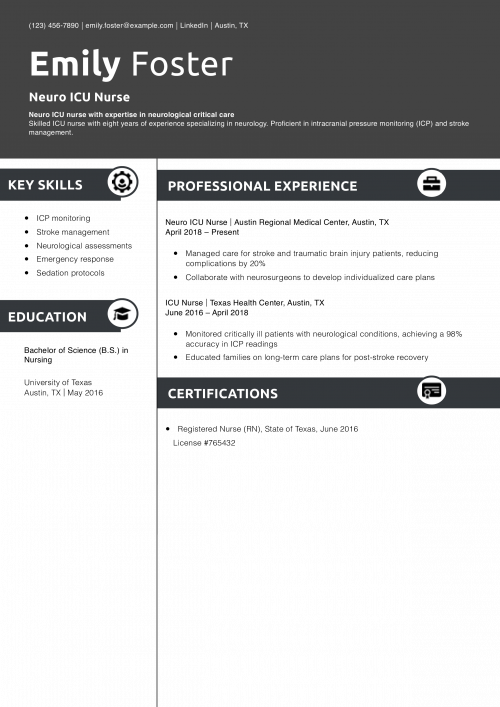
Emily’s resume showcases her expertise in neurological care, emphasizing technical skills and patient outcomes. For insights on how to enhance the strength of your document, visit our guide.
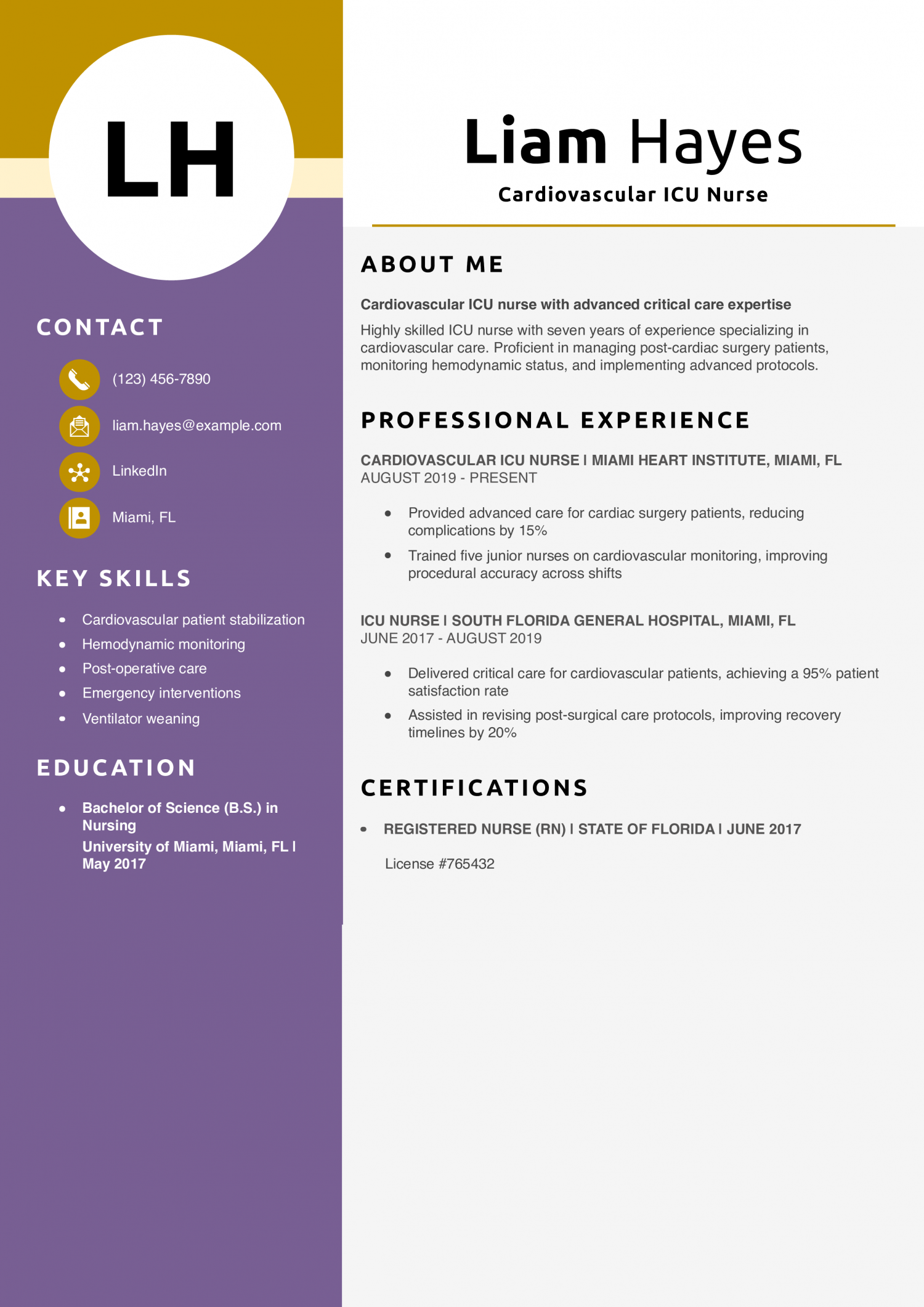
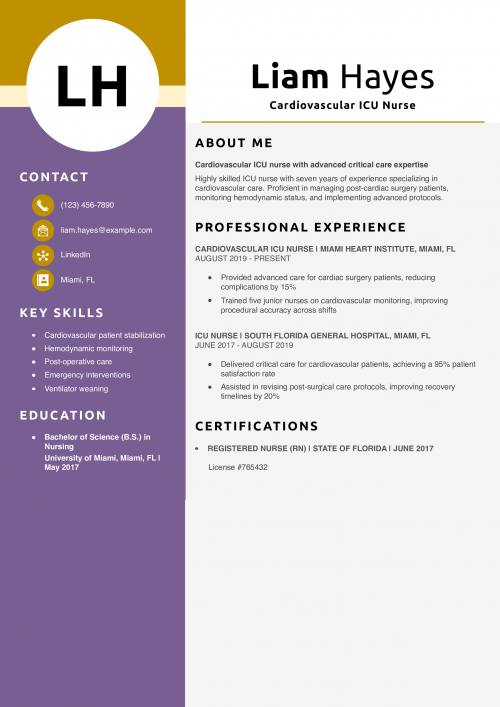
Liam’s resume showcases his deep expertise in cardiovascular care, with quantifiable achievements such as reduced complications and improved recovery times. For more tips on how to feature your career accomplishments, visit our guide.
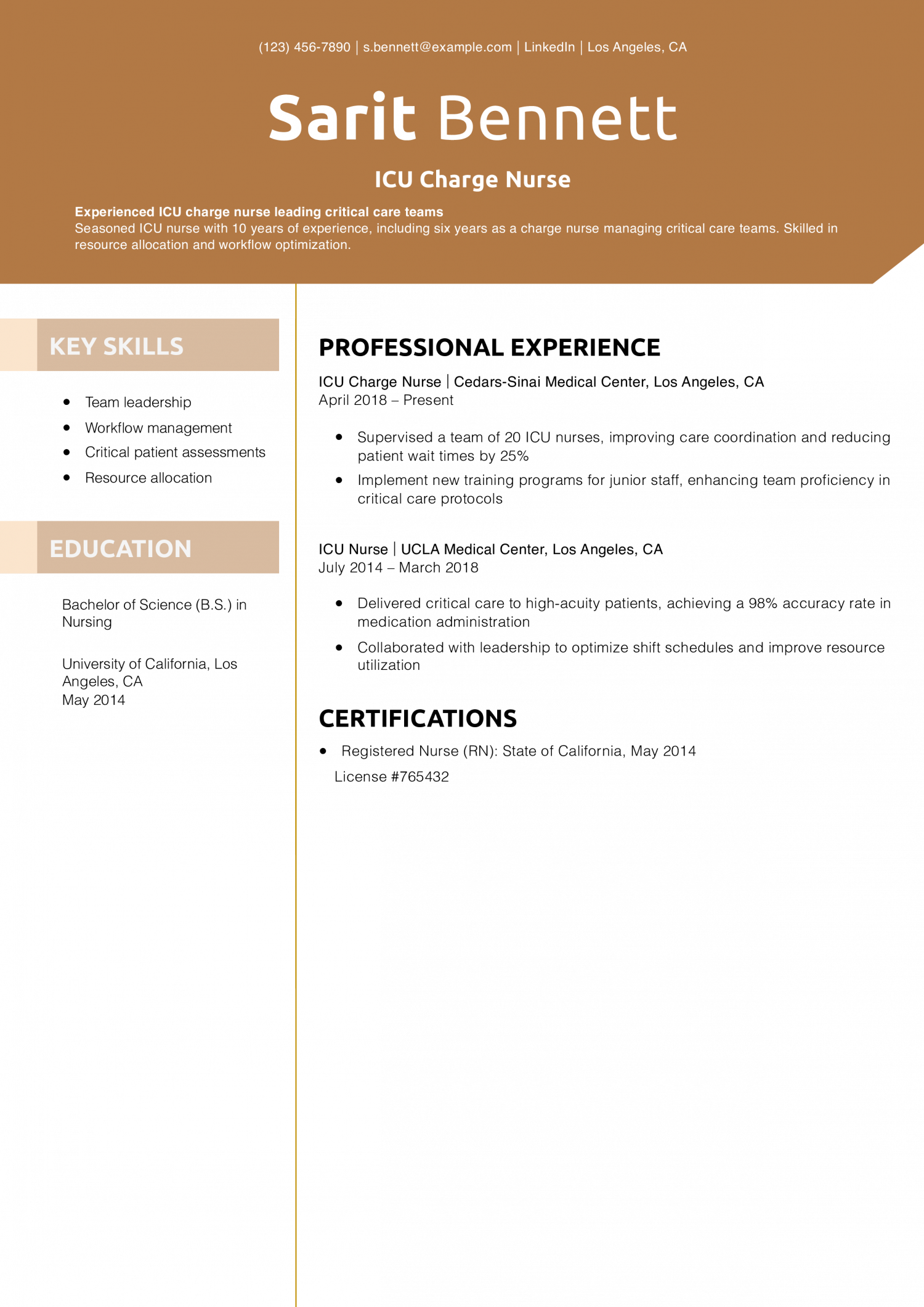
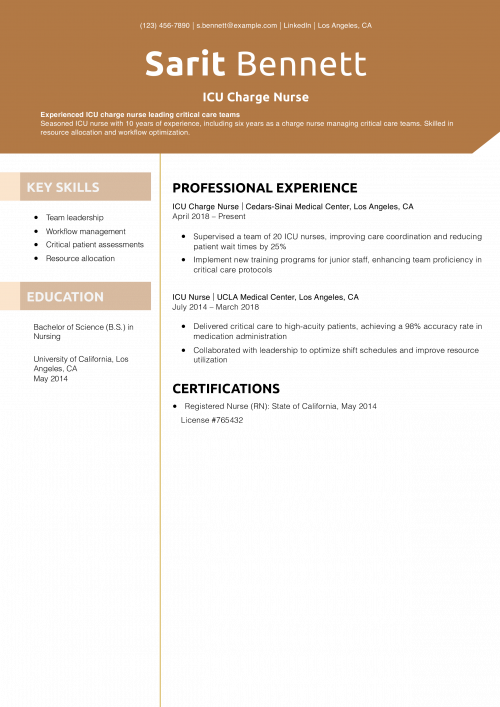
Sarit’s resume highlights her leadership skills and measurable improvements in team performance and workflow efficiency. Learn how to position yourself for managerial roles at Leadership Skills For Resume.
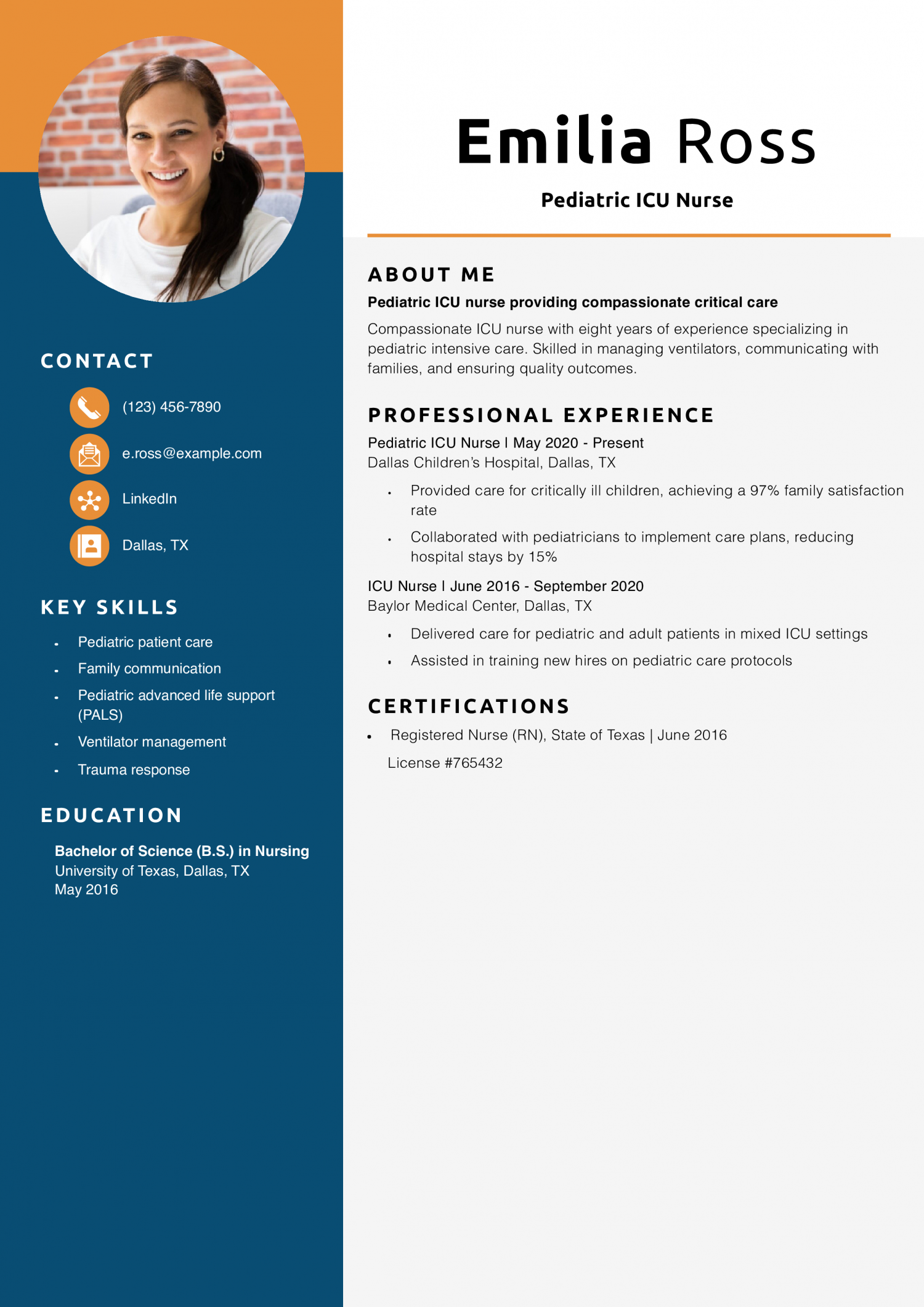
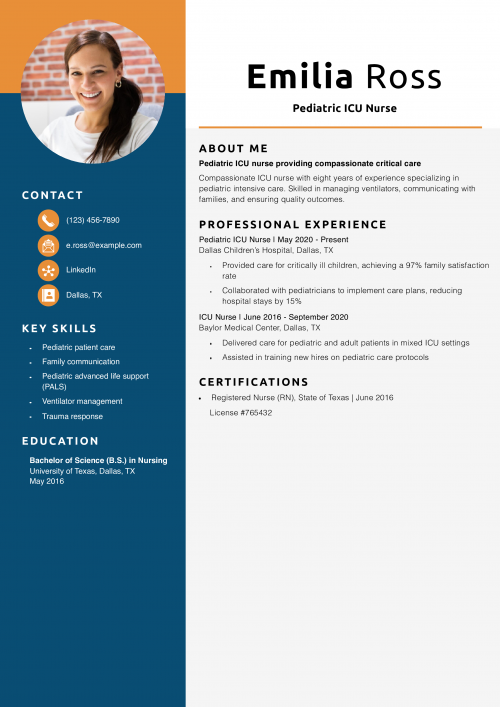
Emilia’s resume emphasizes her ability to provide specialized care to children while building trust with families. For more advice on featuring your nursing expertise, visit our guide.
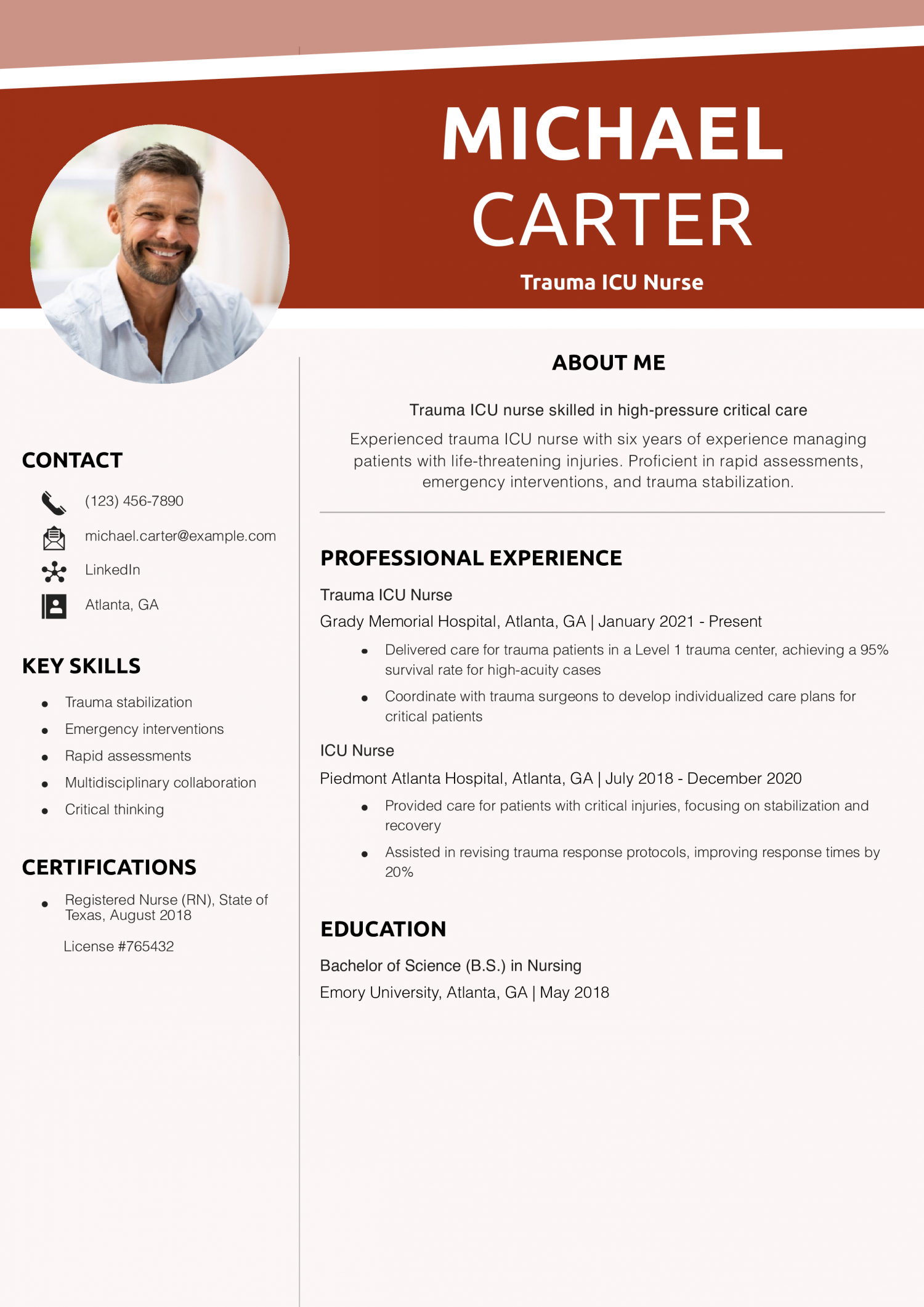
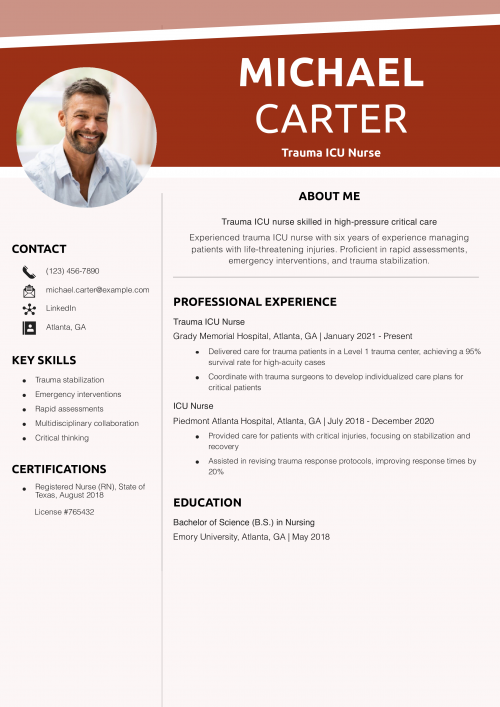
Michael’s resume highlights his ability to manage high-pressure situations and emphasizes measurable achievements, such as survival rates. For more insights on creating impactful resumes, visit Best Resume Formats.
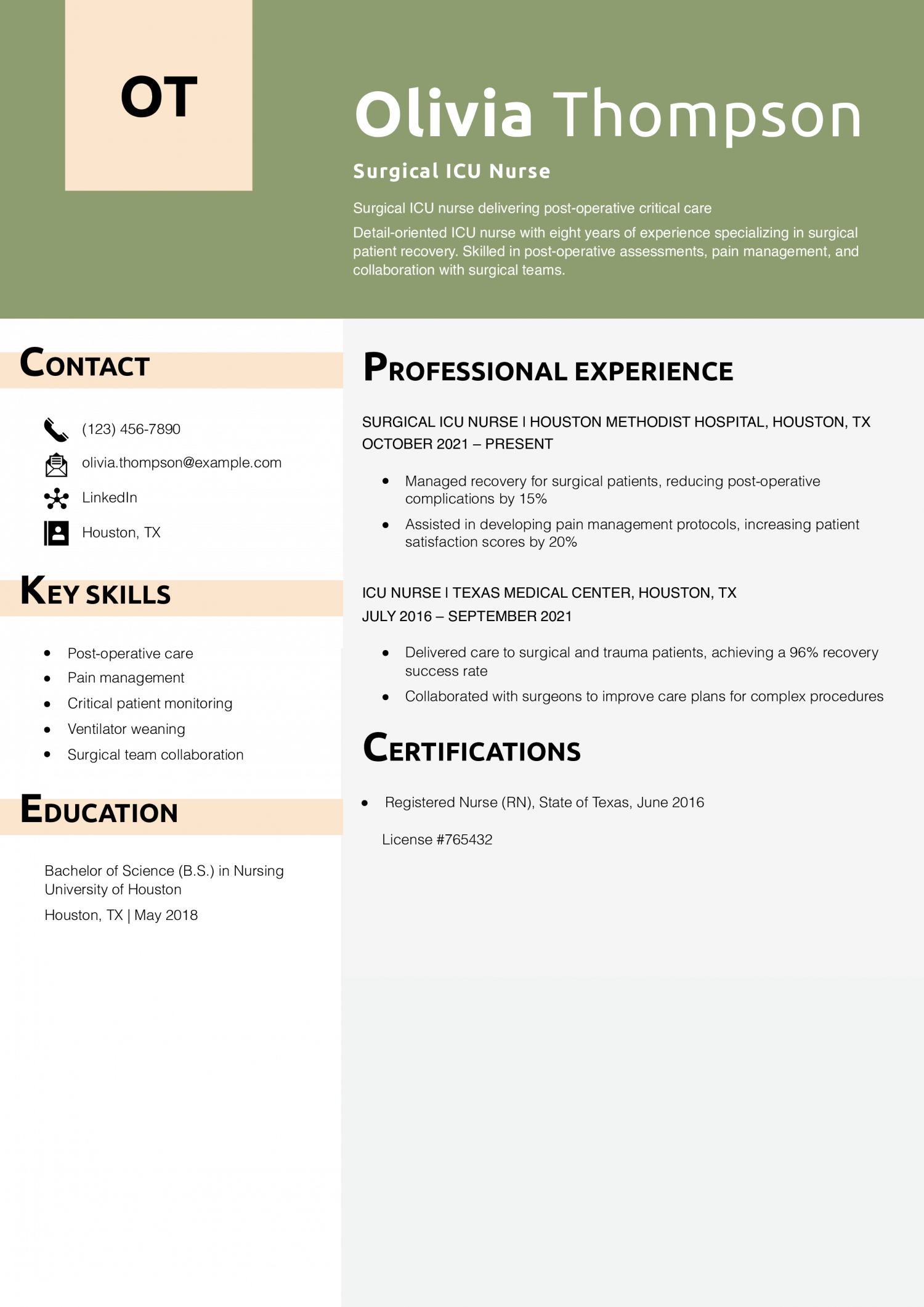
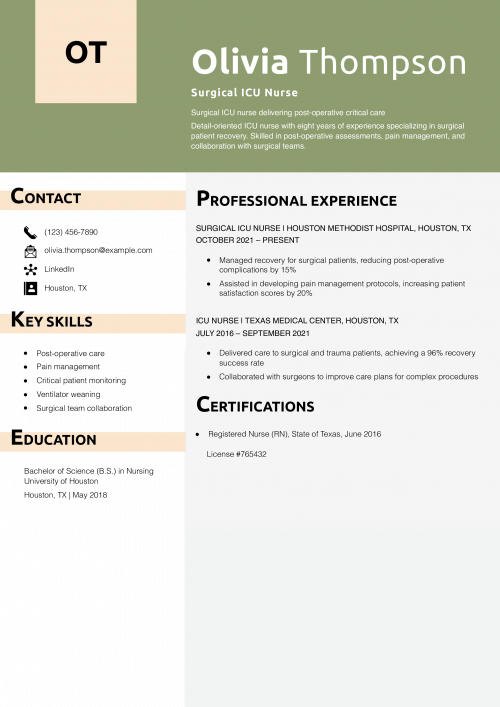
Olivia’s resume emphasizes her expertise in post-operative care and highlights quantifiable results, such as reduced complications. For more advice on enhancing the strength of your resume, visit our guide.
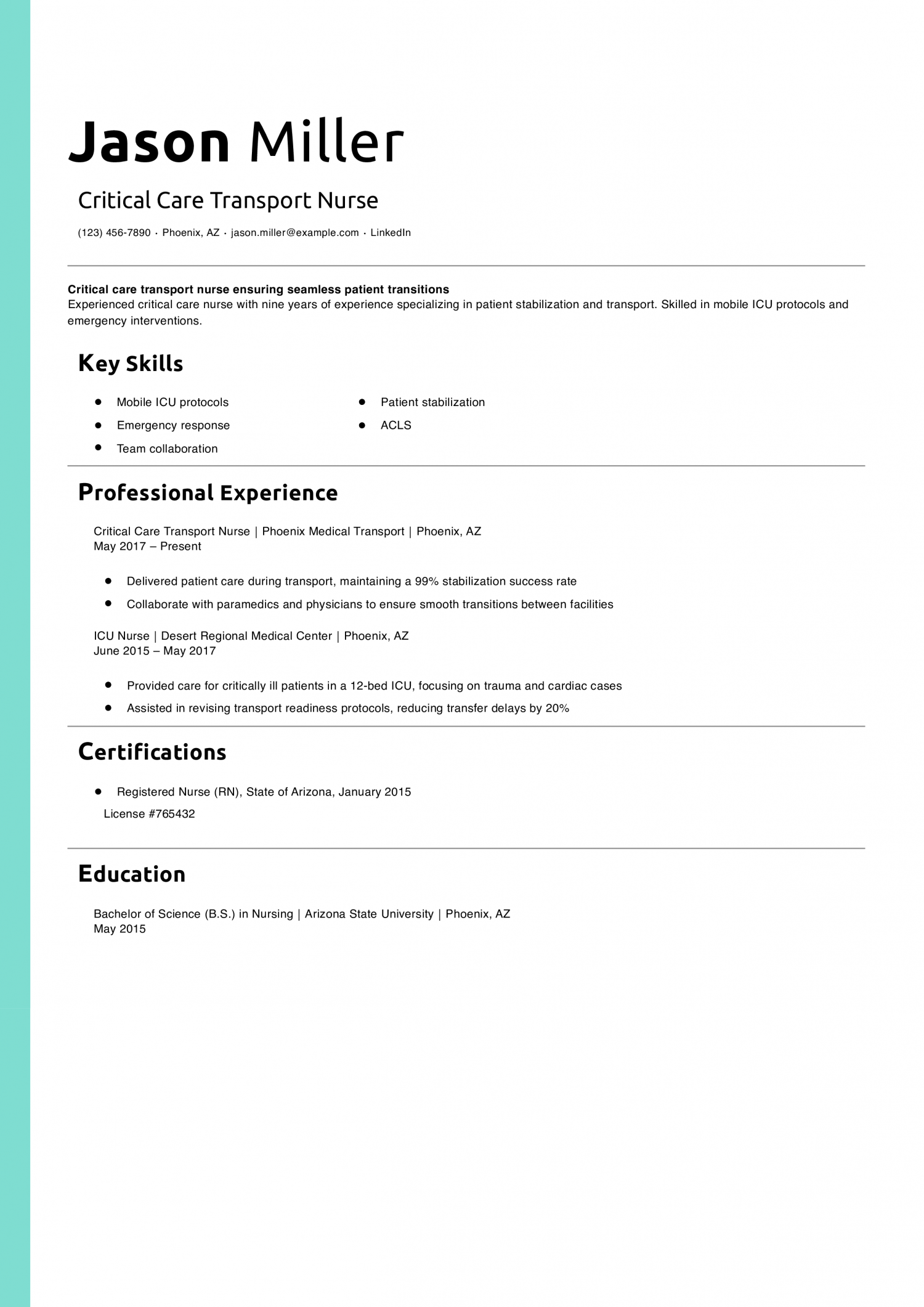
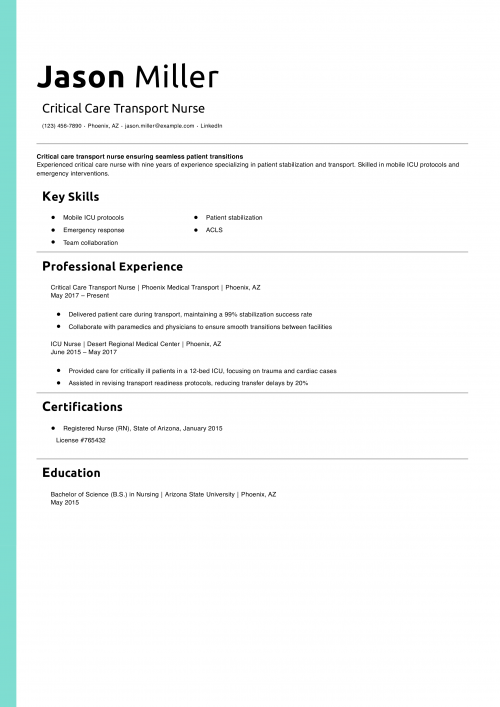
Jason’s resume emphasizes his ability to provide high-quality care during patient transport, showcasing measurable successes like stabilization rates. For tips on demonstrating adaptability, visit Transferable Skills Resume.
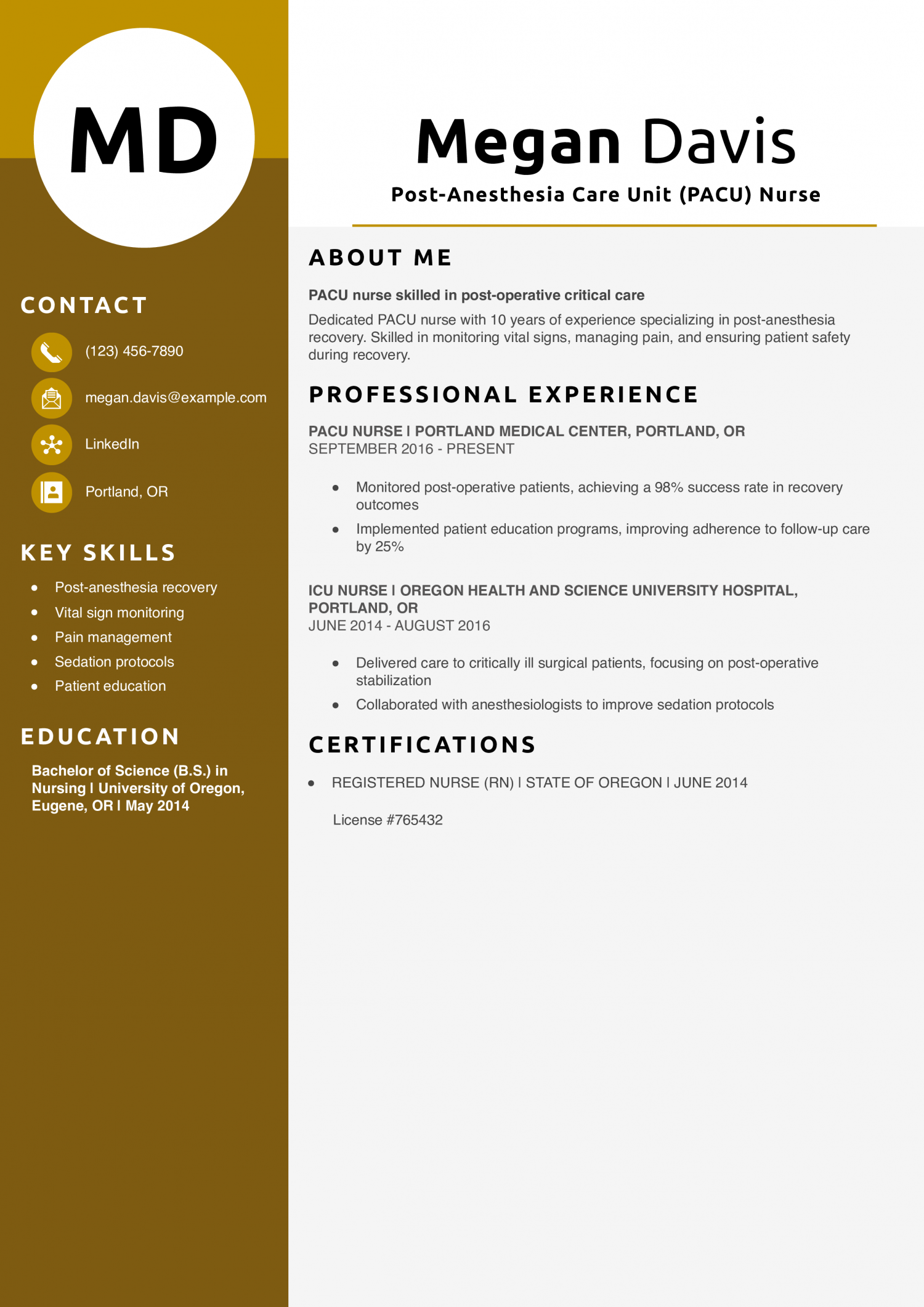
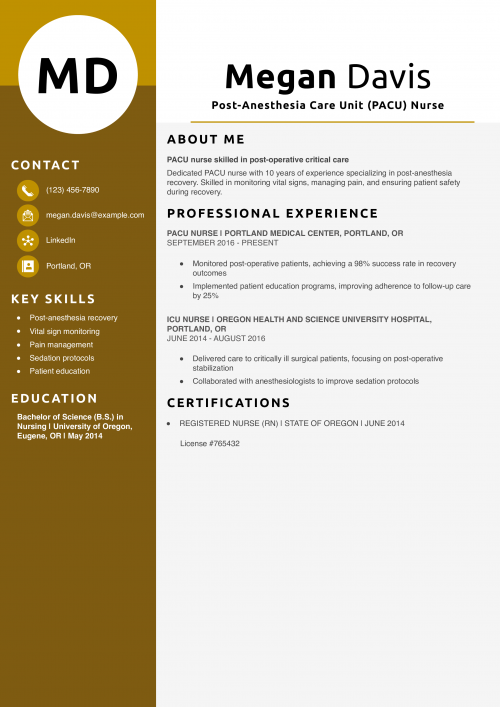
Megan’s resume highlights her expertise in post-operative recovery and measurable patient outcomes, such as adherence improvements. Learn how to showcase specialized skills at Resume Keywords.
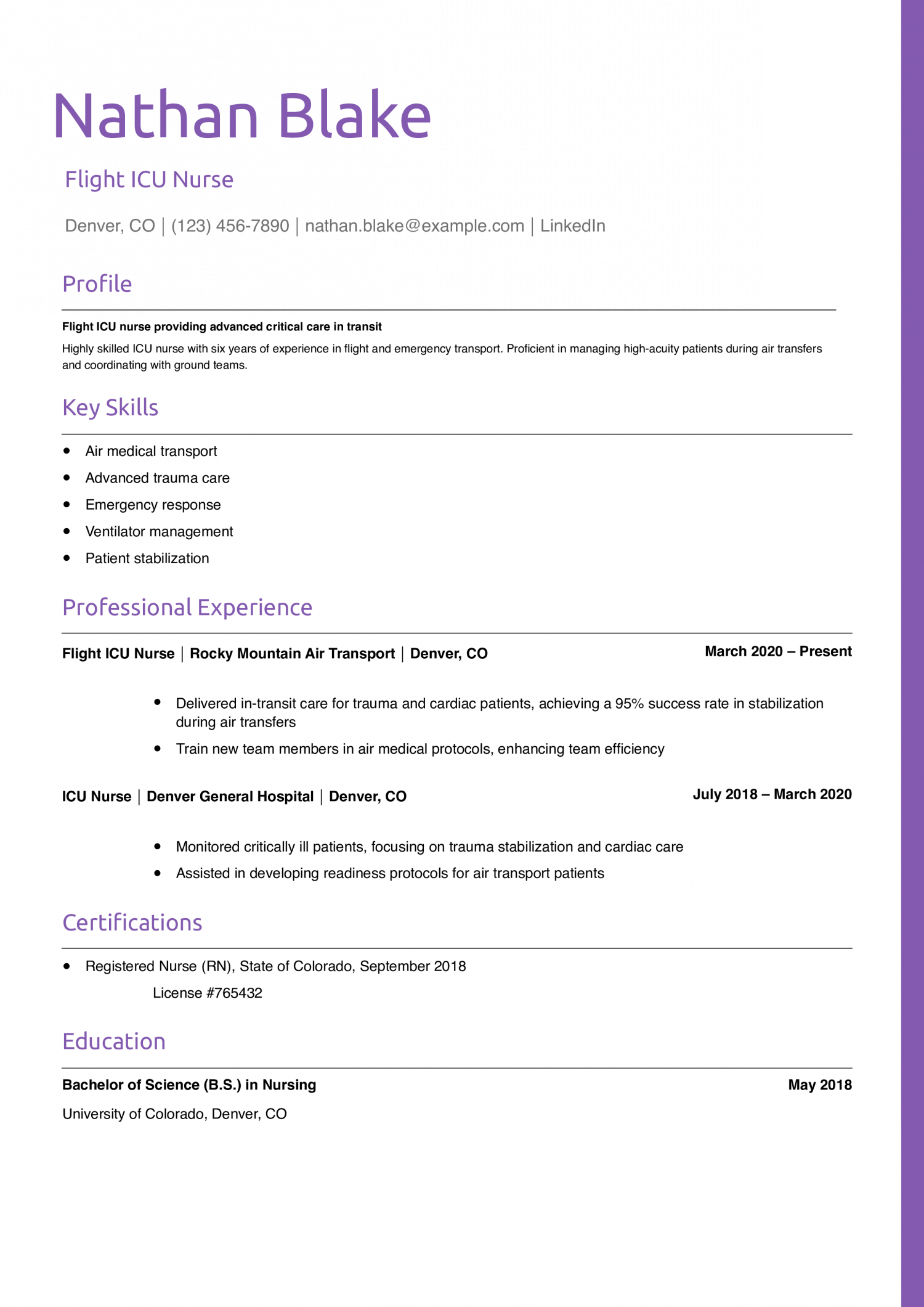
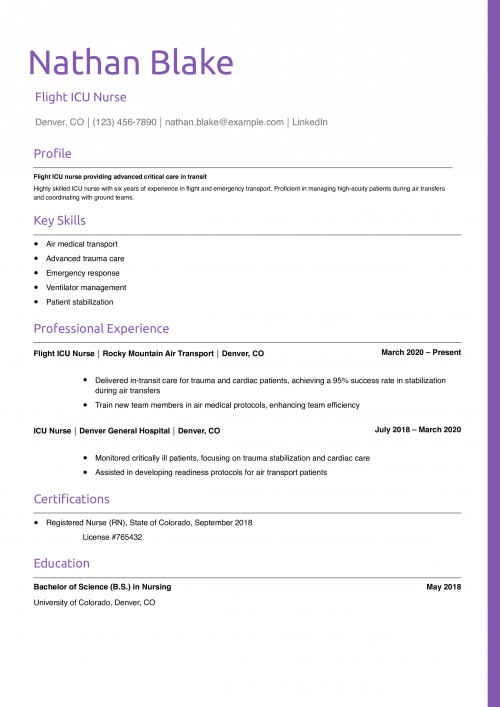
Nathan’s resume highlights his unique skills in air transport and patient stabilization, backed by quantifiable outcomes. Learn how to craft a compelling resume profile at How To Write A Resume Summary.
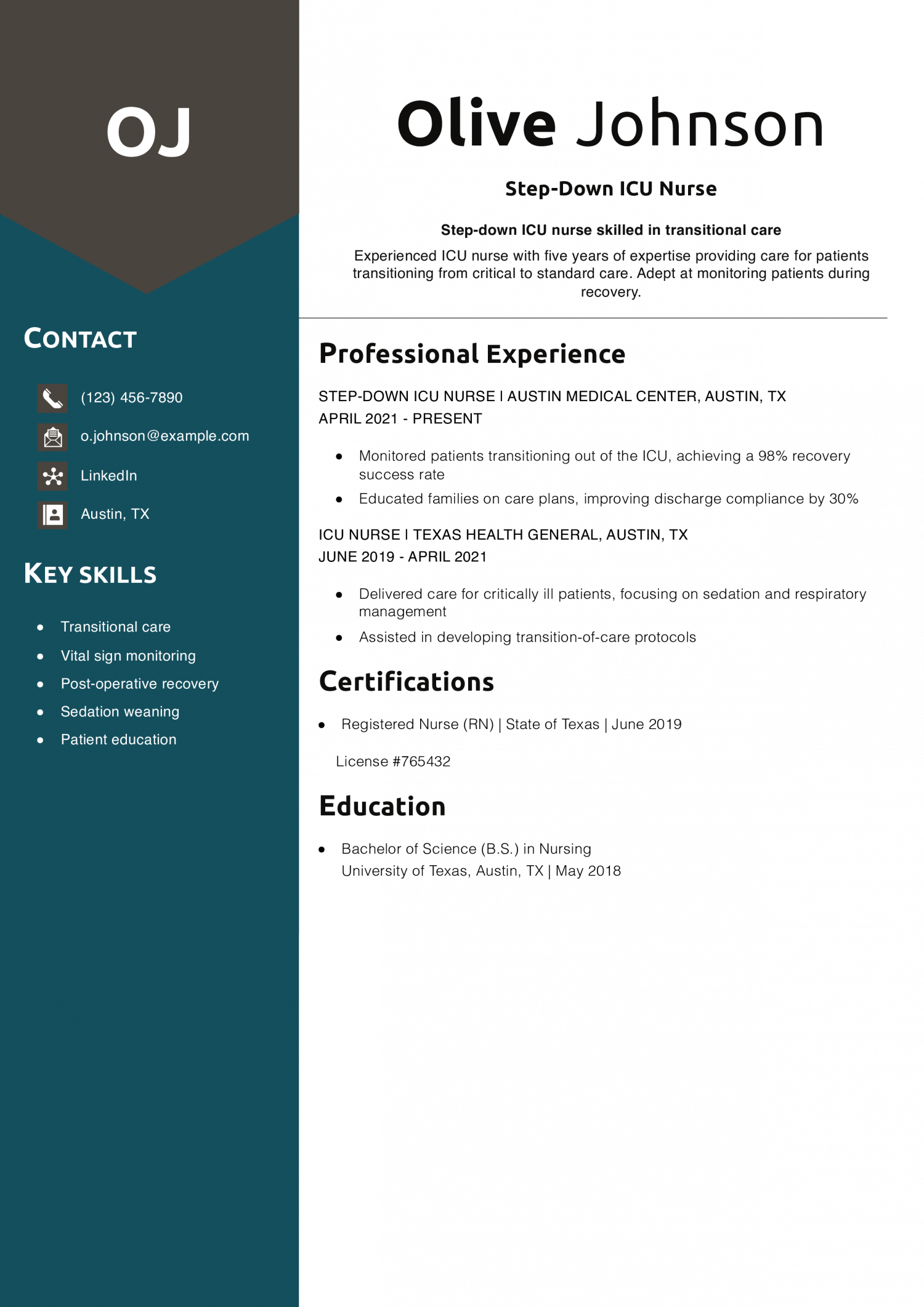
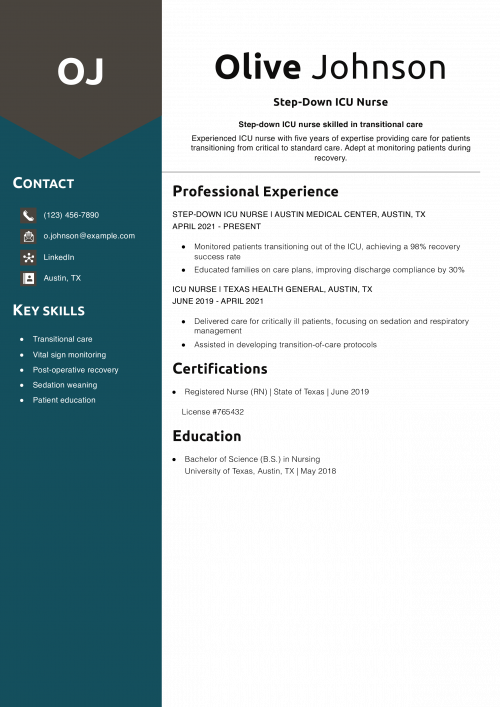
Olive’s resume demonstrates her ability to manage patients transitioning from critical care, highlighting recovery success and discharge compliance rates. For tips on featuring your career achievements, visit How To Use Bullet Points On A Resume Effectively.
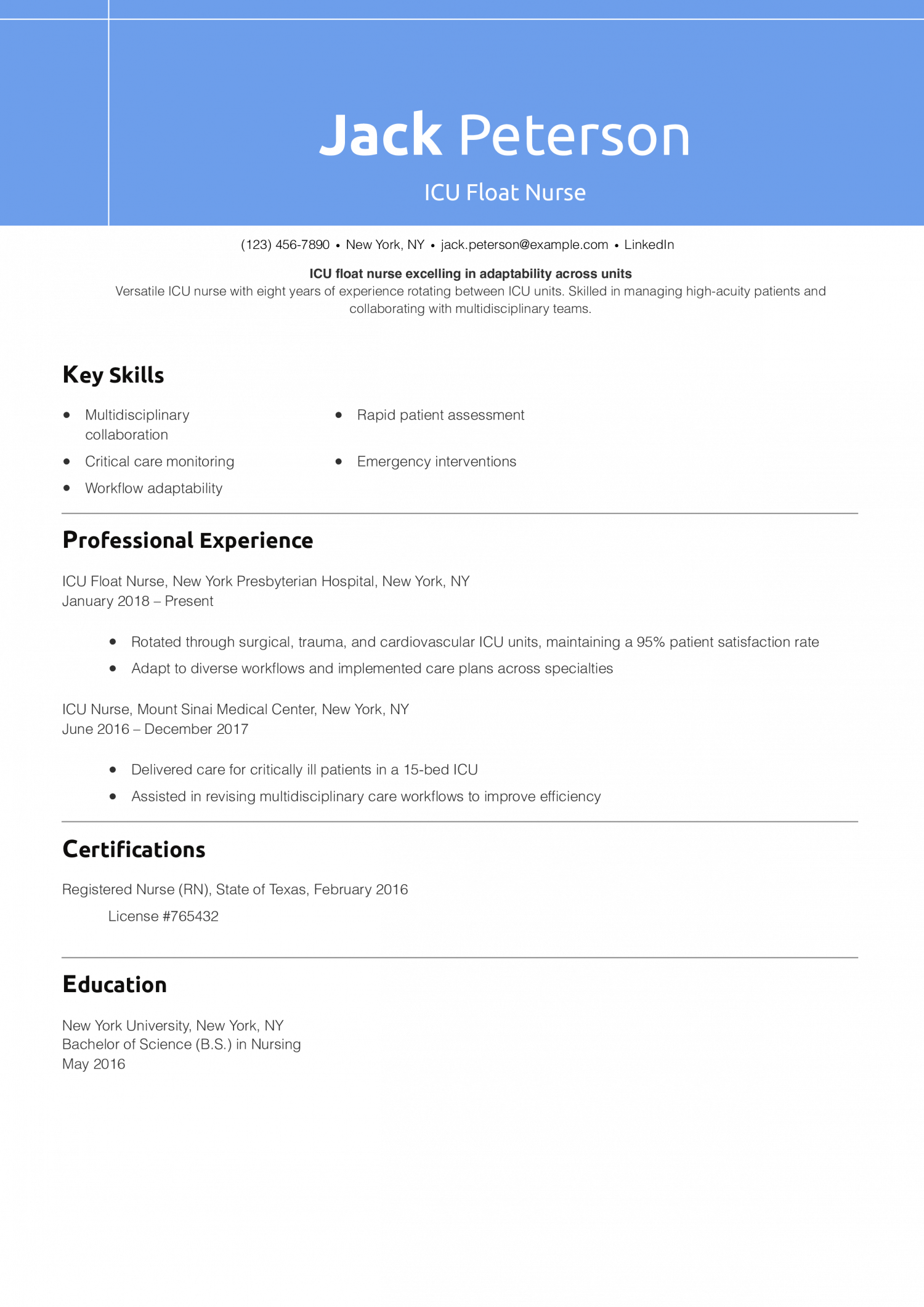
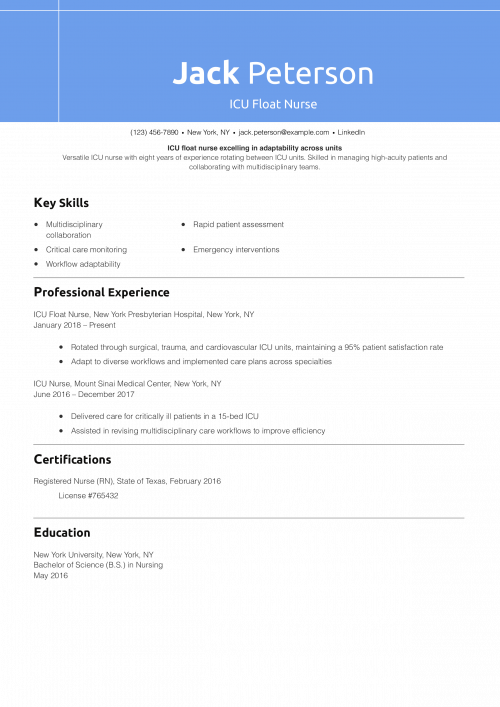
Jack’s resume highlights his flexibility and ability to deliver consistent care across diverse ICU units. For advice on describing your previous nursing experience, visit Resume Job Description.
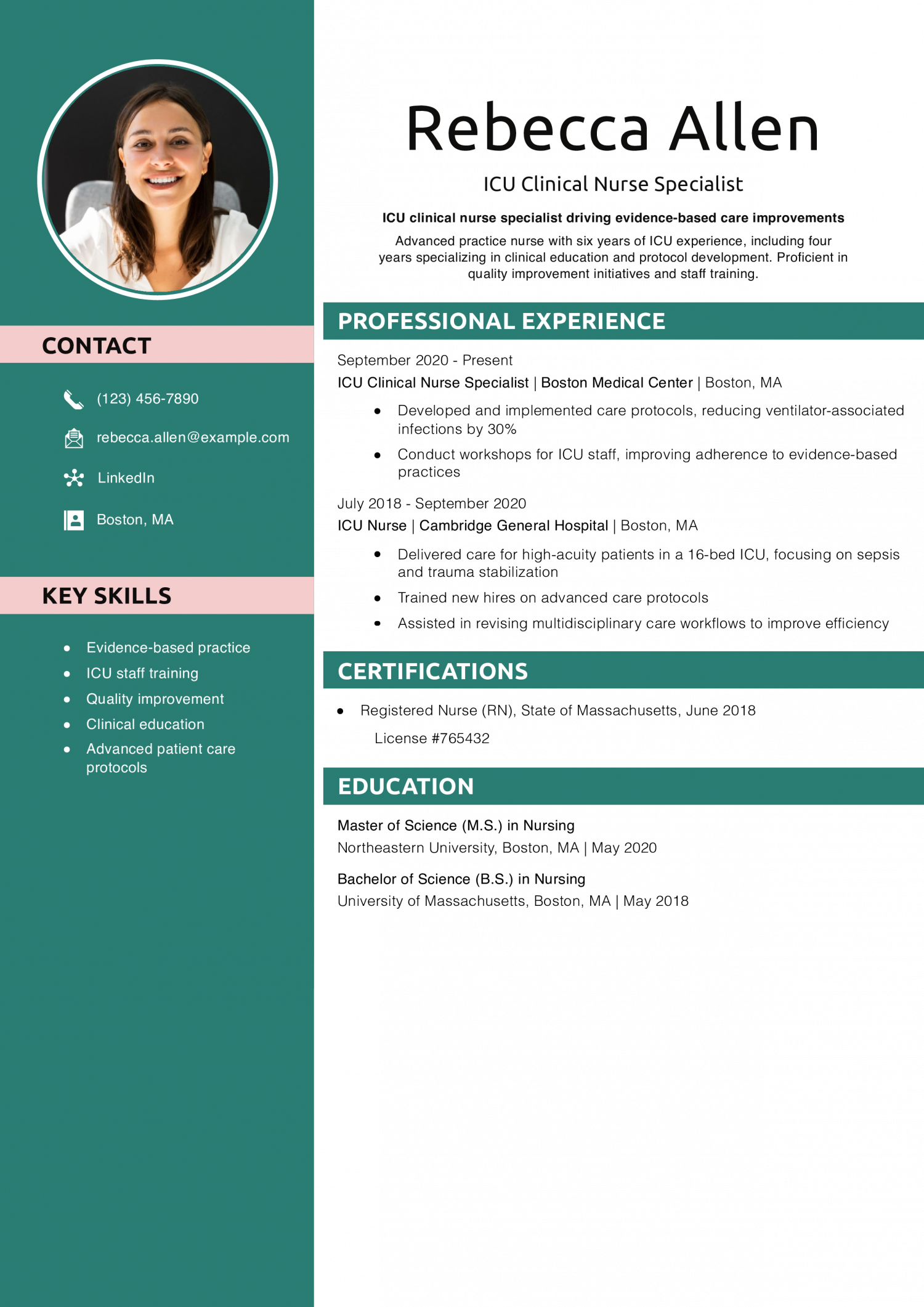
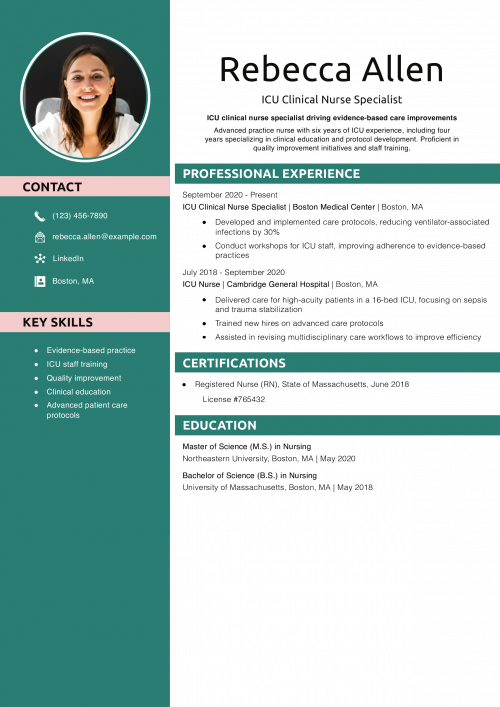
Rebecca’s resume showcases her leadership in education and quality improvements, highlighting measurable achievements like reduced infection rates. Learn more about positioning yourself for nurse manager positions, visit Leadership Skills For Resume.

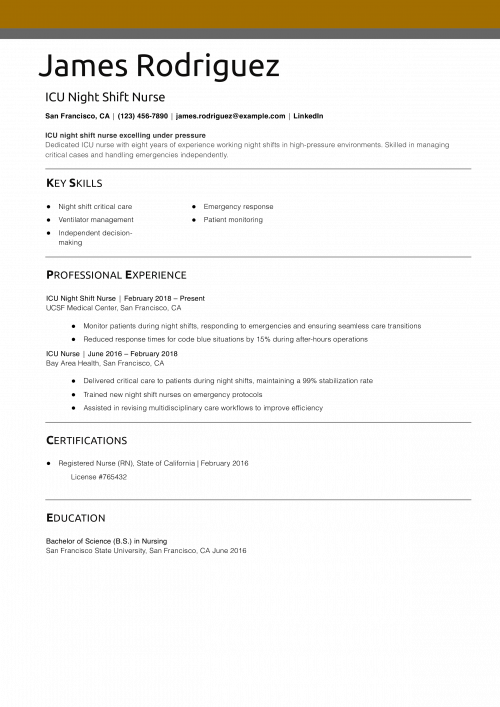
James’s resume highlights his ability to handle emergencies independently and improve response times during high-stress night shifts. Learn more about creating a strong opening summary in our guide.
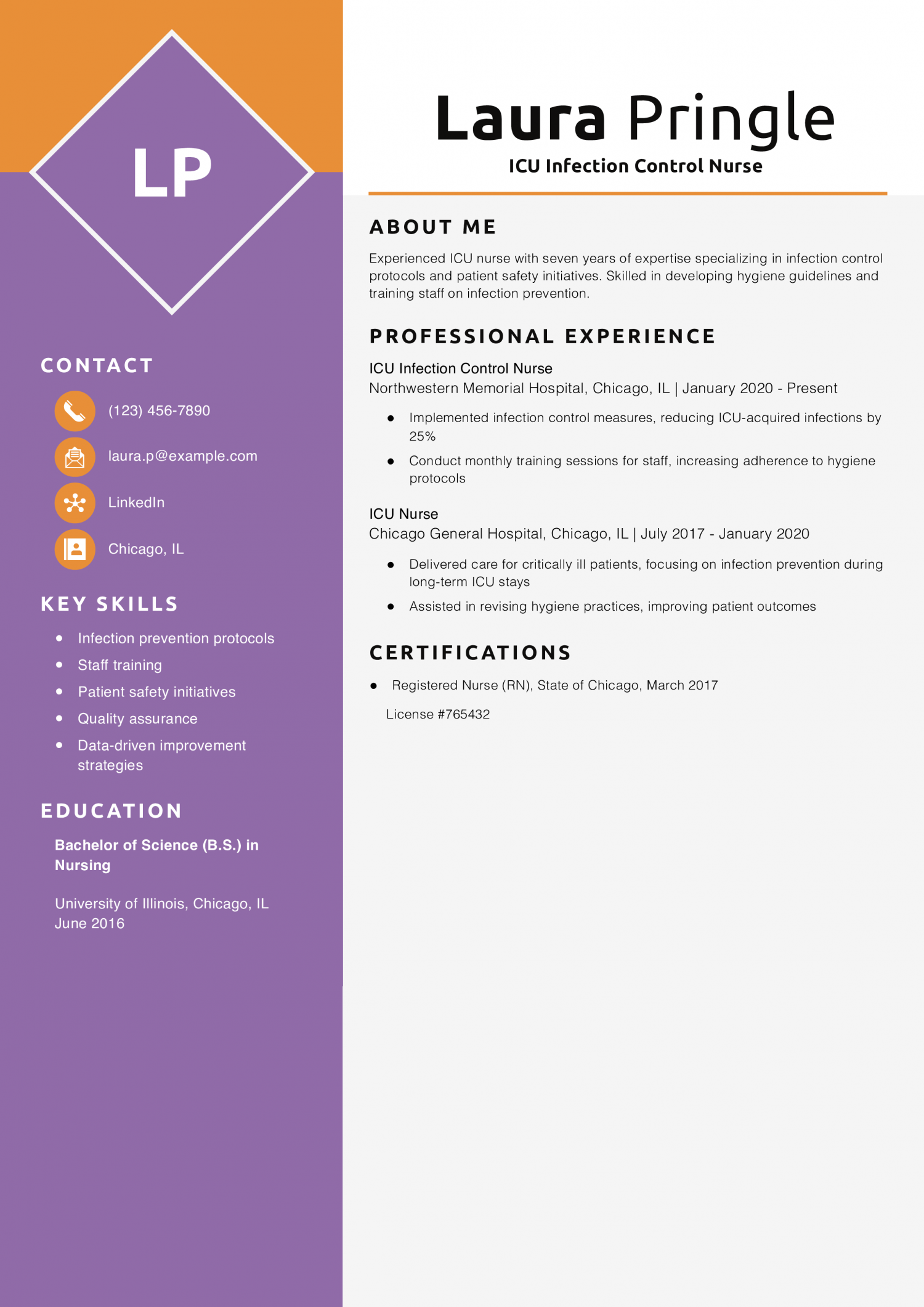
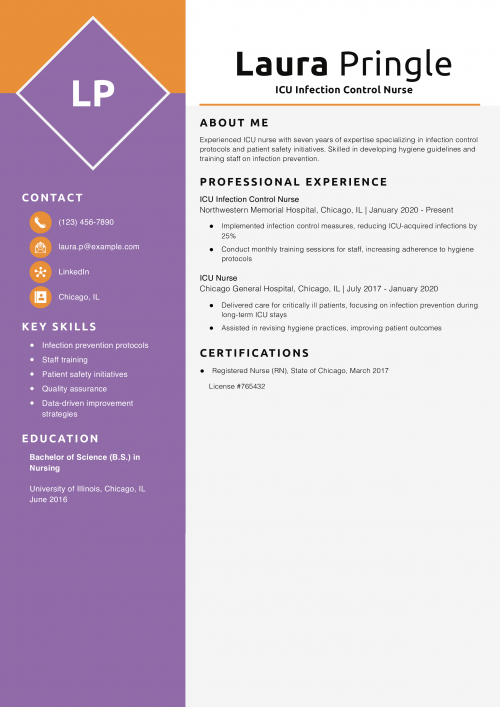
Laura’s resume emphasizes her measurable impact in reducing ICU-acquired infections, showcasing her expertise in safety initiatives. Learn how to present similar achievements at Resume Job Description.
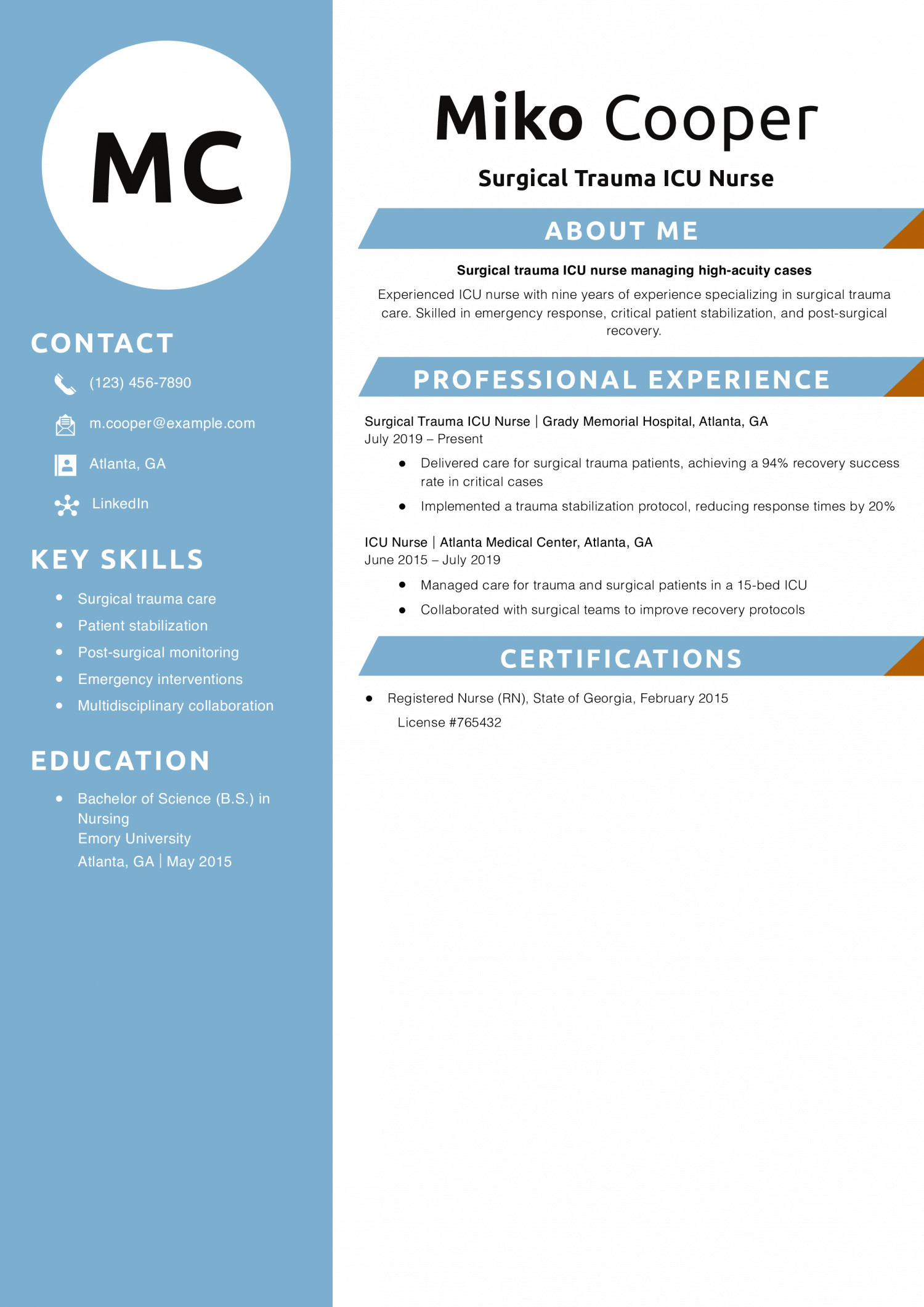
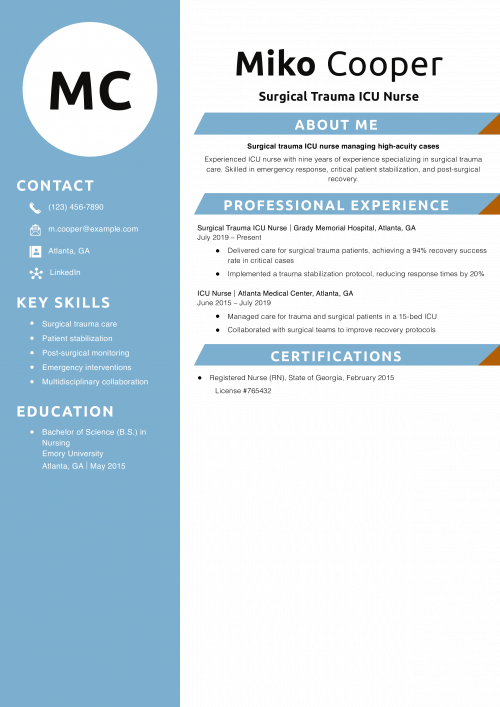
Miko’s resume highlights his expertise in surgical trauma care and his ability to develop impactful protocols. Learn more about structuring results-driven resumes in our guide.
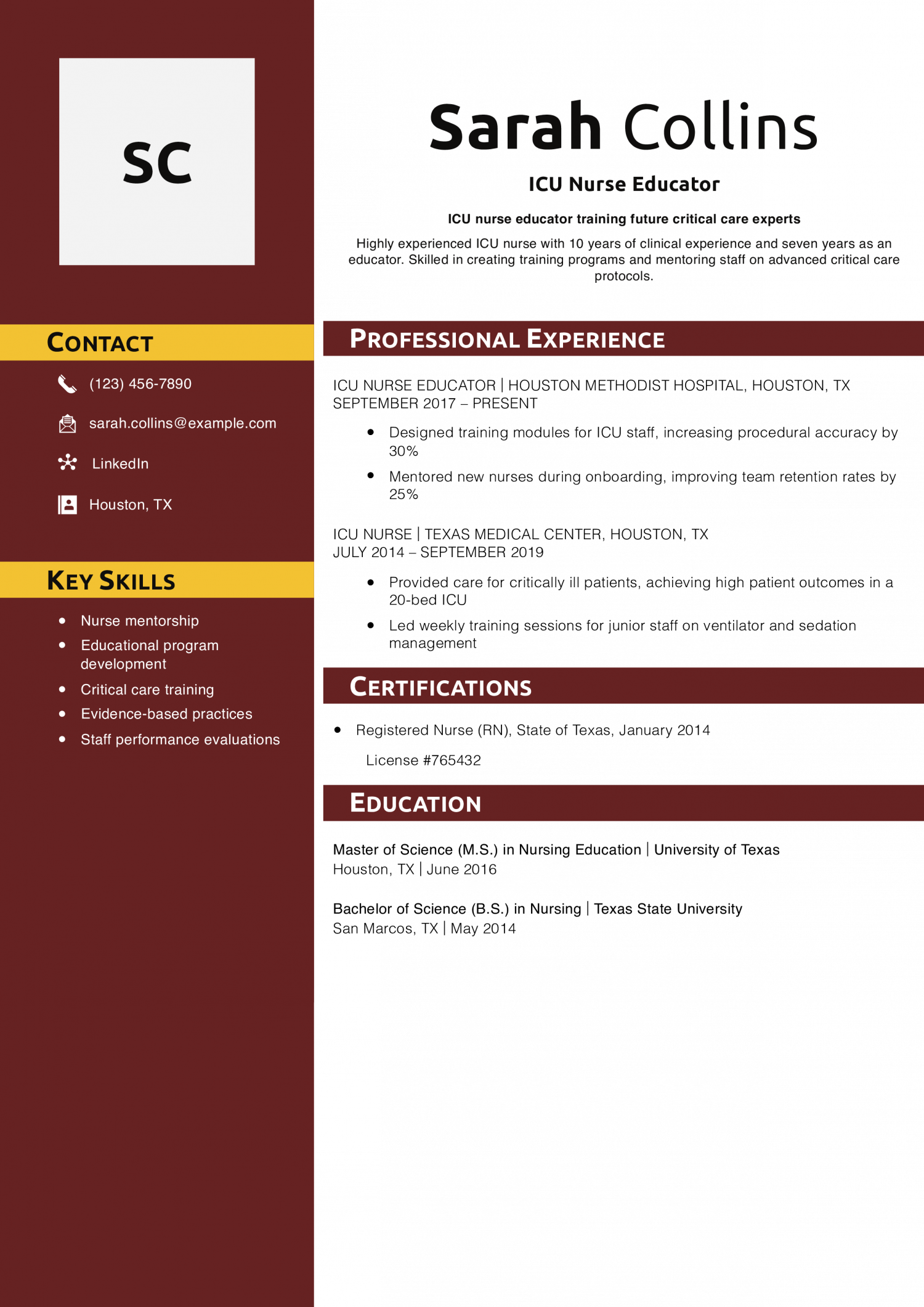
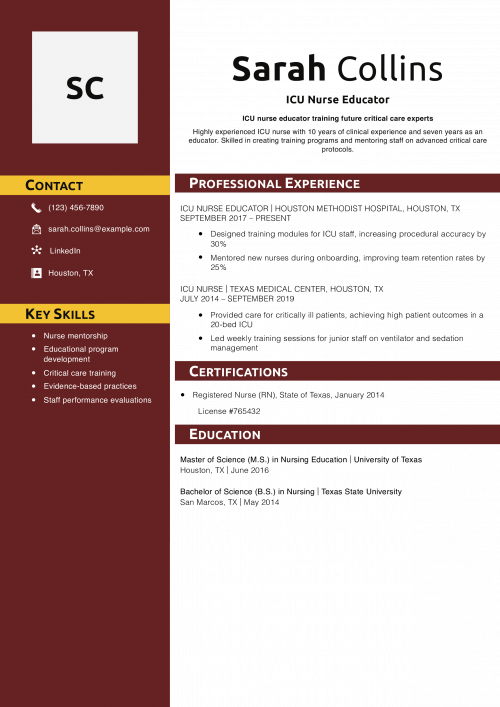
Sarah’s resume highlights her dual expertise in critical care and education, showcasing her impact on training and team performance. Learn how to capture your career achievements using our guide.
As a health care professional, you understand the importance of having protocols and standards in place when providing care to patients in hospital environments. Writing an effective resume also involves following principles and best practices that allow you to structure your content in a cohesive and engaging manner. Before crafting your document, select a professional resume template that contains these key sections:
Provide accurate and up-to-date contact information, including your full name, phone number, email address, city/state, and a URL for your LinkedIn profile. This ensures potential employers can easily reach you to schedule an interview.
Your Name
[email protected] | (123) 456-7890 | City, ST | LinkedIn
Lead with a powerful opening summary to grab the hiring manager’s attention and provide an engaging overview of your nursing career. List your title, years of experience, and three to four clinical skills matching the hospital’s needs. Emphasize your passion and dedication to delivering exceptional care in emergency situations. Highlight unique aspects of your background as a health care professional to make a lasting impression on potential employers. For example, you might showcase your ability to provide emotional support to patients and families facing difficult, life-threatening medical decisions.
ICU nurse with over 10 years of experience providing advanced critical care to high-acuity patients in Level 1 trauma centers. Skilled in ventilator management, hemodynamic monitoring, and team leadership.
Dedicated ICU nurse with three years of experience in ICUs. Proficient in critical patient assessments, ventilator management, and medication administration. Passionate about delivering top-quality patient care.
Your work history is often the determining factor in whether or not an organization decides to schedule you for an interview. As a medical professional, it’s easy to allocate too much page space to job duties, rather than conveying your nursing achievements. While it’s important to demonstrate your ability to perform essential clinical tasks, your bullet points should also emphasize how you’ve consistently helped to improve patient care delivery. For instance, you might highlight how your efforts contributed to a 4% mortality rate.
ICU Nurse, St. John’s Medical Center, New York, NY | June 2015 – Present
ICU Nurse, Mercy Hospital, Boston, MA | August 2021 – Present
Featuring numerical data and clinical metrics adds more depth to your resume, which can greatly increase your odds of landing the interview. For example, as a nursing professional, you might showcase how you helped to improve clinical outcomes by 8% at a high-volume hospital with a 1-to-7 nurse-patient ratio. This shows that you have the expertise to impact clinical operations directly despite staffing challenges.
Customize your resume for each job application by featuring relevant aspects of your work history. For instance, if a posting is looking for an ICU nurse specializing in critical neonatal care, emphasize your experience working effectively in these types of medical units.
Even during the early stages of your medical career, you can still craft an impactful resume. Emphasize the hands-on experience you’ve garnered during your externship and clinical rotations. Feature your certifications and any volunteer work you’ve done, especially if it relates to the health care field.
Your education and certifications are critical components of your ICU nurse resume. A bachelor’s degree in nursing is a standard requirement on all job postings for these types of roles, though pursuing a master’s can be highly advantageous to your long-term career outlook. In addition to obtaining your RN license, you should consider pursuing other specialized certifications and training, such as a Certified Critical Registered Nurse (CCRN) designation.
Template:
[Degree Name]
[School Name], [City, State Abbreviation] | [Graduation Year]
Example:
Bachelor of Science (B.S.) Nursing | May 2015
University of California | Los Angeles, CA
Template:
[Certification Name], [Awarding Organization], [Completion Year]
Example:
Most hospitals rely on some form of ATS to select qualified candidates during the hiring process. To get your resume through the initial screening phase, incorporate a comprehensive list of skills that contains specific keywords from the job description. In addition to highlighting clinical terminology and medical equipment, highlight interpersonal skills to show nurse managers that you can communicate effectively with hospital personnel, patients, and families in high-stress environments.
| Key Skills for an ICU Nurse Resume: | |
|---|---|
| Advanced cardiovascular life support (ACLS) | Clinical operations |
| Communication | Critical care monitoring |
| Emergency response | Hemodynamic assessment |
| Infection prevention | Medication administration |
| Neonatal care | Patient-centered care |
| Patient education | Pediatric care |
| Rapid assessment | Sedation protocols |
| Surgical care | Trauma care |
| Ventilator management | |
Start each bullet point in your professional experience section with a dynamic action verb to capture the impact of your contributions. Using proactive language allows the hiring manager to visualize your essential role in clinical operations. Below, you’ll find a list of skills to help you describe your nursing achievements:
| Action Verbs | |
|---|---|
| Administered | Assessed |
| Collaborated | Coordinated |
| Delivered | Developed |
| Drove | Enhanced |
| Evaluated | Identified |
| Implemented | Improved |
| Led | Managed |
| Monitored | Oversaw |
| Performed | Provided |
| Supported | Treated |
| Triaged | |
Select a clean, professional resume template that highlights your qualifications without distracting from your content. Prioritize structure and readability to make it easy for hiring managers to identify your key skills and achievements.
Adapting a ICU Nurse resume example to your career journey means focusing on how your skills and responsibilities have evolved over time. Be sure to include specific milestones that show how your role has changed and your growing expertise. If you're applying for a more senior role, highlight leadership positions, advanced skills, and any industry-specific certifications that support your qualifications.
According to the Bureau of Labor Statistics, occupations for ICU nurses are expected to grow by 6% between 2023 and 2033. This equates to over 194,500 new openings every year. Despite the growing need for skilled nurses with experience working in critical care settings, it's still important to tailor your resume towards each application to maximize your chances of success during the job search.
For example, if you're pursuing an ICU nurse educator role, emphasize your experience delivering coaching and mentorship to develop effective nursing teams. Showcase how the training programs you've cultivated have positively impacted performance and clinical metrics for your previous organizations.
Reverse chronological is the optimal format for ICU nurses. This approach emphasizes your professional experience, placing it directly below your summary of qualifications. Combination and functional resume formats prioritize your skills, certifications, and education, making them better suited for entry-level candidates entering the workforce for the first time.
Once you’ve completed your resume, consider pairing it with a strong cover letter to maximize your chances of landing the interview. Mention something specific about the hospital’s reputation or culture and why this entices you to apply for the position. For instance, you might mention that the organization’s commitment to patient-centered care strongly aligns with your background as a health care professional.
Executive Resume Writer and Career Coach
Andrew Stoner is an executive career coach and resume writer with 17 years of experience as a hiring manager and operations leader at two Fortune 500 Financial Services companies, and as the career services director at two major university business schools.
Resume Templates offers free, HR approved resume templates to help you create a professional resume in minutes. Choose from several template options and even pre-populate a resume from your profile.