

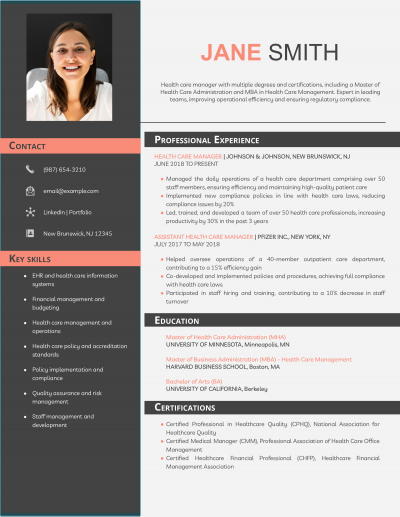
Health Care Resume Examples and Templates



For an effective occupational therapy (OT) resume, focus on your relevant skill areas like patient education, workplace evaluation, or durable medical equipment (DME). Emphasize your success in helping patients recover and return to daily life activities, and cite any training or certificate programs you’ve done. This guide provides expert tips to help you create a resume showing your best OT qualifications.
Key takeaways:

This resume demonstrates expertise with specific therapy techniques and quantifiable achievements, such as reducing patient dependency by 15%. The concise layout effectively highlights professional skills and education. Learn more about resume layouts here.
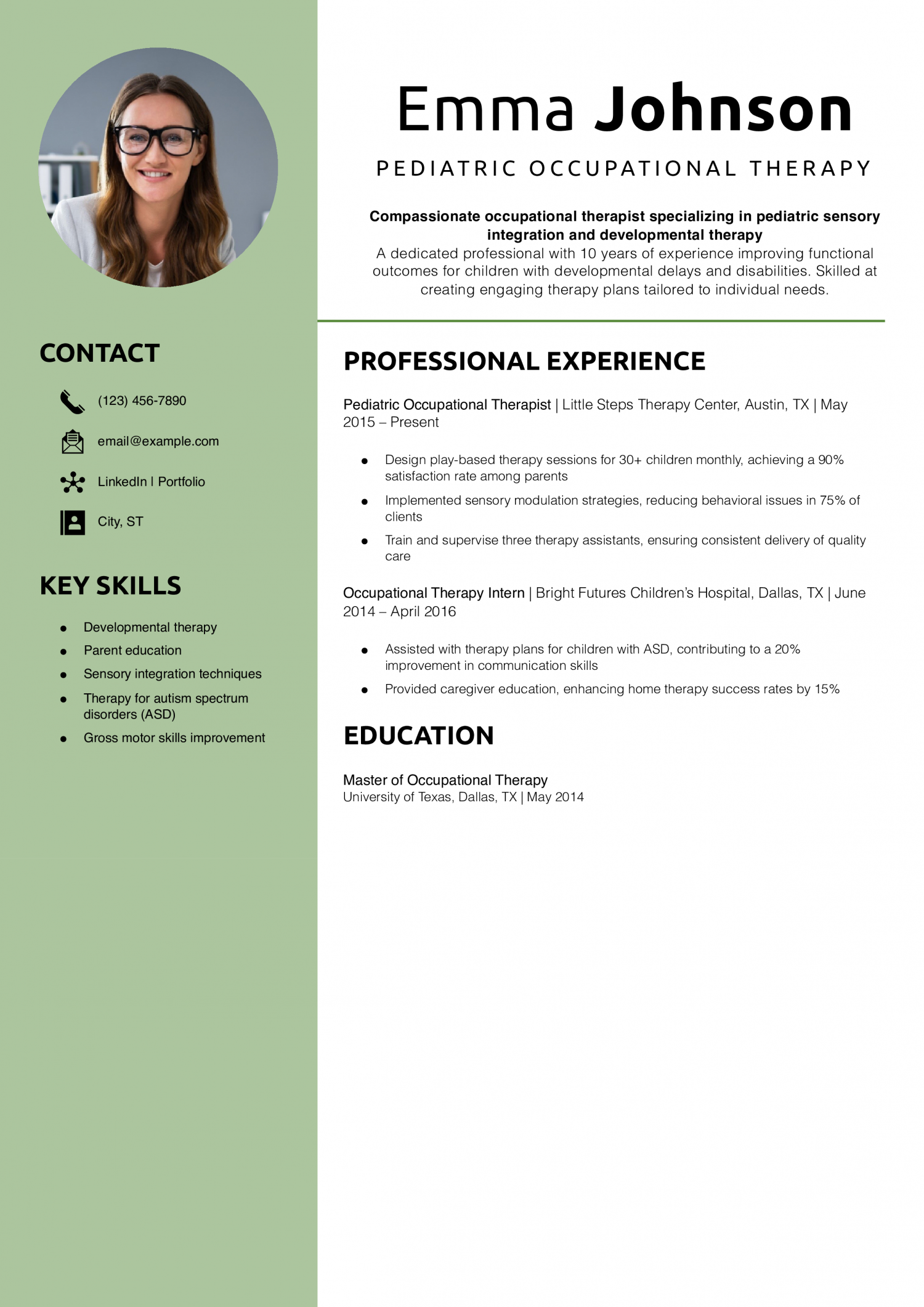
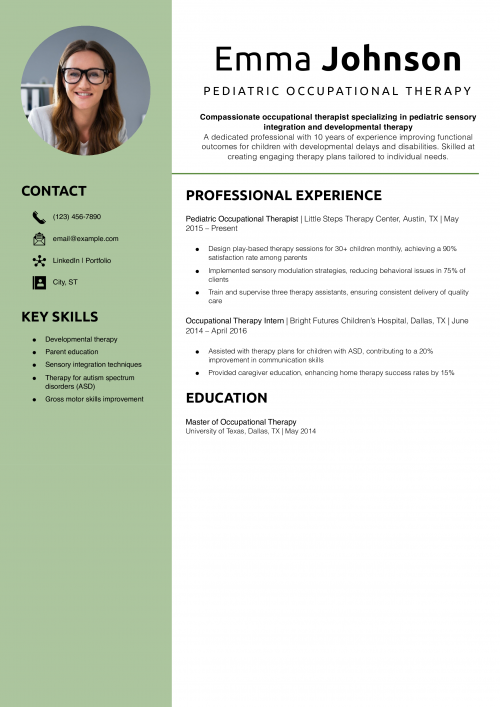
This resume emphasizes specialized pediatric skills and notable outcomes like 90% parent satisfaction. It aligns with best practices for highlighting expertise and has a powerful summary section.
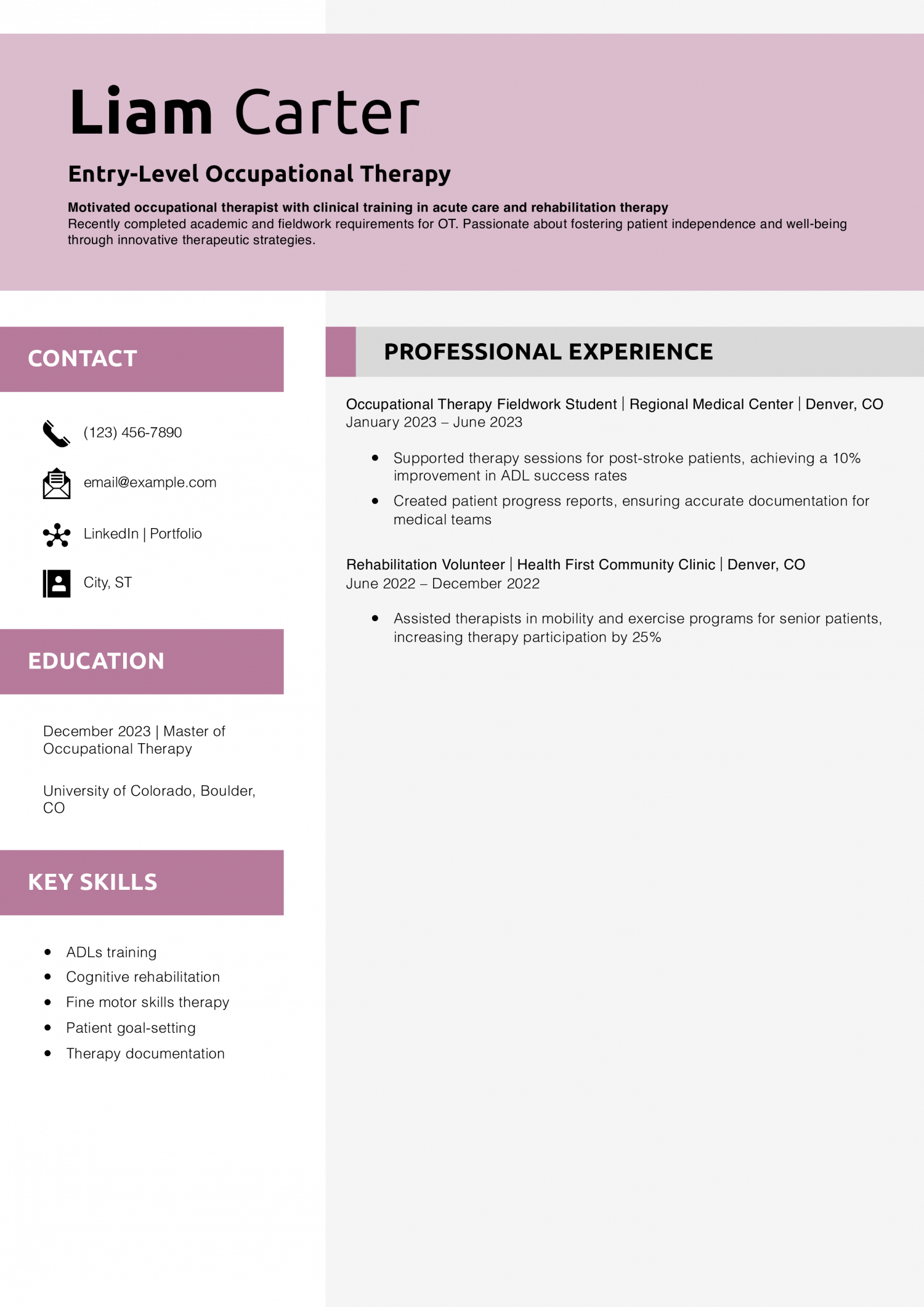
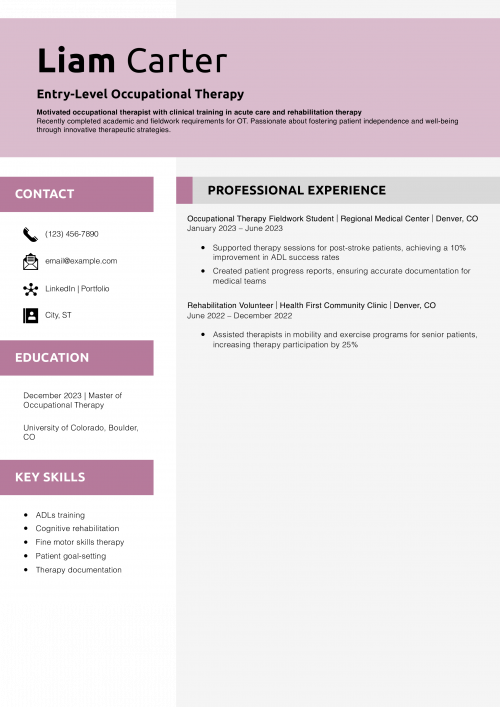
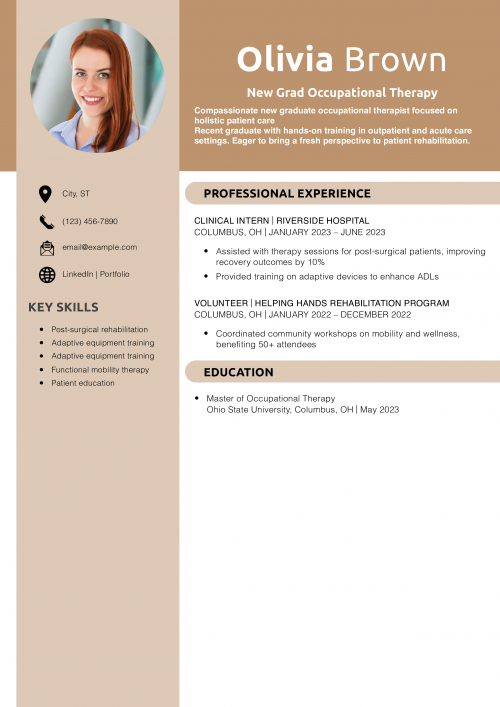
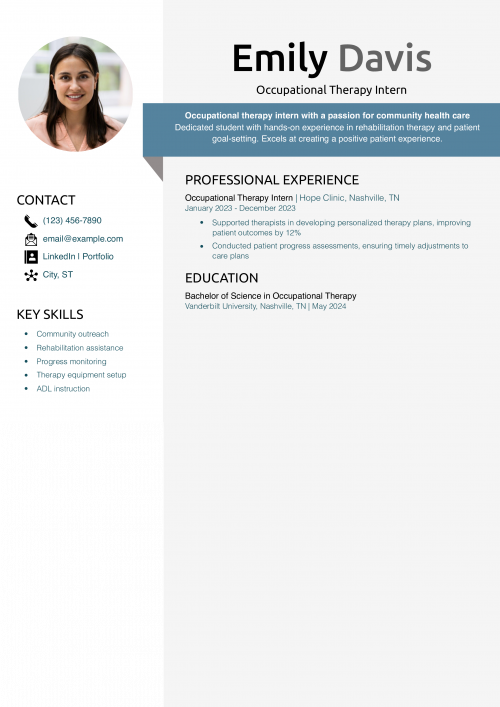
This resume showcases hands-on clinical training and outcomes, like a 10% improvement in ADL, while maintaining a professional tone. See how to tailor entry-level resumes here.
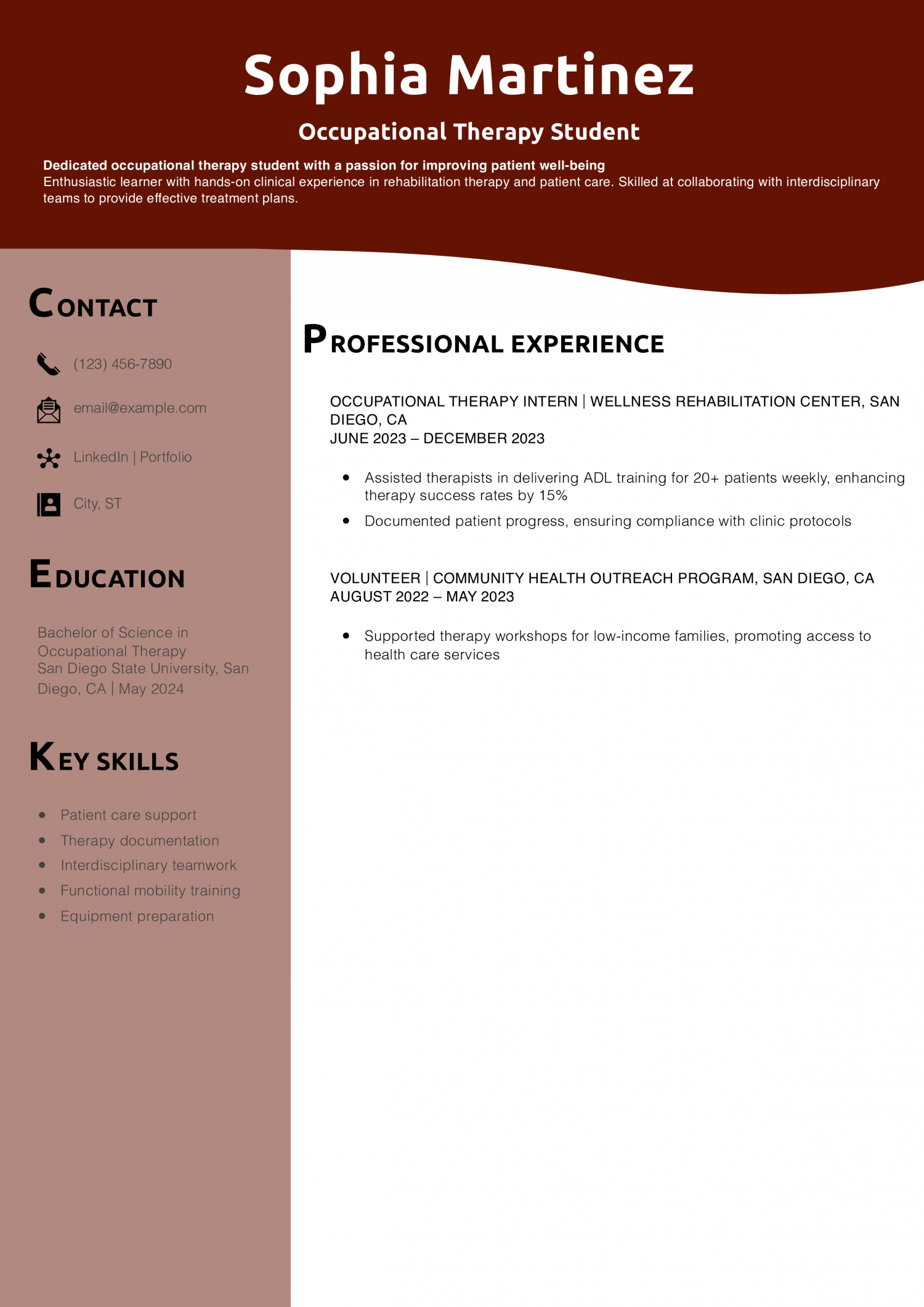
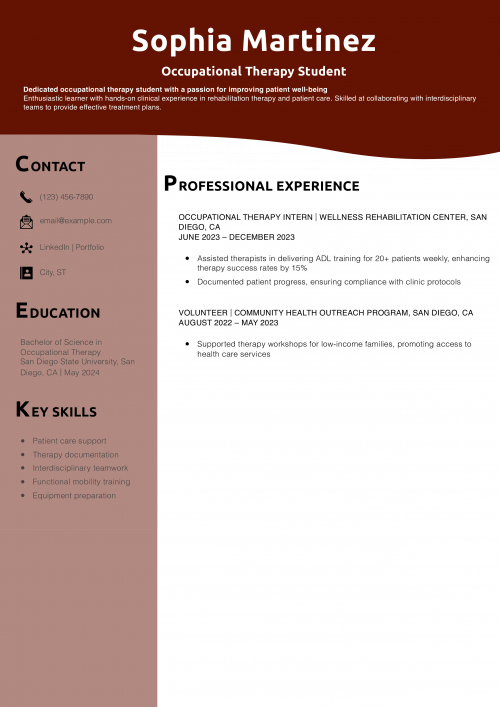
This resume highlights relevant learning, internships, and volunteer work, showing a strong commitment to patient care. Find tips on listing your education here.
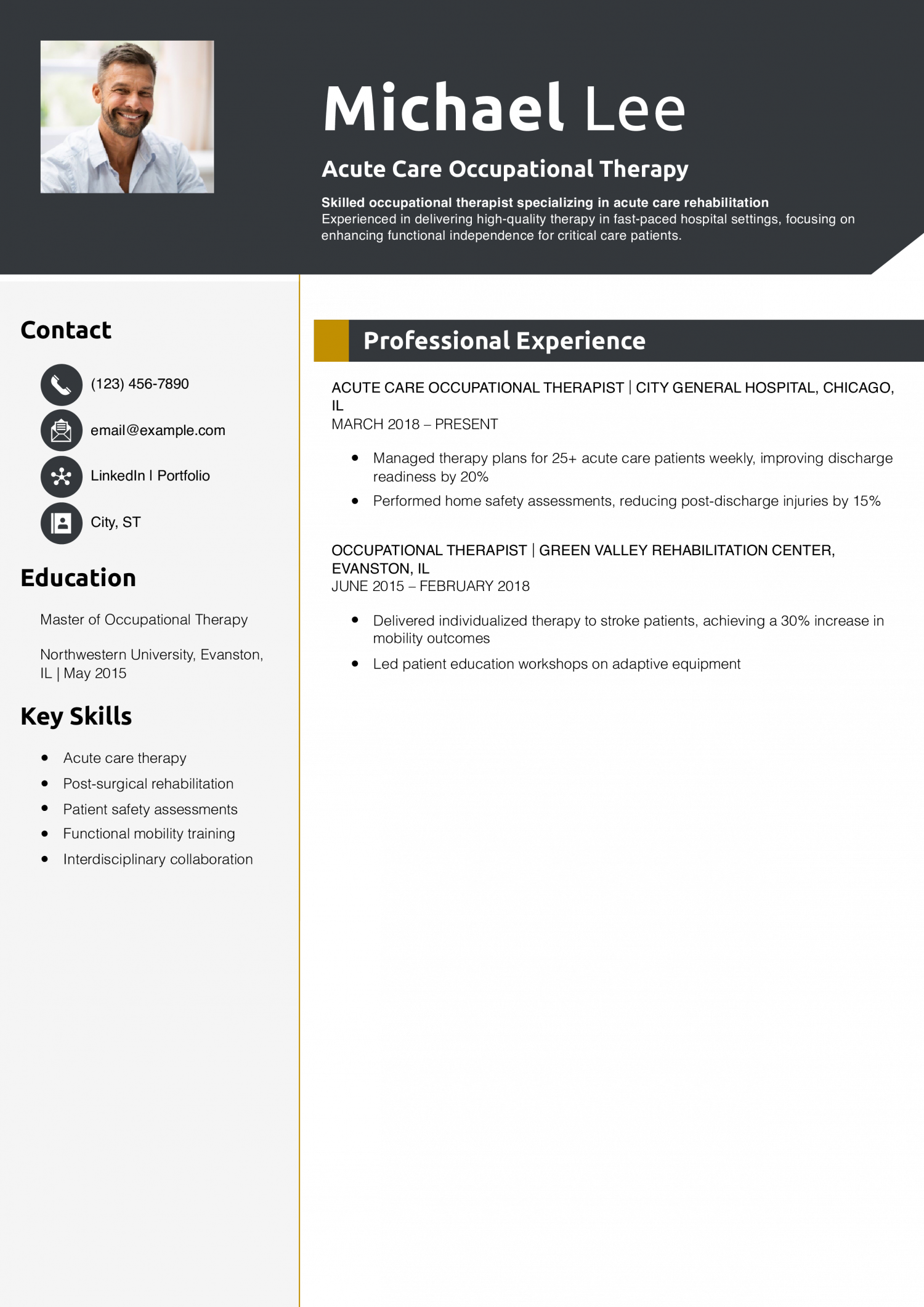
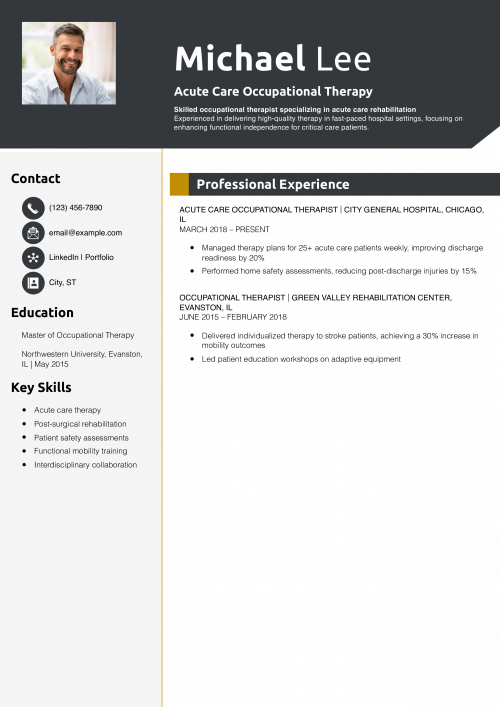
This resume emphasizes specialized skills in acute care and quantifiable results like improving discharge readiness. Discover more about crafting impactful resumes here.
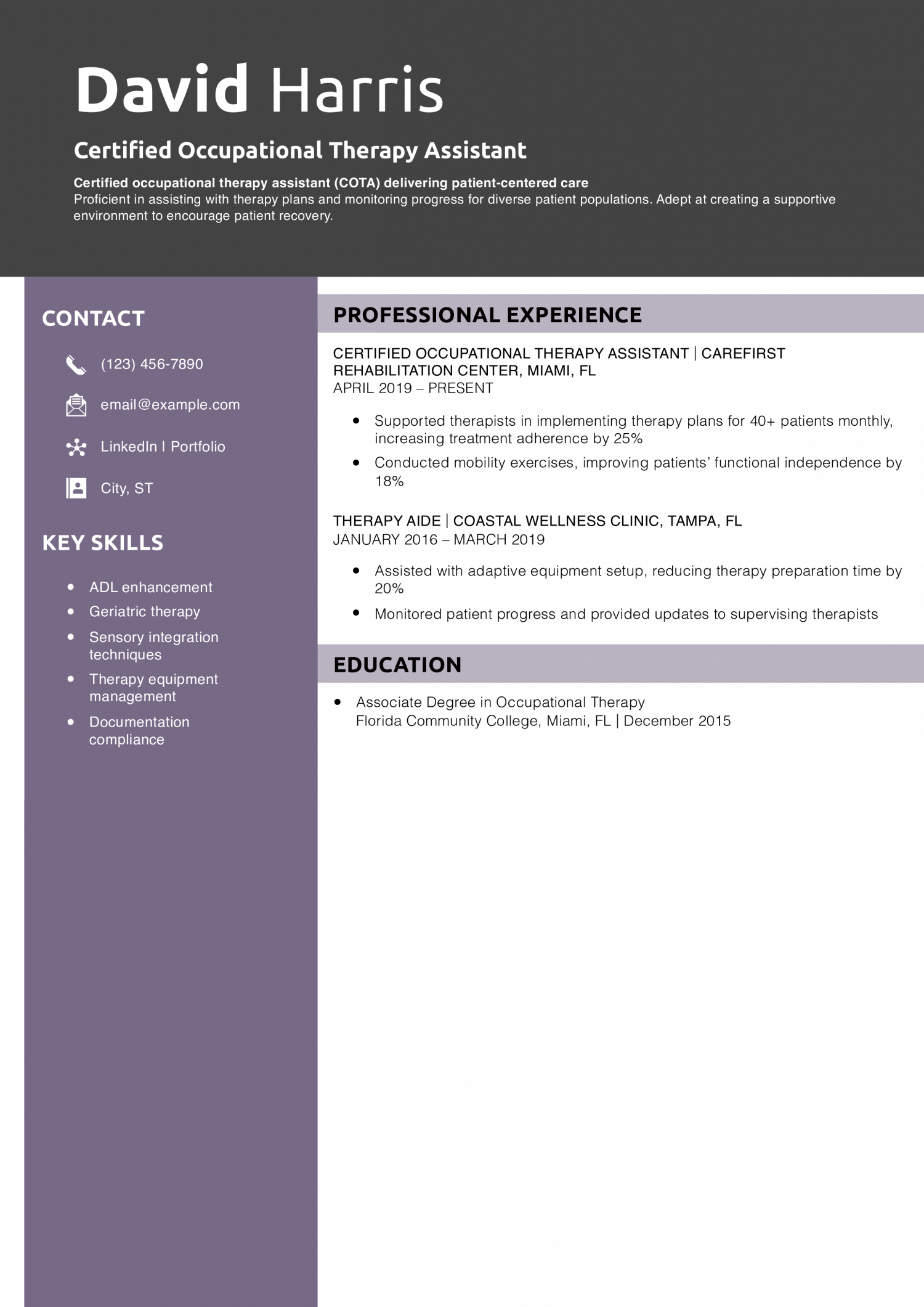
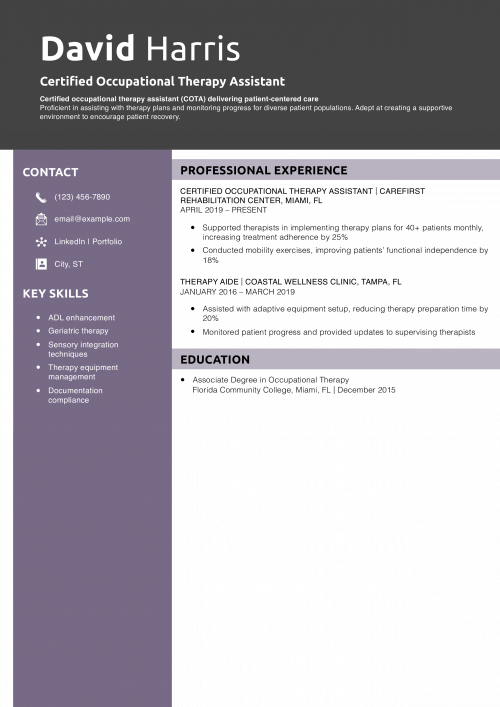
The resume highlights certifications and demonstrates measurable patient outcomes, showcasing the candidate’s impact in the field. Learn about presenting certifications effectively here.
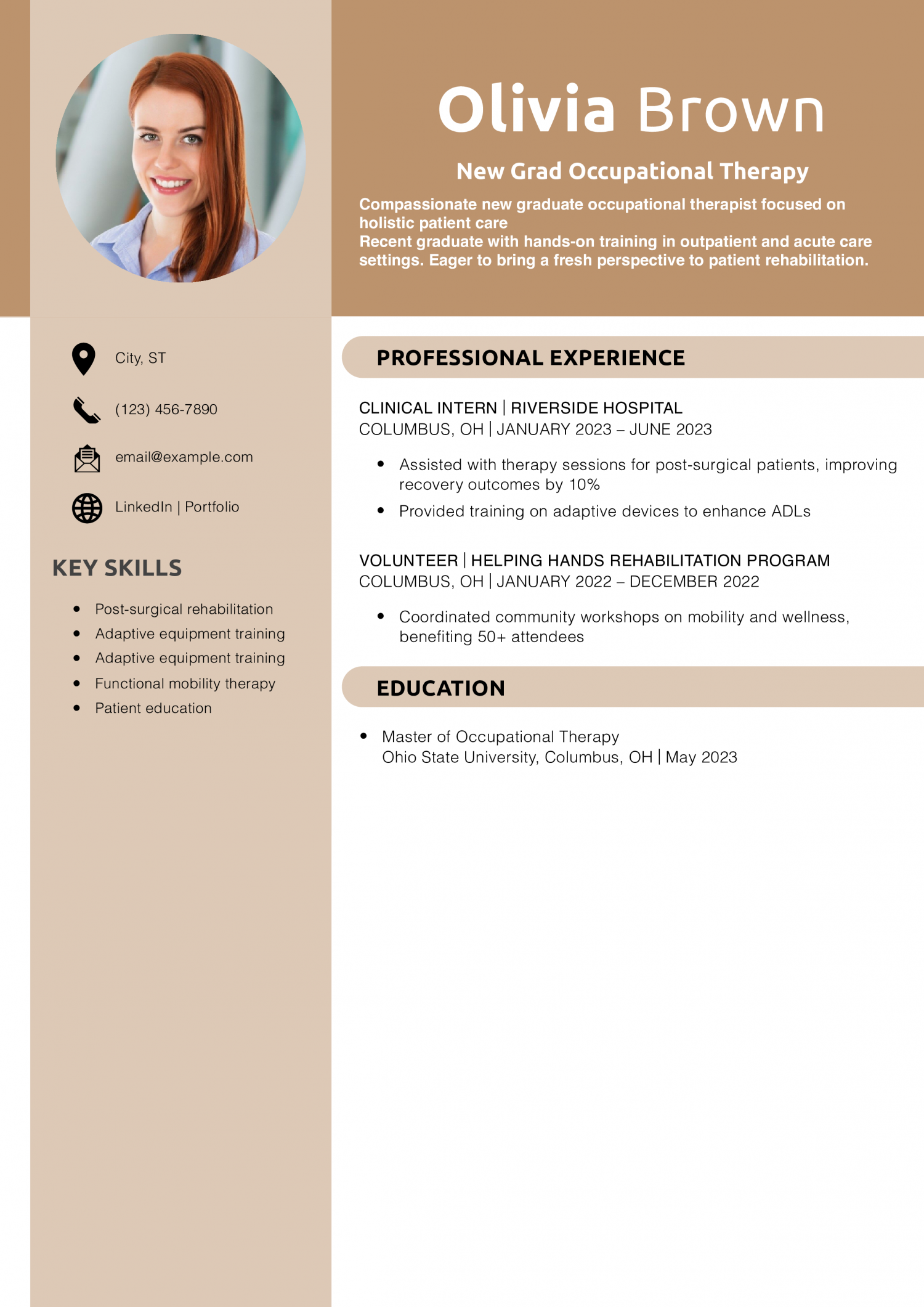
This resume emphasizes clinical training and eagerness to contribute, making it an excellent template for entry-level professionals. Explore how to build entry-level resumes here.
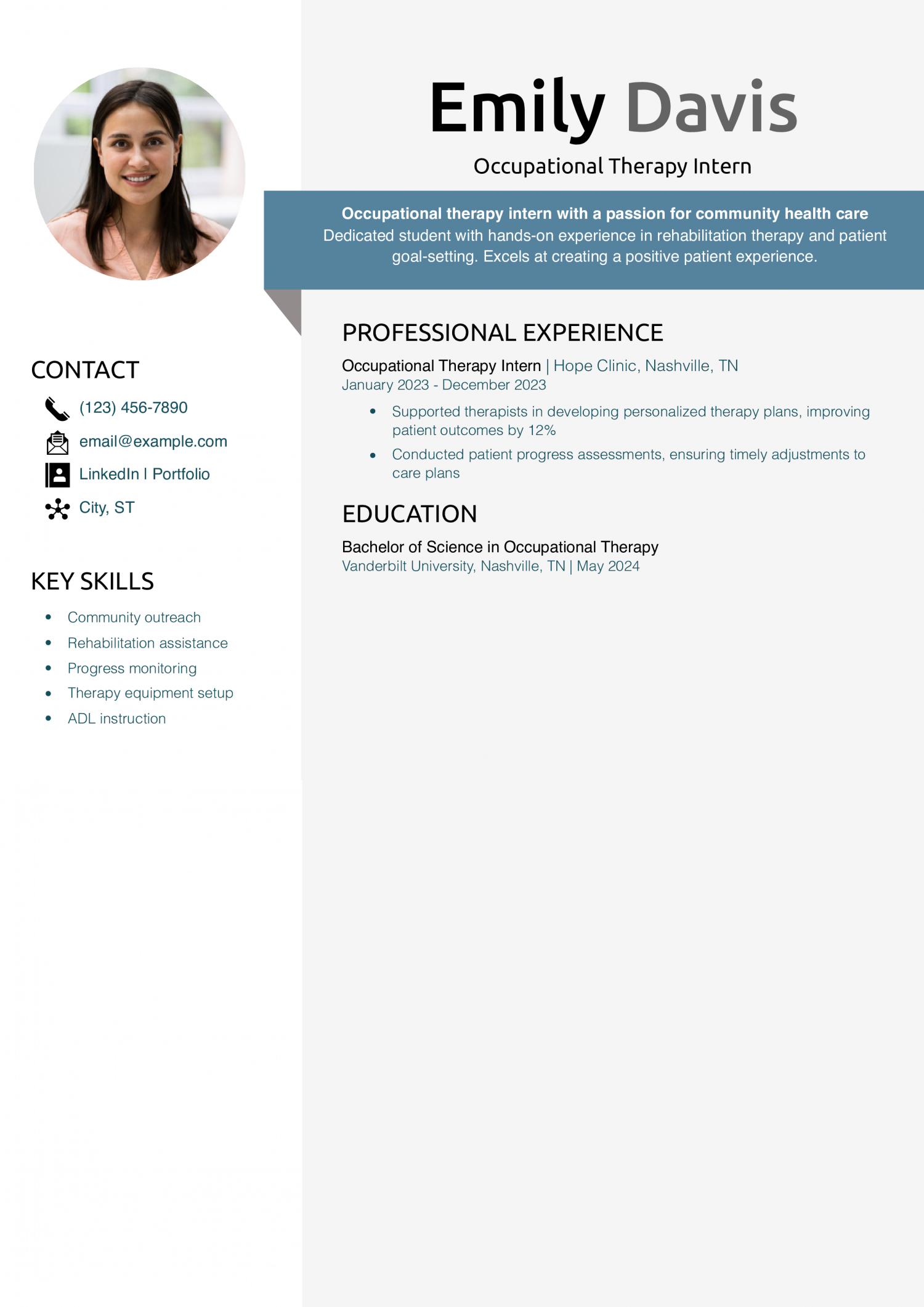
This resume demonstrates the candidate’s ability to assist therapists effectively while emphasizing community care. Learn how to showcase your volunteer experience here.
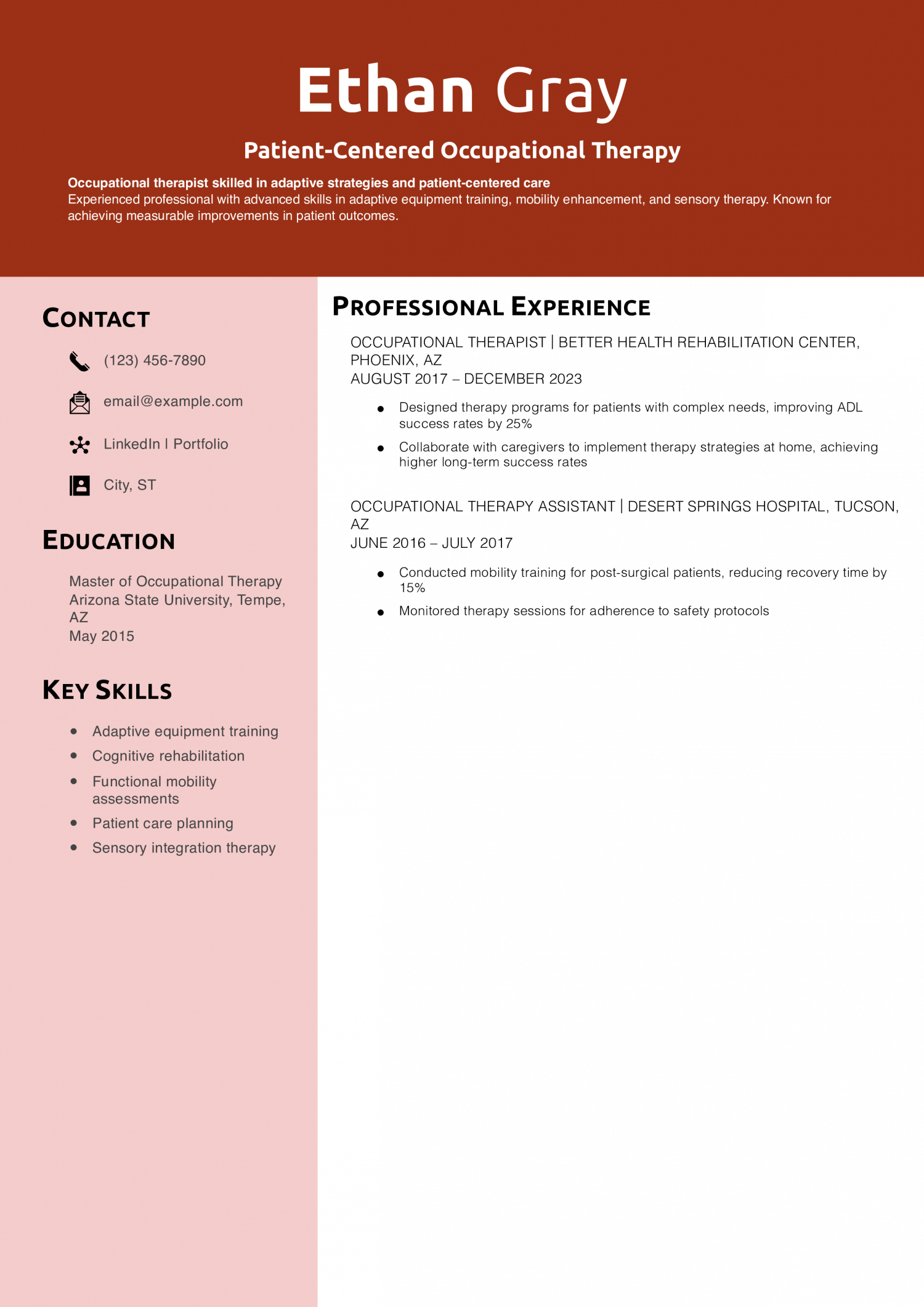
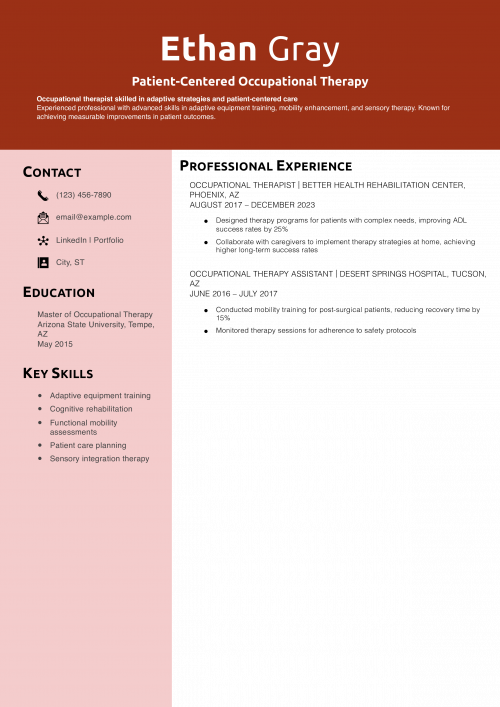
This resume effectively integrates key skills and quantifiable achievements, such as a 25% improvement in ADL outcomes. Learn more about incorporating skills into resumes here.
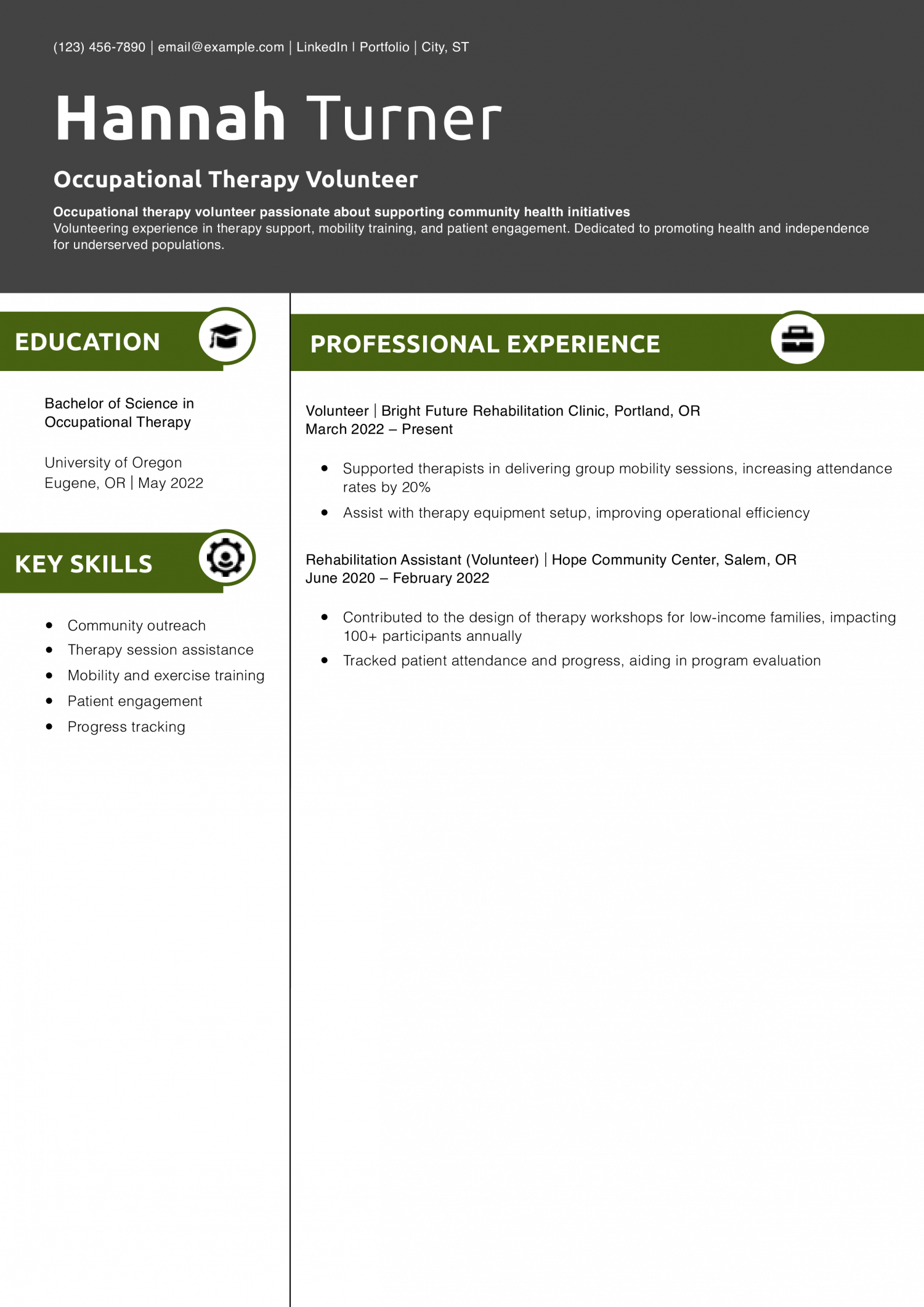
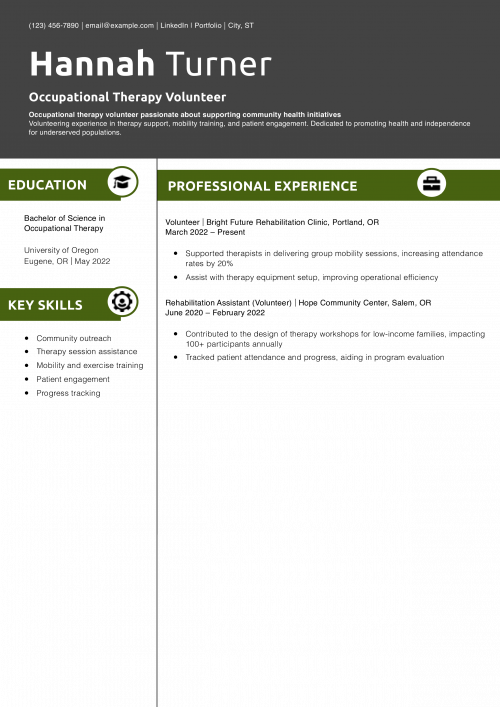
This resume highlights volunteer experiences and their impact, such as boosting group therapy attendance by 20%. Learn how to list volunteer work effectively here.
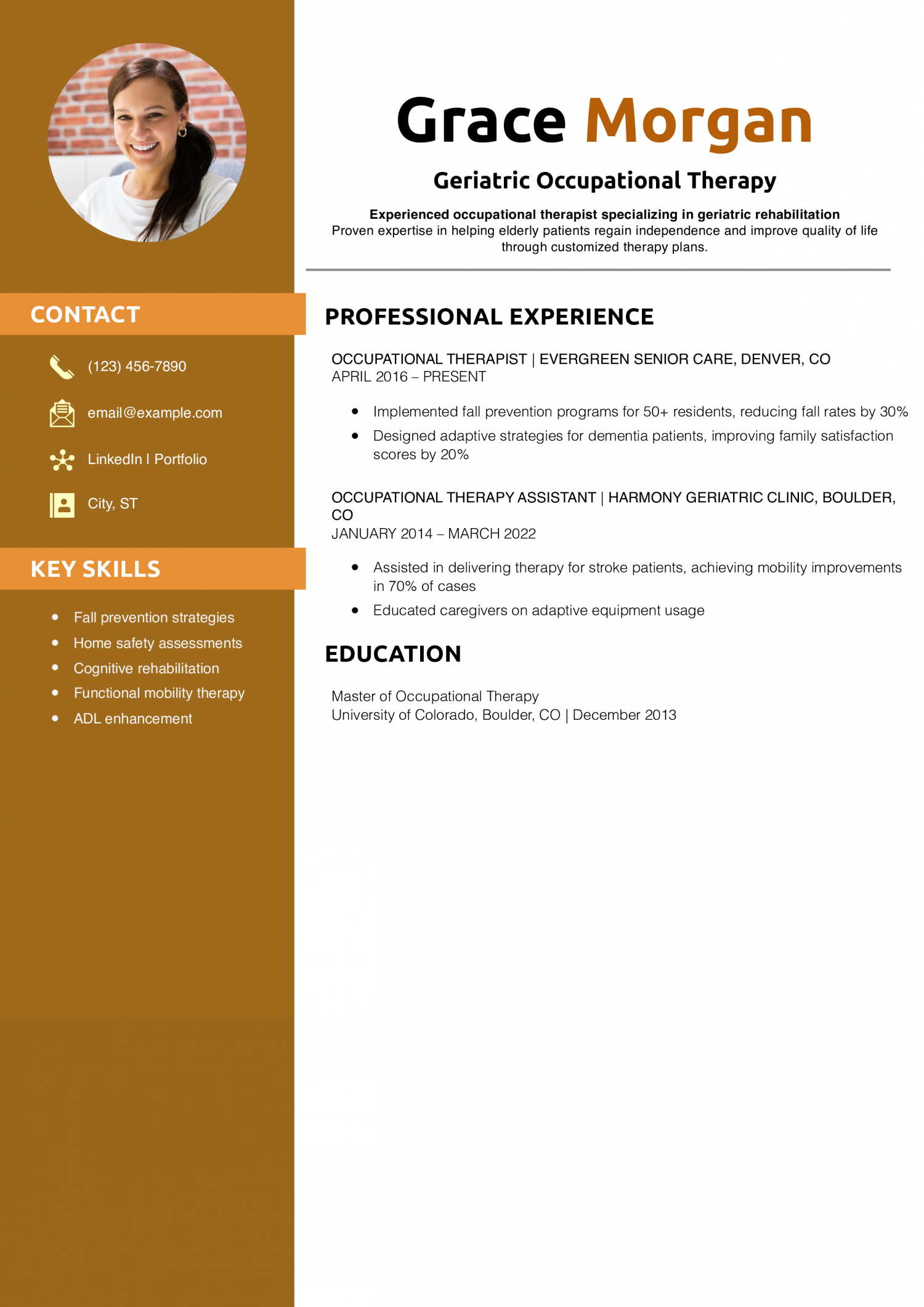
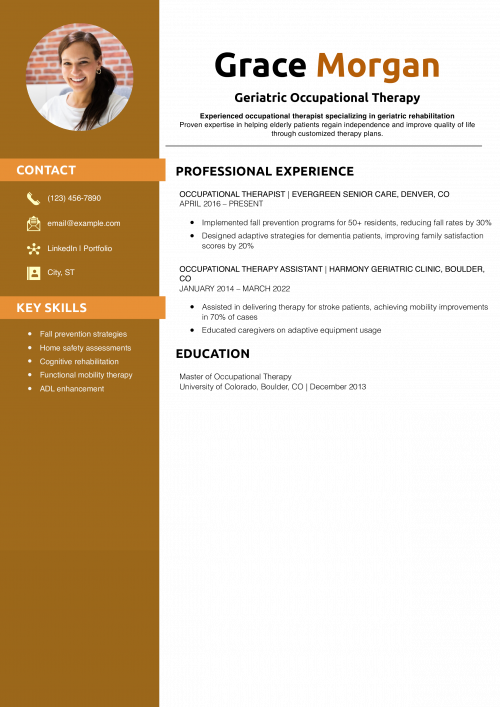
This resume emphasizes specialized care for elderly populations with measurable results, like a 30% reduction in fall rates. Explore impactful resume formatting and font styles here.
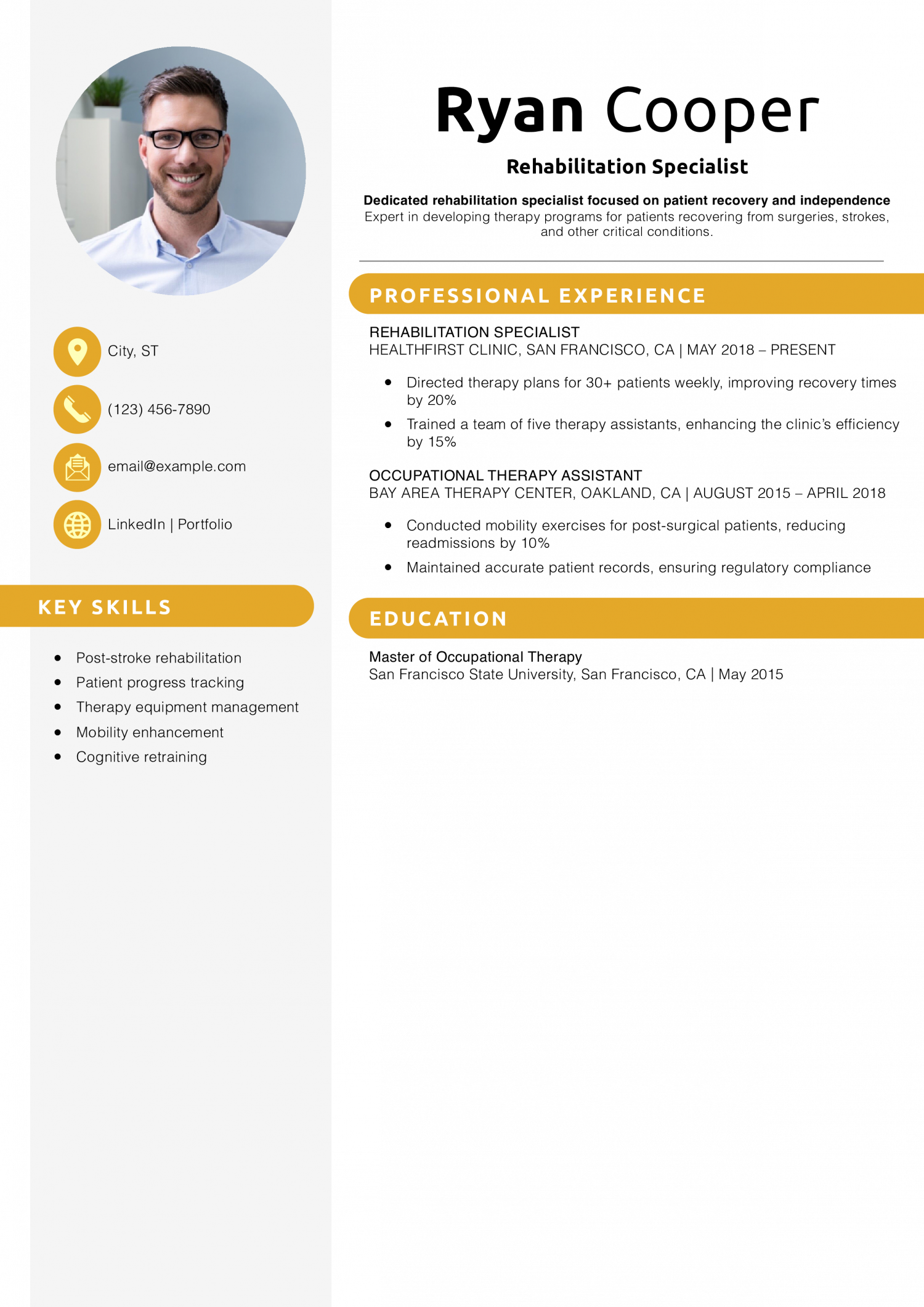
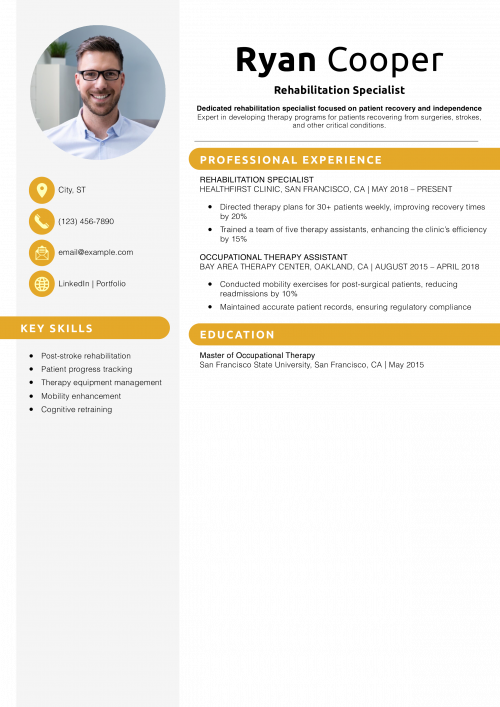
This resume emphasizes collaboration and measurable achievements, such as reducing readmissions by 10%. Tips on tailoring resumes are available here.
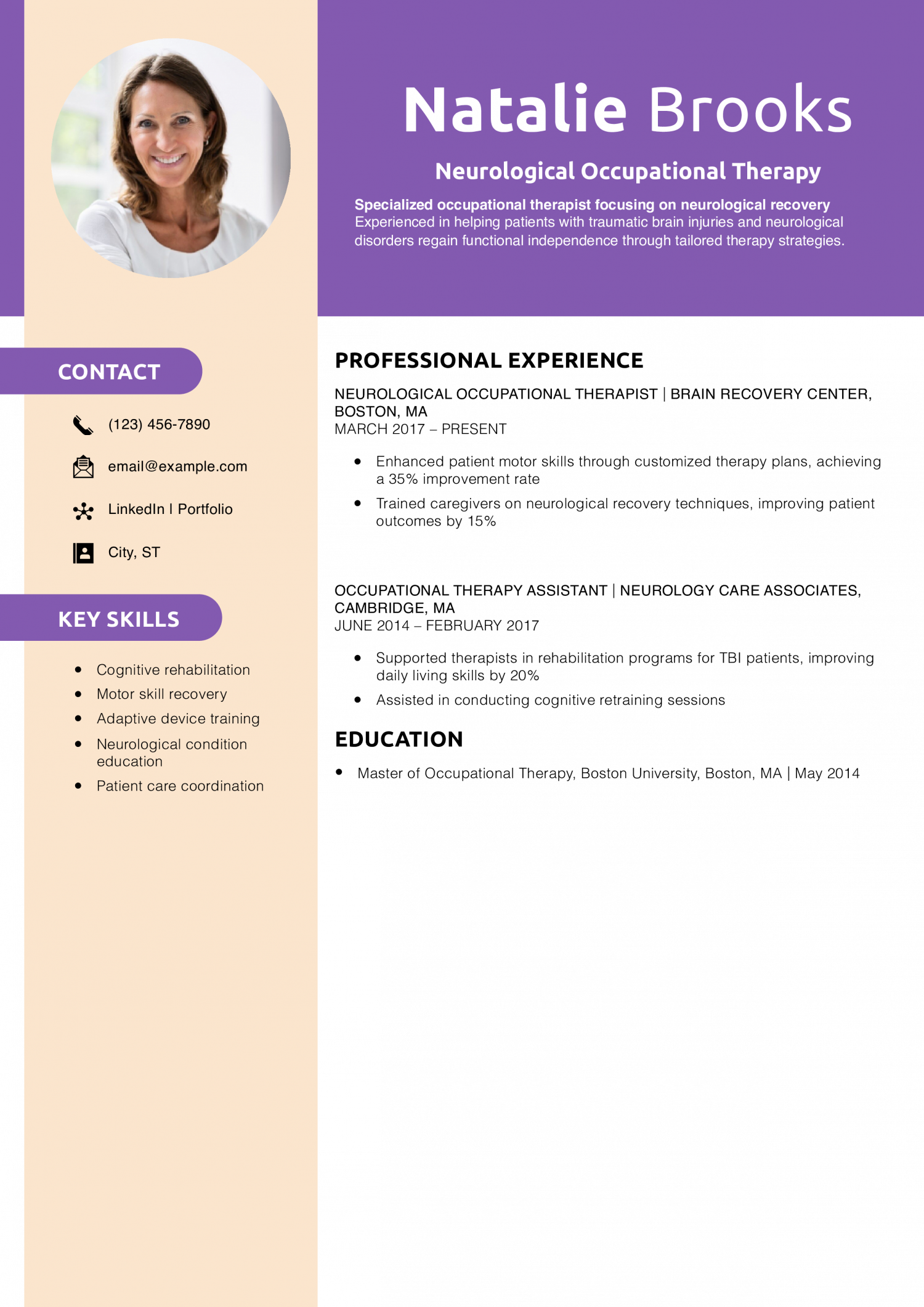
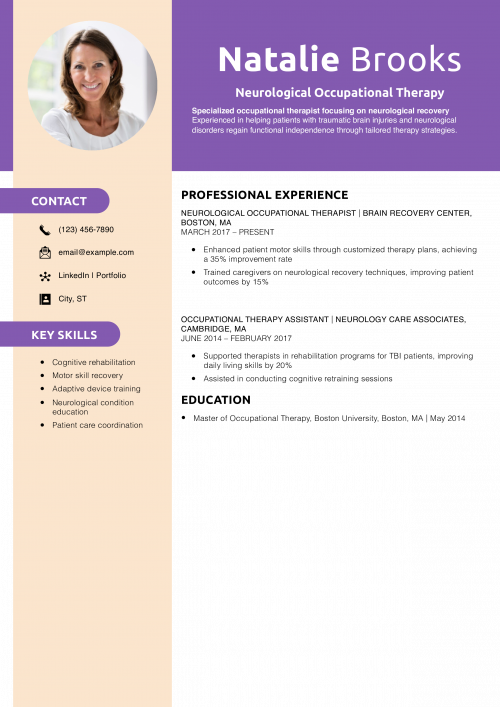
The resume highlights neurological expertise with quantifiable improvements in motor skills and caregiver training. Explore how to feature specialized skills here.
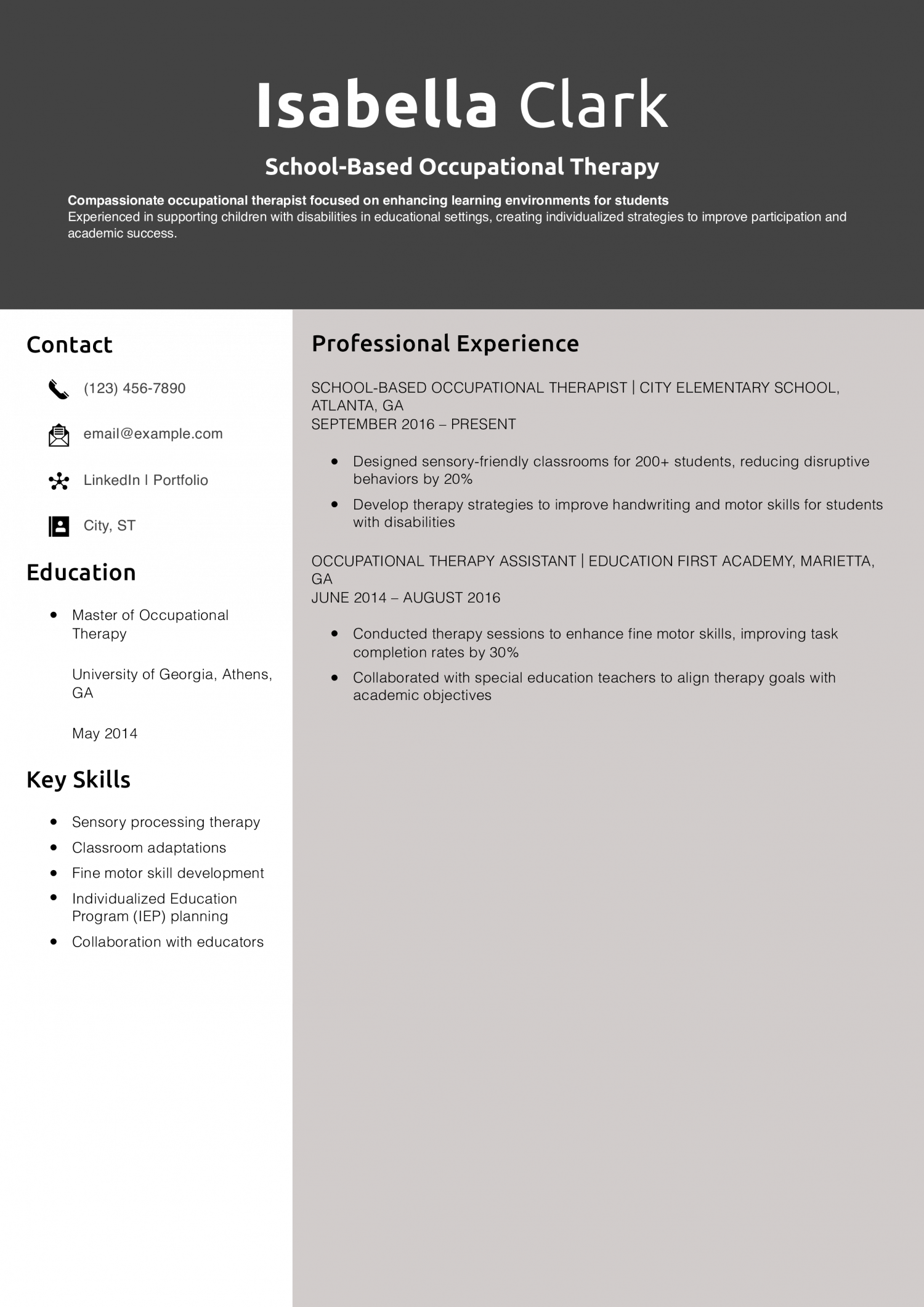
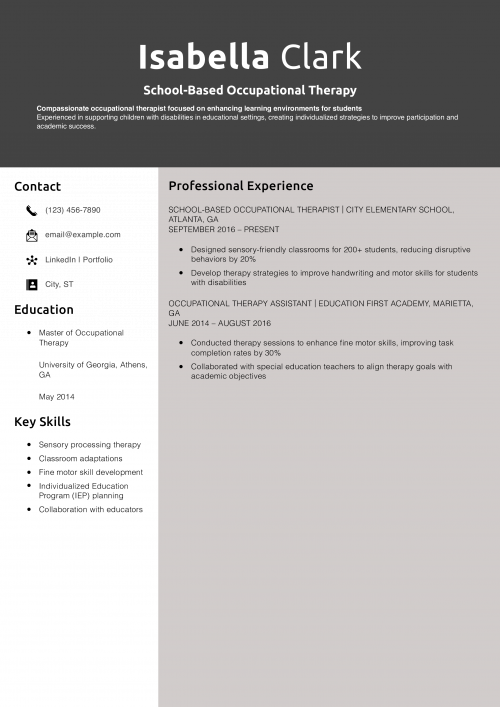
This resume effectively showcases specialized experience in schools and quantifiable outcomes like a 20% behavior improvement. Learn more about tailoring resumes to niche roles here.
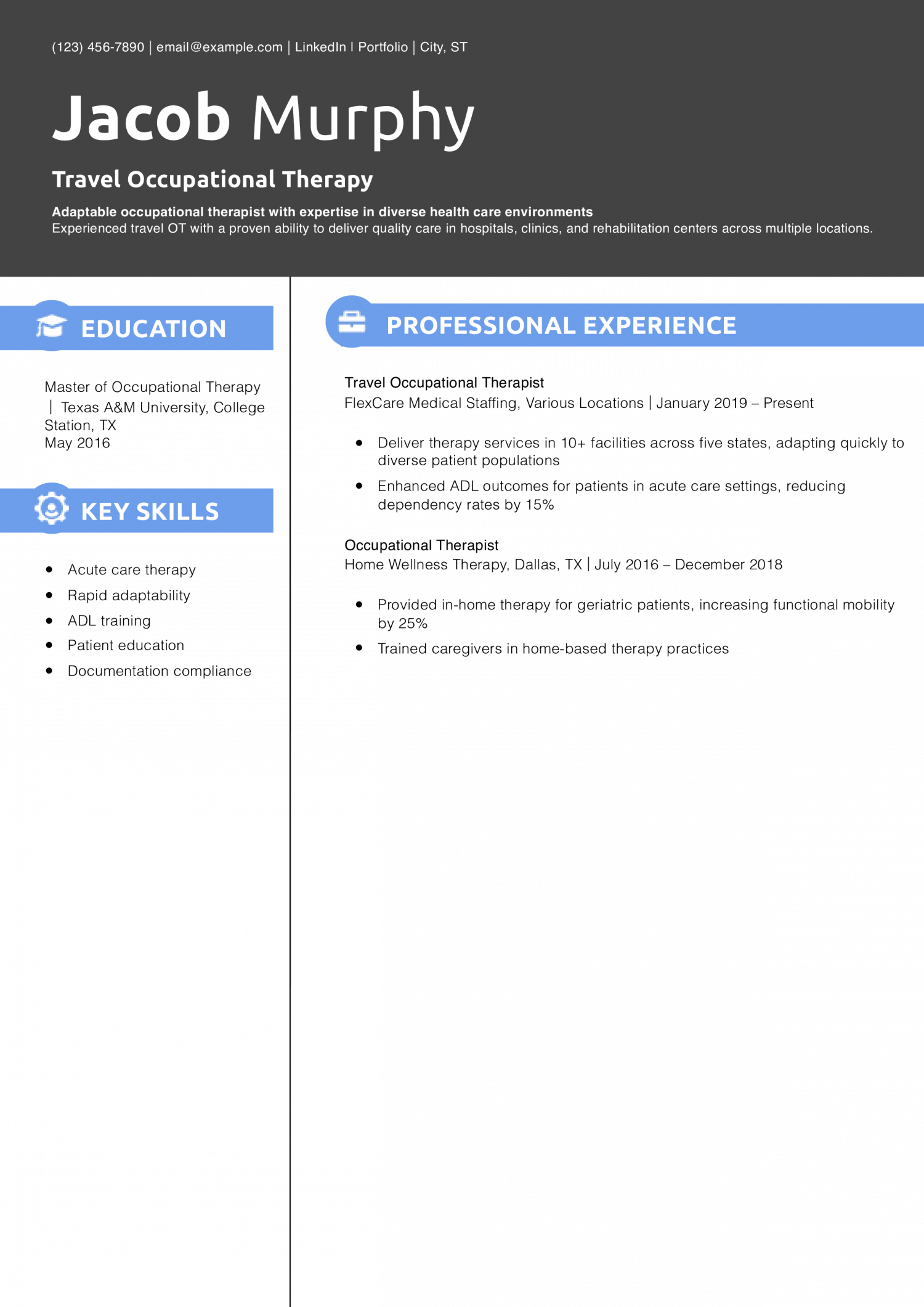
This resume highlights adaptability and diverse experience, including a measurable reduction in dependency rates. Discover tips for creating versatile resumes here.
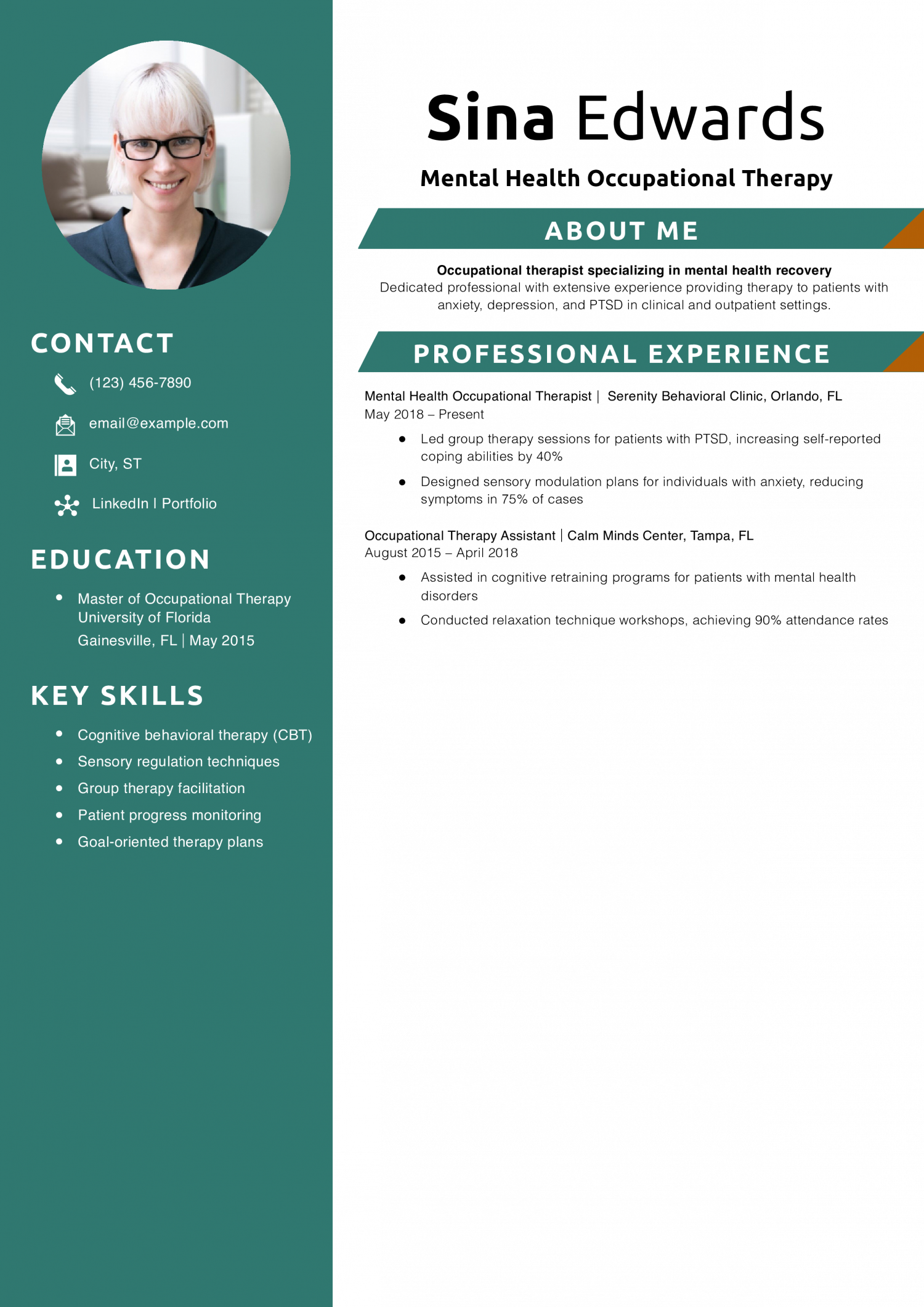
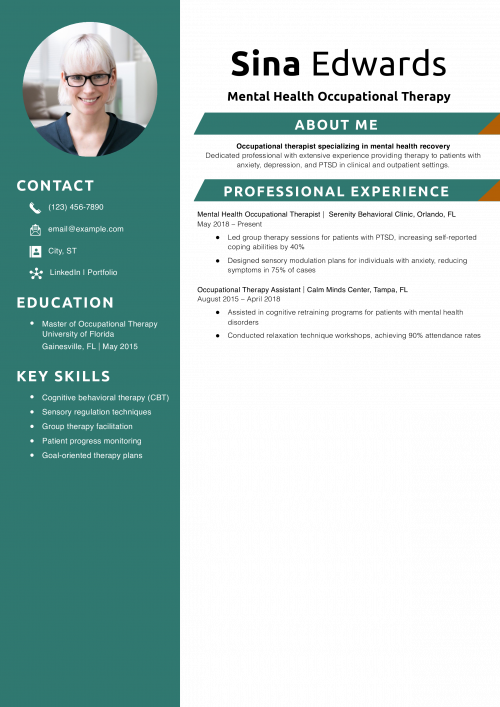
The resume demonstrates expertise in mental health therapy, with outcomes such as a 40% improvement in coping skills. Find tips on creating effective resume bullet points here.
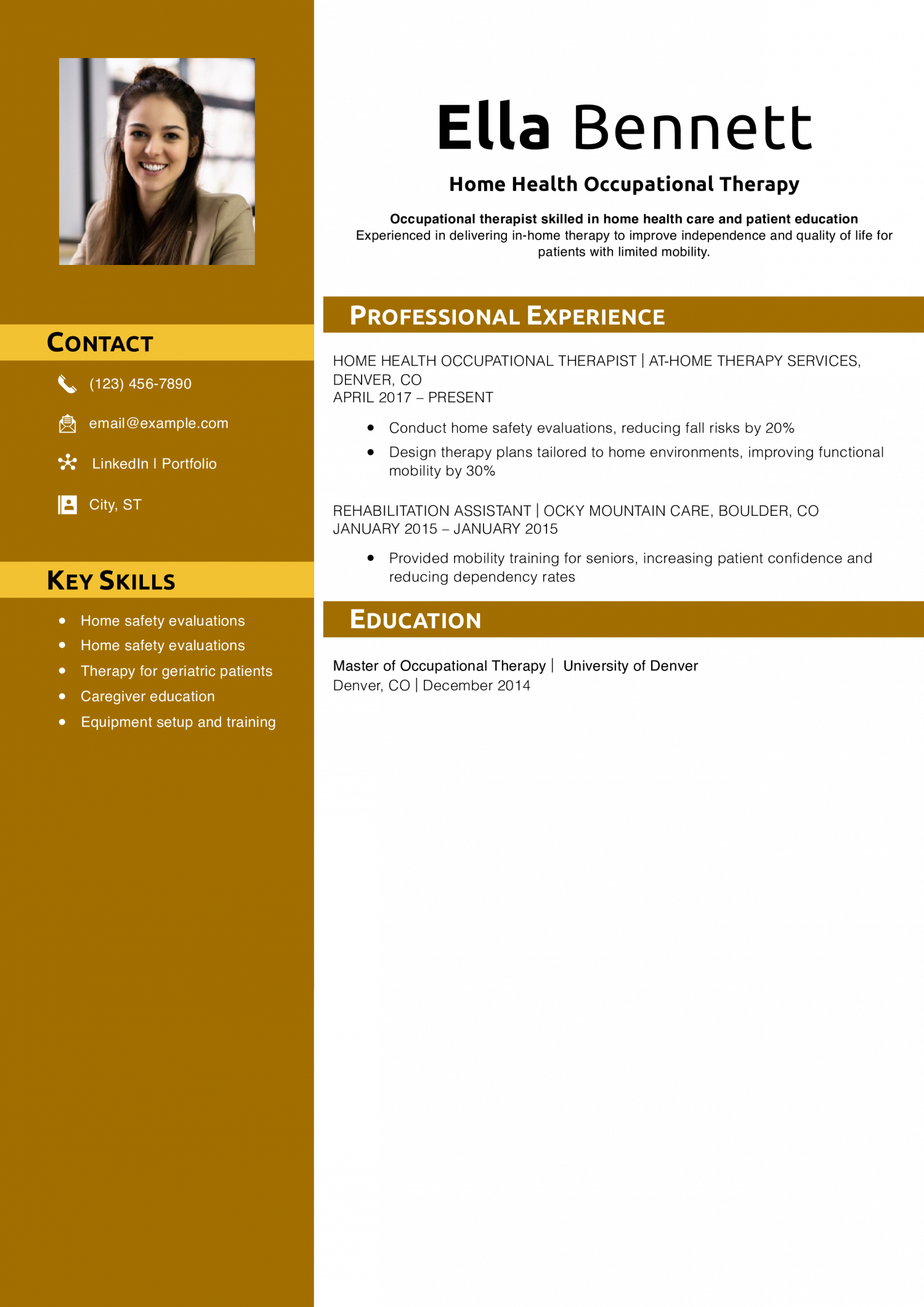
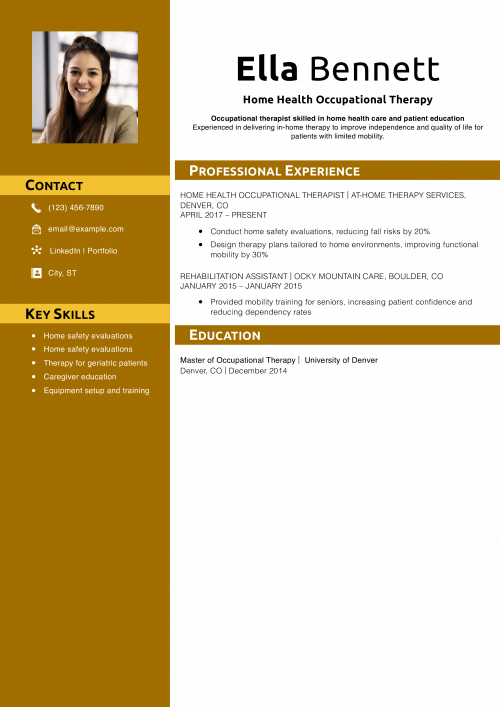
This resume focuses on in-home care expertise and quantifiable achievements like reducing fall risks. See strategies for displaying your skills and education here.
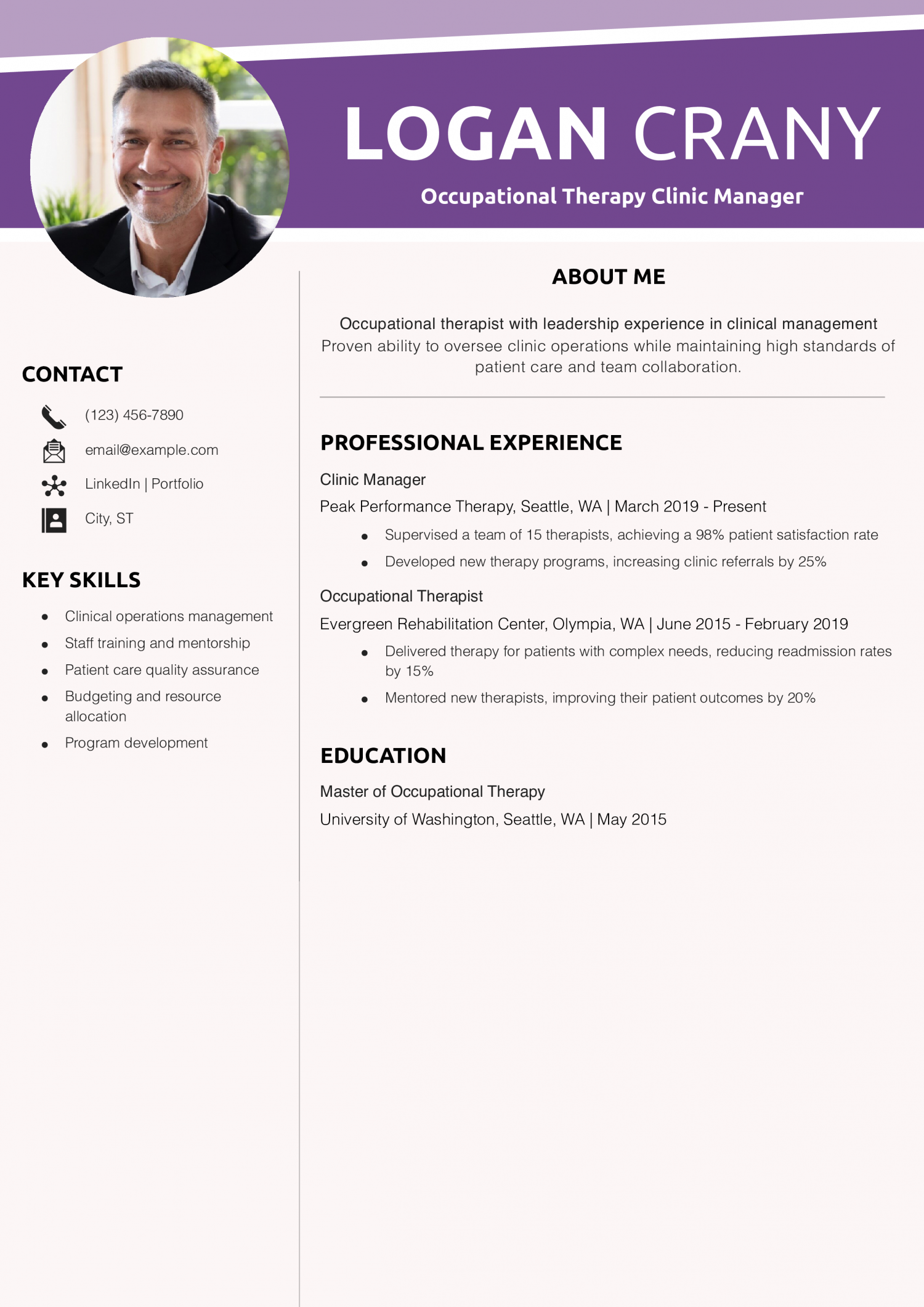
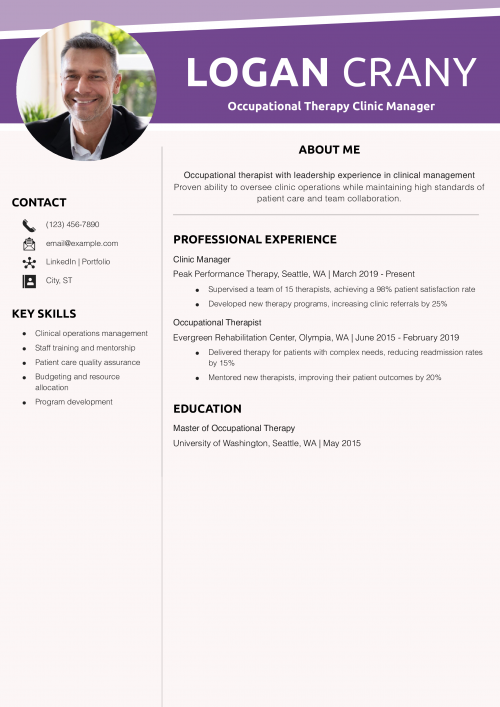
This resume highlights leadership skills and measurable clinic improvements, such as increased referrals. Discover resume tips on writing great job descriptions here.
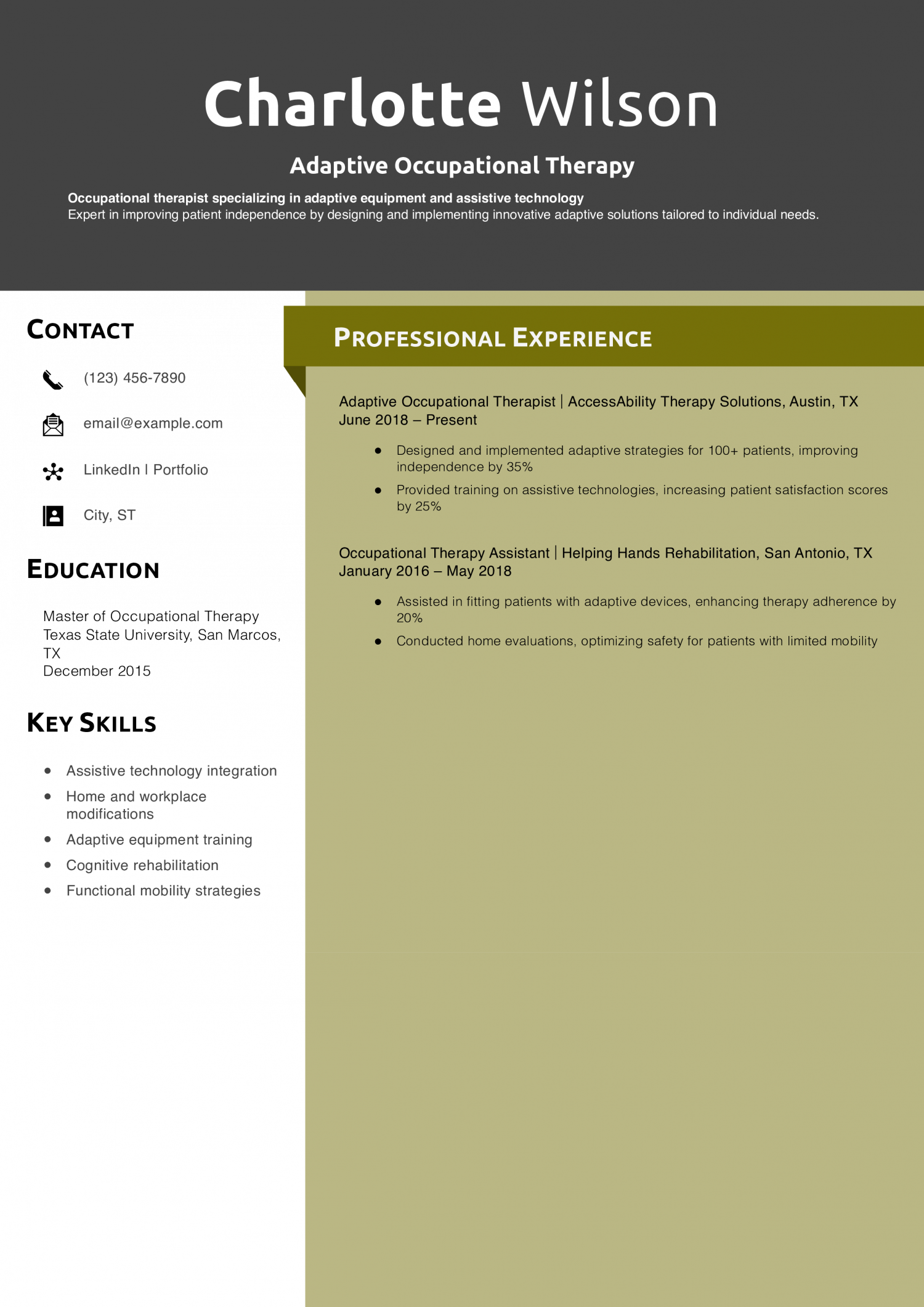
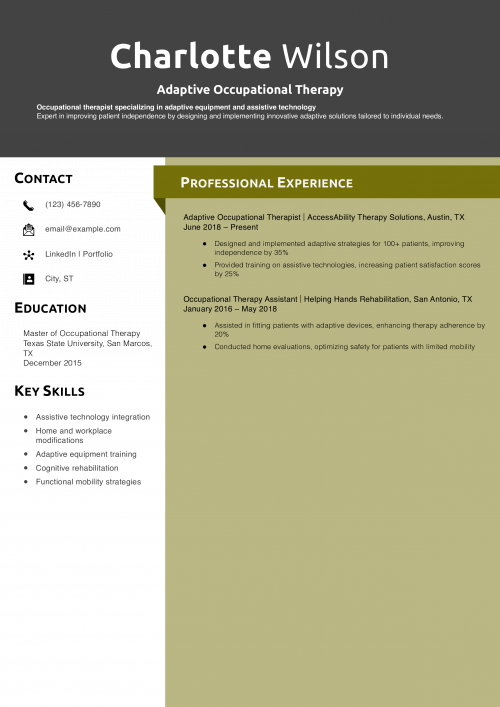
This resume emphasizes innovation and measurable outcomes, such as a 35% improvement in patient independence. Find tips for highlighting your relevant skills here.
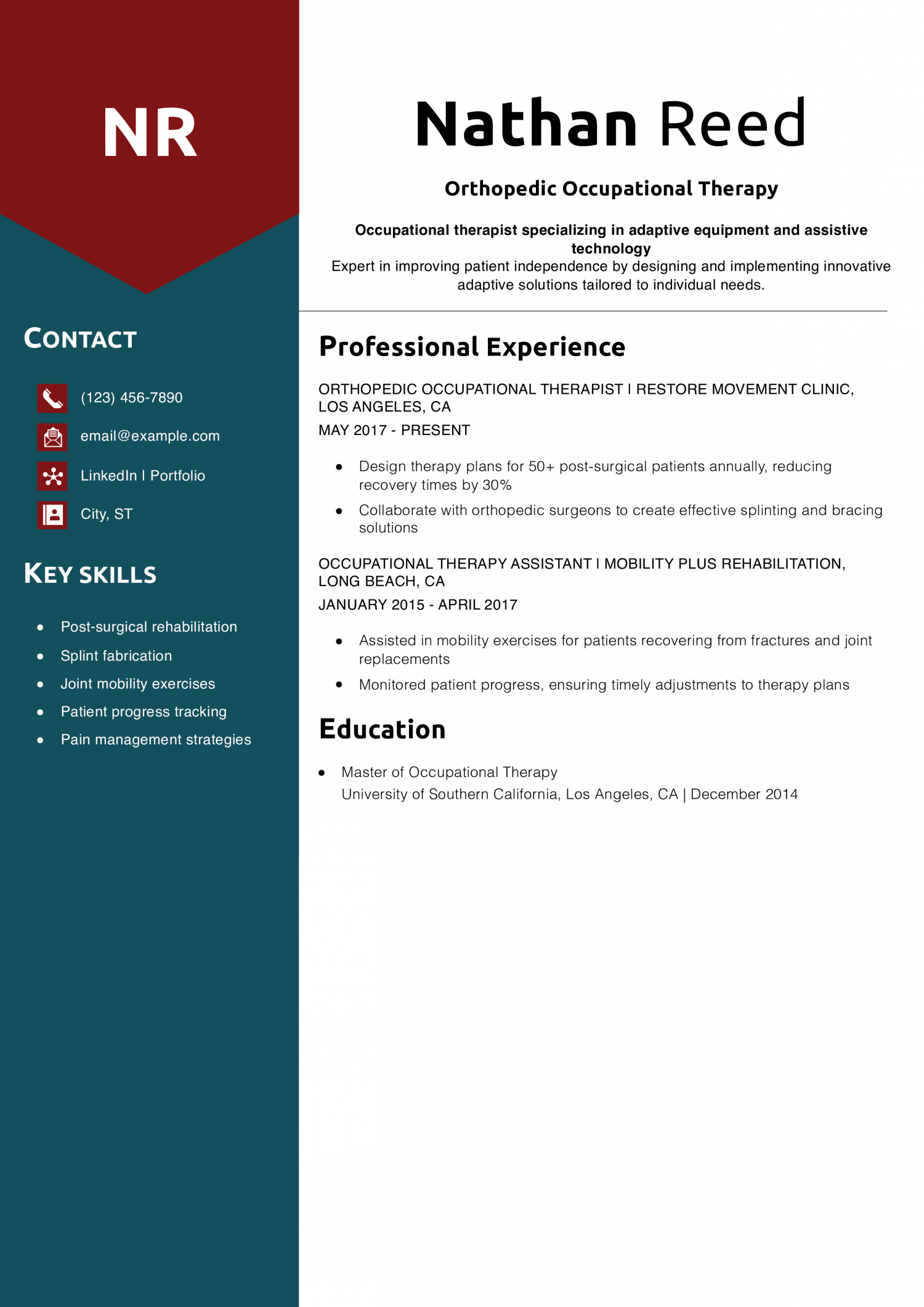
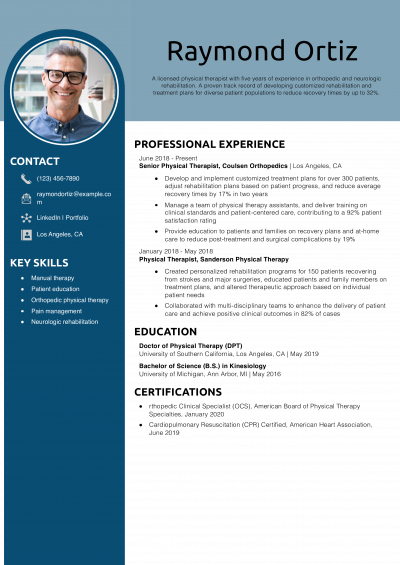
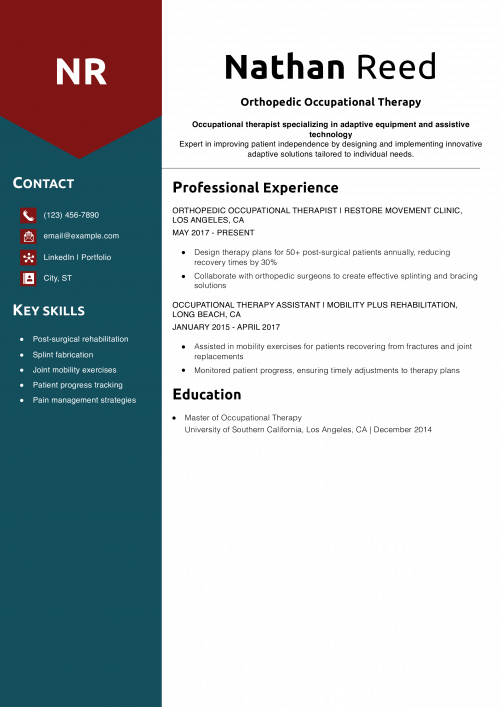
This resume showcases orthopedic specialization with concrete metrics, such as a 30% reduction in recovery times. Learn more about creating targeted resumes here.
Your OT resume should usually include these sections:
Below are tips and samples to help you organize each resume section.
Give your full name, phone number, email address, location, and links to any online professional profiles. Ensure your current contact information so employers can reach you for an interview.
Your Name
(123) 456-7890 | [email protected] | City, ST 09876 | LinkedIn
You can impress hiring managers at the top of your resume by giving the three to five primary reasons you’ll excel as their next OT hire. These key selling points may include your:
(Note: Most job seekers find it easier to write their profile last.)
OT with 10 years of experience in acute care, specializing in stroke recovery and post-surgical rehabilitation. Proven ability to enhance patient independence and mobility through evidence-based therapies.
OT assistant with a strong foundation in activities of daily living (ADLs) training, pediatric care, and adaptive equipment management. Passionate about promoting patient engagement and well-being.
For each job in your recent work history, brainstorm your (possibly various) duties and achievements on a separate document or sheet of paper. Then, review your notes in light of your target OT job, and choose the most relevant ones to feature as bullet points in this section. You can create a detailed and focused experience section by filtering your information this way.
Occupational Therapist, Wellness Clinic, New York, NY | June 2015 to present
When possible, use relevant performance data to measure your OT results. Hard numbers and percentages put your work in context and give recruiters a better sense of your impact.
Before sending your resume, review it carefully against the OT job posting. Delete any details that don’t speak to the requirements, and consider using that space for more information about your relevant health care experience. This process takes extra time. But it can shorten your overall job search by giving you an edge over the many applicants who send a more general, less convincing resume.
Writing a resume can be hard if you don’t have real-world experience. But remember, you still have valuable skills and knowledge from your education and training. Include any relevant coursework you’ve done or certifications you’ve earned. Also, describe volunteer roles or internships you’ve completed in your field, and emphasize your work ethic and willingness to learn. By focusing on these qualities, you can show you’d be an asset to any team.
With the education and certifications sections, you can show you have a strong knowledge base in your field. Each degree or credential also serves as a formal endorsement of your skills and professionalism. The following templates help you organize this information on your resume (note: years are optional).
Template:
[Degree Name], [School Name], [City, State Abbreviation] | [Graduation Year]
[Relevant honors, coursework, or activities]
Example:
Master of Occupational Therapy (MOT), XYZ University, Chicago, IL
Template:
[Certification Name], [Awarding Organization], [Completion Year]
[Description if the credential is lesser-known but relevant]
Example:
Certified Hand Therapist (CHT), Hand Therapy Certification Commission | 2022
NBCOT Registered OTR, National Board for Certification in Occupational Therapy | 2021
A skills section lets you quickly show how to support patients, family members, and health care colleagues. Below, you’ll find some key terms and skills to consider for this section:
| Key Skills | |
|---|---|
| Adaptive equipment management | Cognitive rehabilitation |
| Cross-team collaboration | Home safety assessments |
| Patient education | Pediatric therapy |
| Physical rehabilitation | Sensory integration therapy |
| Splint fabrication | Stroke recovery |
Start each bullet point with a strong action verb. Dynamic verbs help you keep the hiring manager’s attention and show the varied nature of your clinical or other hands-on experience.
The following list can help you find a good mix of action verbs for your OT resume:
| Action Verbs | |
|---|---|
| Adapted | Analyzed |
| Assisted | Created |
| Decreased | Designed |
| Enhanced | Evaluated |
| Facilitated | Fostered |
| Generated | Grew |
| Implemented | Improved |
| Increased | Introduced |
| Lowered | Managed |
| Monitored | Planned |
| Prevented | Provided |
| Ranked | Reduced |
| Reinforced | Reversed |
| Streamlined | Strengthened |
| Updated | Won |
A resume is a simple tool for professional communication and should be formatted that way. Choose a clear and straightforward template, and avoid any with elaborate graphics or various colors and font styles. Simple resume design helps a hiring manager scan for relevant information. It also helps you tailor the document to each job application and update your work history.
To effectively tailor your Occupational Therapy CV, start by highlighting key skills and experiences that match the job description. Look for keywords from the job posting, such as specific tools, certifications, or industry terms, and integrate them naturally into your CV. This customization will make your CV more relevant and increase your chances of passing ATS scans.
Focus on editing your skills section. With a few quick changes to this section, you can further hone your OT resume and help it get past screenings by applicant tracking systems (ATS).
First, look closely at the job posting and highlight any required skills. Then, compare those highlighted terms against your resume's existing skills section. Delete any skills from your list that don't appear in the job posting, and add any missing skills of yours that do.
The combination (or hybrid) format, because it lets you present yourself both clearly and strategically. According to job search experts Wendy Enelow and Louise Kursmark, this format "gives you many opportunities to share your specific successes ... It offers immense flexibility in an easy-to-follow structure."
A combination resume has these two features:
1. An introduction to your strengths. Typically, the resume intro comprises a profile paragraph and skills list, as in the examples on this page. But there are many variations. Depending on your job search, you may omit one or both of these sections in favor of a one- or two-sentence professional headline. Whatever approach you choose, make sure your introduction tells why you're great for the job.
2. One or more experience sections. Hiring managers want to know your latest career activities. The combination format lets you provide that information with sections for your recent years' work, internship, education, or other experience. For most job seekers, the bulk of their combination resume will be a "Professional Experience" section with detailed job descriptions in reverse chronological order.
A good cover letter sharpens your job application by directly explaining your interest in the health facility or job opening. When possible, quote or paraphrase text from the job posting and explain why it caught your attention.
Executive Resume Writer and Career Coach
Andrew Stoner is an executive career coach and resume writer with 17 years of experience as a hiring manager and operations leader at two Fortune 500 Financial Services companies, and as the career services director at two major university business schools.
Resume Templates offers free, HR approved resume templates to help you create a professional resume in minutes. Choose from several template options and even pre-populate a resume from your profile.